Get your free personalized podcast brief
We scan new podcasts and send you the top 5 insights daily.
Algorithmic social distribution rewards consumer engagement rather than institutional gatekeeping, allowing creators to circumvent traditional entertainment power brokers entirely. Creators who achieve sufficient audience resonance can no longer be suppressed by historical gatekeepers, making claims of systemic bias within open digital distribution uncompelling.

Related Insights
Algorithms now push content based on its quality and relevance to user interests, not the creator's follower count. A new account can go viral and outperform established ones, creating a true meritocracy.

As AI tools enable millions of amateur creators to produce professional-quality content, platforms like YouTube and Spotify become less reliant on a small number of mainstream media giants. This diffusion of content creation shifts bargaining power away from traditional studios and labels to the platforms themselves.
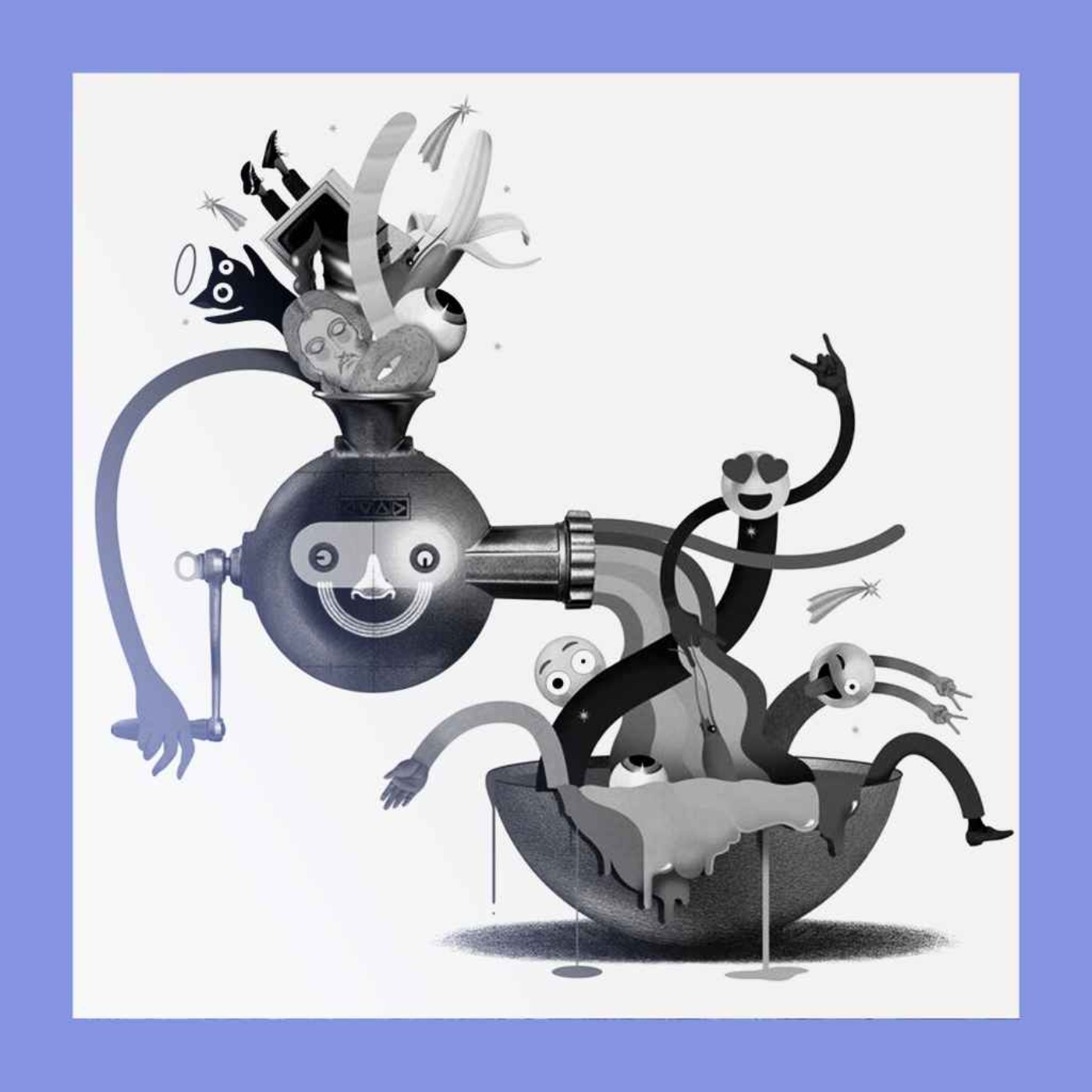
Unlike legacy media, which had standards and practices departments, the modern creator economy operates without gatekeepers. Content optimized for maximum engagement—often featuring sex, violence, and controversy—is pushed to the top by algorithms, leaving young and vulnerable audiences exposed to unfiltered and often harmful material.

Blaming algorithms for low reach is a failure of accountability. Algorithms are neutral supply-and-demand platforms that reward value. Instead of complaining, creators must accept the feedback that their content isn't funny, smart, or innovative enough to beat the competition.
In the pre-internet era, a small number of executives and critics decided what art was produced and celebrated. Today, social media algorithms allow the audience to decide what is 'good' by rewarding it with attention, enabling talent that would have been overlooked by the old system to thrive.
Neal Mohan reframes YouTube's recommendation engine as a direct reflection of audience choice, not an opaque AI gatekeeper. He argues that what is often called the "algorithm" is simply the collective voice of 2 billion daily viewers giving feedback and deciding what content rises to the top.
Platform algorithms now prioritize showing users content relevant to their interests, regardless of who they follow. This means a brand's follower count is less important than the relevance of each individual piece of content. Any creator can achieve massive reach on a single post, making it a true meritocracy.
Follower count is increasingly irrelevant. Today's social platforms function as 'interest media,' where algorithms prioritize surfacing the most relevant content to users, regardless of who posted it. This creates a meritocracy where a new account with great content can get more views than an established one with mediocre content.
The value of a large, pre-existing audience is decreasing. Powerful platform algorithms are becoming so effective at identifying and distributing high-quality content that a new creator with great material can get significant reach without an established following. This levels the playing field and reduces the incumbent advantage.
The rapid evolution of YouTube content, from fringe videos to mainstream entertainment, demonstrates the power of a permissionless system. Without gatekeepers, millions of creators compete, leading to faster innovation than in traditional, centrally-controlled media, a lesson applicable to any industry.