Get your free personalized podcast brief
We scan new podcasts and send you the top 5 insights daily.
AI tools are breaking down communication silos. Marketers no longer need to write lengthy briefs to describe their vision; they can use AI to generate functional prototypes and landing pages, visually demonstrating exactly what's in their head and revolutionizing cross-team collaboration.

Related Insights
Vercel's Pranati Perry explains that tools like V0 occupy a new space between static design (Figma) and development. They enable designers and PMs to create interactive prototypes that better communicate intent, supplement PRDs, and explore dynamic states without requiring full engineering resources.

Traditional "writing-first" cultures create communication gaps and translation errors. With modern AI tools, product managers can now build working prototypes in hours. This "show, don't tell" approach gets ideas validated faster, secures project leadership, and overcomes language and team barriers.
GTM leaders no longer need to delegate strategy implementation. With tools like ChatGPT, their spoken words can become code, allowing them to rapidly prototype and test complex, data-driven prospecting campaigns themselves, directly connecting high-level strategy to on-the-ground execution.

Advanced AI models are blurring the lines between coding, design, and marketing, enabling a new "vibe building" workflow. This paradigm shift allows a single person to manage the entire product stack holistically, moving beyond simple "vibe coding" to full-fledged product creation.

Historically, resource-intensive prototyping (requiring designers and tools like Figma) was reserved for major features. AI tools reduce prototype creation time to minutes, allowing PMs to de-risk even minor features with user testing and solution discovery, improving the entire product's success rate.
As AI automates content generation, the key differentiator for marketers will be creating interactive experiences, like micro-sites, scorecards, or light versions of a product. With modern no-code tools, marketers no longer need to rely on engineers, allowing them to own the entire workflow from idea to execution.

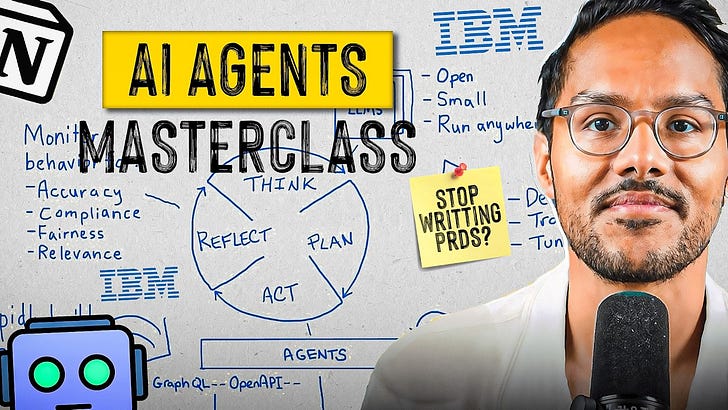
Product Requirement Documents (PRDs) are often written and then ignored. AI-generated prototypes change this dynamic by serving as powerful internal communication tools. Putting an interactive model in front of engineering and design teams sparks better, more tangible conversations and ideas than a flat document ever could.

A prototype-first culture, accelerated by AI tools, allows teams to surface and resolve design and workflow conflicts early. At Webflow, designers were asked to 'harmonize' their separate prototypes, preventing a costly integration problem that would have been much harder to fix later in the development cycle.

AI tools that generate functional UIs from prompts are eliminating the 'language barrier' between marketing, design, and engineering teams. Marketers can now create visual prototypes of what they want instead of writing ambiguous text-based briefs, ensuring alignment and drastically reducing development cycles.
Traditional agile development, despite its intent, still involves handoffs between research, design, and engineering which create opportunities for misinterpretation. AI tools collapse this sequential process, allowing a single person to move from idea to interactive prototype in minutes, keeping human judgment and creativity tightly coupled.