Get your free personalized podcast brief
We scan new podcasts and send you the top 5 insights daily.
Contrary to the 'stop AI' narrative, the AI 2040 proposal advocates for continued use of current models and capabilities research. The explicit goal is not to halt progress but to slow the pace of development to ensure safety, targeting superintelligence for 2040 instead of a rushed 2028 timeline.

Related Insights
Framing AI governance as a short, time-limited 'pause' is a mistake. A better approach is a moratorium that ends not after a set time, but only when society's investment in safety and governance is 'commensurate' with the monumental risk of creating superintelligence, a standard we are currently failing to meet.

Framing an AI development pause as a binary on/off switch is unproductive. A better model is to see it as a redirection of AI labor along a spectrum. Instead of 100% of AI effort going to capability gains, a 'pause' means shifting that effort towards defensive activities like alignment, biodefense, and policy coordination, while potentially still making some capability progress.
There's a stark contrast in AGI timeline predictions. Newcomers and enthusiasts often predict AGI within months or a few years. However, the field's most influential figures, like Ilya Sutskever and Andrej Karpathy, are now signaling that true AGI is likely decades away, suggesting the current paradigm has limitations.

The narrative that AI risk-awareness is just "doomerism" is a recent phenomenon, strategically pushed by those who stand to benefit commercially from unchecked AI development. In reality, concerns about superintelligence risks have been foundational to the AI industry for decades.

Instead of only slowing down risky AI, a key strategy is to accelerate beneficial technologies like decision-making tools. This 'differential technology development' aims to equip humanity with better cognitive tools before the most dangerous AI capabilities emerge, improving our odds of a safe transition.
AI accelerationists and safety advocates often appear to have opposing goals, but may actually desire a similar 10-20 year transition period. The conflict arises because accelerationists believe the default timeline is 50-100 years and want to speed it up, while safety advocates believe the default is an explosive 1-5 years and want to slow it down.
The default assumption is that slowing innovation is inherently bad. With a technology as potent as AI, a deliberate slowdown is a feature, providing critical time to understand the systems, manage disruptions, and build governance structures before irreversible consequences occur. A true halt is not the alternative.

Contrary to calls for an immediate pause, Nick Bostrom argues the most effective time for a pause is right before a system could become superintelligent. A pause years ago would have been wasted on theory. A last-minute pause allows researchers to work with the actual, near-finalized system to perform crucial evaluations and alignment checks.

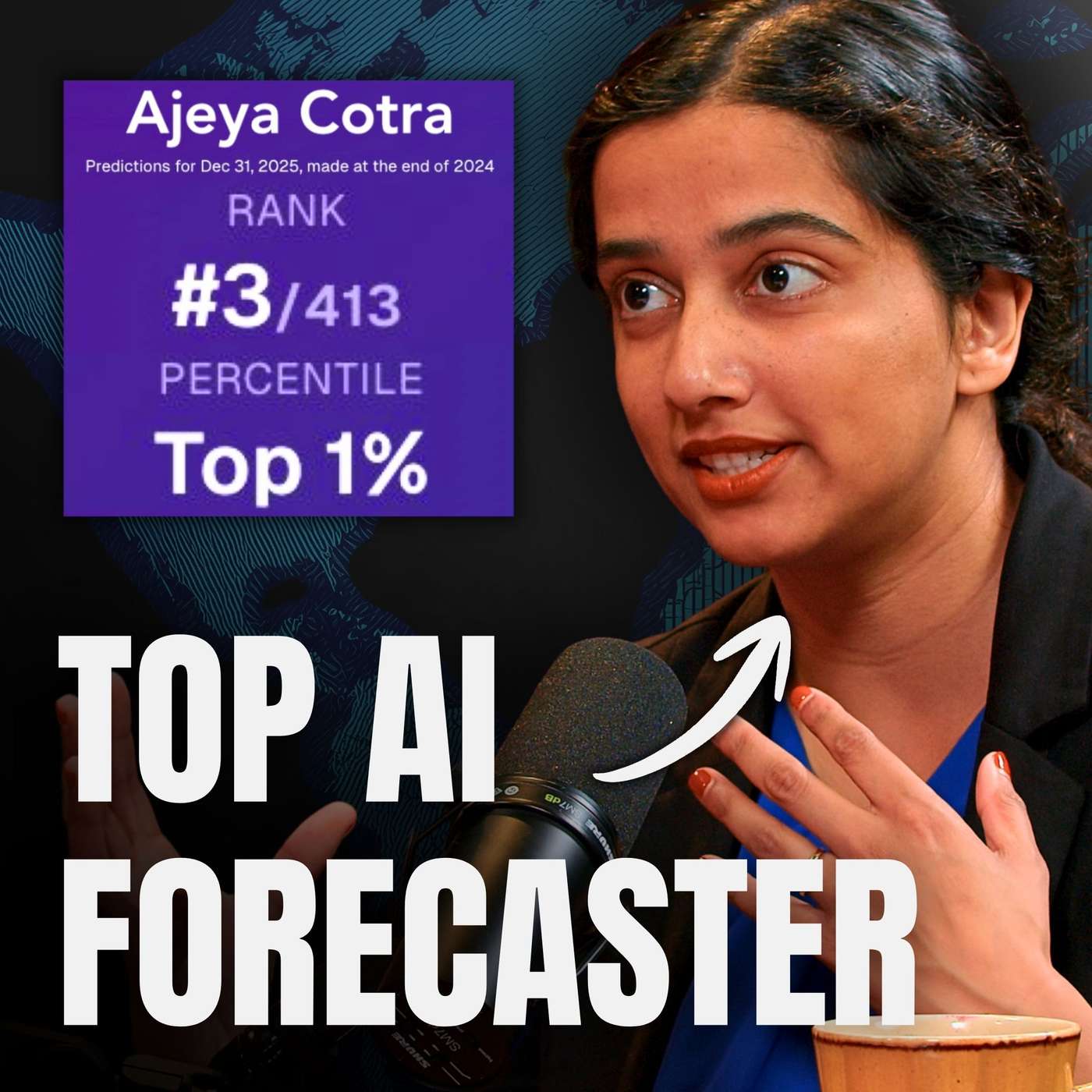
Ajeya Cotra reframes the concept of an AI pause. Instead of a binary 'stop' (0% of labor on R&D), she suggests thinking of it as a spectrum. The goal should be to redirect the vast majority of AI labor from accelerating capabilities to solving safety, biodefense, and other critical societal challenges.
The proposal focuses on pausing new frontier model training, not eliminating current AI. It advocates for government-controlled, highly-secured R&D facilities and strict compute monitoring, with the goal of reaching superintelligence by 2040 instead of 2028.