Get your free personalized podcast brief
We scan new podcasts and send you the top 5 insights daily.
Ajeya Cotra reframes the concept of an AI pause. Instead of a binary 'stop' (0% of labor on R&D), she suggests thinking of it as a spectrum. The goal should be to redirect the vast majority of AI labor from accelerating capabilities to solving safety, biodefense, and other critical societal challenges.

Related Insights
Ajeya Cotra suggests a radical shift for philanthropies like Open Philanthropy. Their best strategic play during the critical AI 'crunch time' may be to deploy billions of dollars not on human salaries, but on buying massive amounts of compute to direct AI labor towards solving safety and defense challenges.
If society gets an early warning of an intelligence explosion, the primary strategy should be to redirect the nascent superintelligent AI 'labor' away from accelerating AI capabilities. Instead, this powerful new resource should be immediately tasked with solving the safety, alignment, and defense problems that it creates, such as patching vulnerabilities or designing biodefenses.
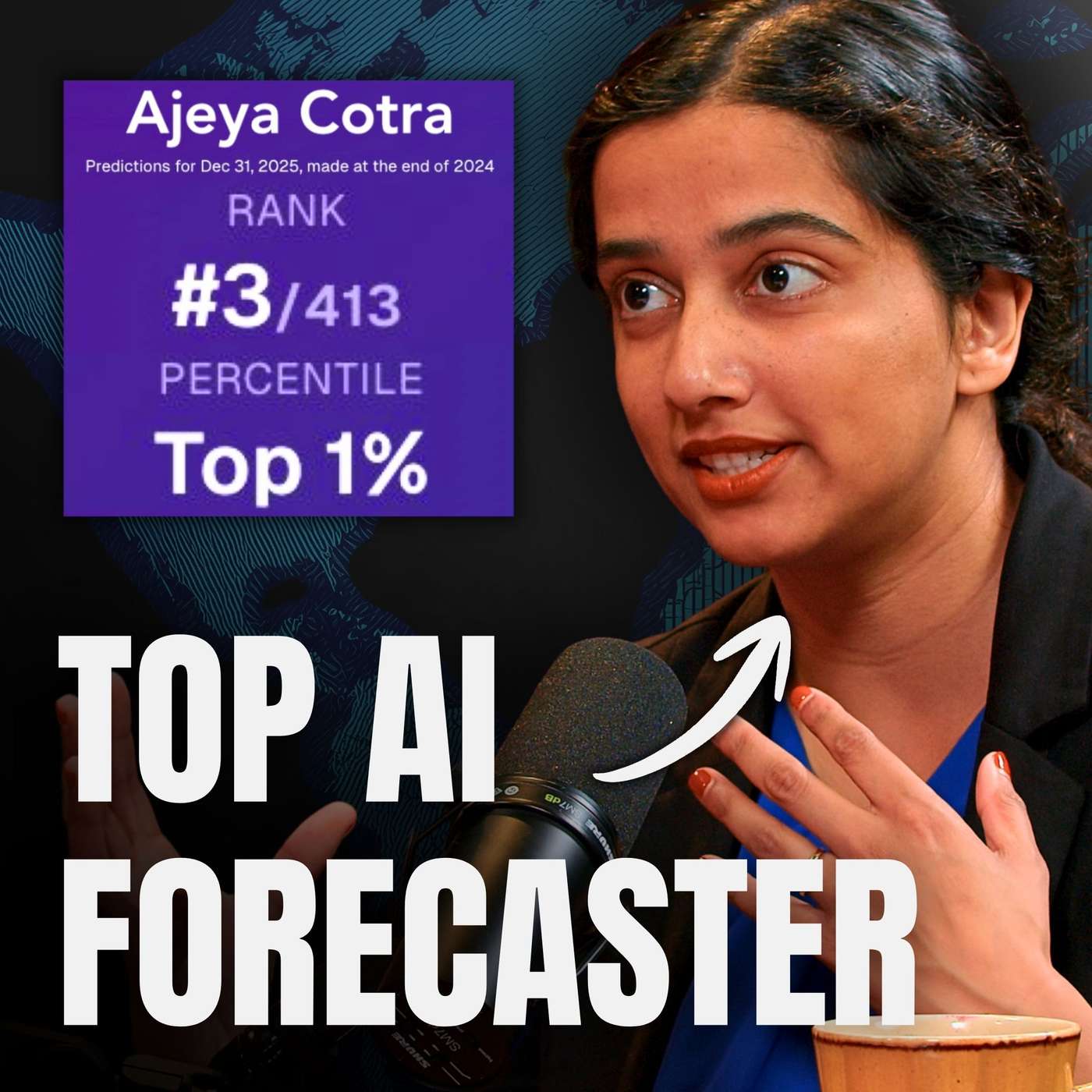
Framing an AI development pause as a binary on/off switch is unproductive. A better model is to see it as a redirection of AI labor along a spectrum. Instead of 100% of AI effort going to capability gains, a 'pause' means shifting that effort towards defensive activities like alignment, biodefense, and policy coordination, while potentially still making some capability progress.
Tech leaders state they would support an AI development pause if competitors, especially China, also agreed. This is a strategic PR move, as they know a global consensus is unachievable. It allows them to appear responsible about AI safety without any actual risk of having to slow down progress.

Top AI lab leaders, including Demis Hassabis (Google DeepMind) and Dario Amodei (Anthropic), have publicly stated a desire to slow down AI development. They advocate for a collaborative, CERN-like model for AGI research but admit that intense, uncoordinated global competition currently makes such a pause impossible.

Instead of only slowing down risky AI, a key strategy is to accelerate beneficial technologies like decision-making tools. This 'differential technology development' aims to equip humanity with better cognitive tools before the most dangerous AI capabilities emerge, improving our odds of a safe transition.

Leaders at top AI labs publicly state that the pace of AI development is reckless. However, they feel unable to slow down due to a classic game theory dilemma: if one lab pauses for safety, others will race ahead, leaving the cautious player behind.

AI accelerationists and safety advocates often appear to have opposing goals, but may actually desire a similar 10-20 year transition period. The conflict arises because accelerationists believe the default timeline is 50-100 years and want to speed it up, while safety advocates believe the default is an explosive 1-5 years and want to slow it down.
The discussion highlights the impracticality of a global AI development pause, which even its proponents admit is unfeasible. The conversation is shifting away from this "soundbite policy" towards more realistic strategies for how society and governments can adapt to the inevitable, large-scale disruption from AI.

The race for AI supremacy is governed by game theory. Any technology promising an advantage will be developed. If one nation slows down for safety, a rival will speed up to gain strategic dominance. Therefore, focusing on guardrails without sacrificing speed is the only viable path.