Get your free personalized podcast brief
We scan new podcasts and send you the top 5 insights daily.
Framing AI governance as a short, time-limited 'pause' is a mistake. A better approach is a moratorium that ends not after a set time, but only when society's investment in safety and governance is 'commensurate' with the monumental risk of creating superintelligence, a standard we are currently failing to meet.

Related Insights
The path to surviving superintelligence is political: a global pact to halt its development, mirroring Cold War nuclear strategy. Success hinges on all leaders understanding that anyone building it ensures their own personal destruction, removing any incentive to cheat.

Framing an AI development pause as a binary on/off switch is unproductive. A better model is to see it as a redirection of AI labor along a spectrum. Instead of 100% of AI effort going to capability gains, a 'pause' means shifting that effort towards defensive activities like alignment, biodefense, and policy coordination, while potentially still making some capability progress.
Unlike previous technological revolutions that unfolded over centuries, allowing for societal adaptation, the current AI transition is happening too fast. This speed prevents the development of adequate mitigations, understanding, and defenses. The common-sense intuition that "we are going too fast" is the correct and most important take.

Instead of trying to legally define and ban 'superintelligence,' a more practical approach is to prohibit specific, catastrophic outcomes like overthrowing the government. This shifts the burden of proof to AI developers, forcing them to demonstrate their systems cannot cause these predefined harms, sidestepping definitional debates.

The default assumption is that slowing innovation is inherently bad. With a technology as potent as AI, a deliberate slowdown is a feature, providing critical time to understand the systems, manage disruptions, and build governance structures before irreversible consequences occur. A true halt is not the alternative.
Despite safety concerns from their own employees, AI labs are trapped in a prisoner's dilemma. Any single company that pauses development risks bankruptcy, and any nation that does so risks falling behind competitors like China. This creates a race that can only be paced through a coordinated, international agreement.

Prosaic AI alignment research is similar enough to capabilities research that it will likely accelerate in tandem during an intelligence explosion. The real danger is that governance—which requires different skills and societal buy-in—won't keep pace, as policymakers may be unwilling to automate their own work with AI.

Drawing on Nick Bostrom's 'astronomical waste' argument, the focus should be on mitigating existential risks. While accelerating progress brings a better future sooner (adding one year of utopia), preventing a catastrophe preserves the *entire* potential future, making risk mitigation a far higher-leverage activity.
The popular idea of a government 'sign-off' before an AI model's release is based on a false premise. Risk isn't a one-time event at launch; it's continuous, existing during model development, internal use, and post-release updates. Effective oversight must reflect this ongoing reality.

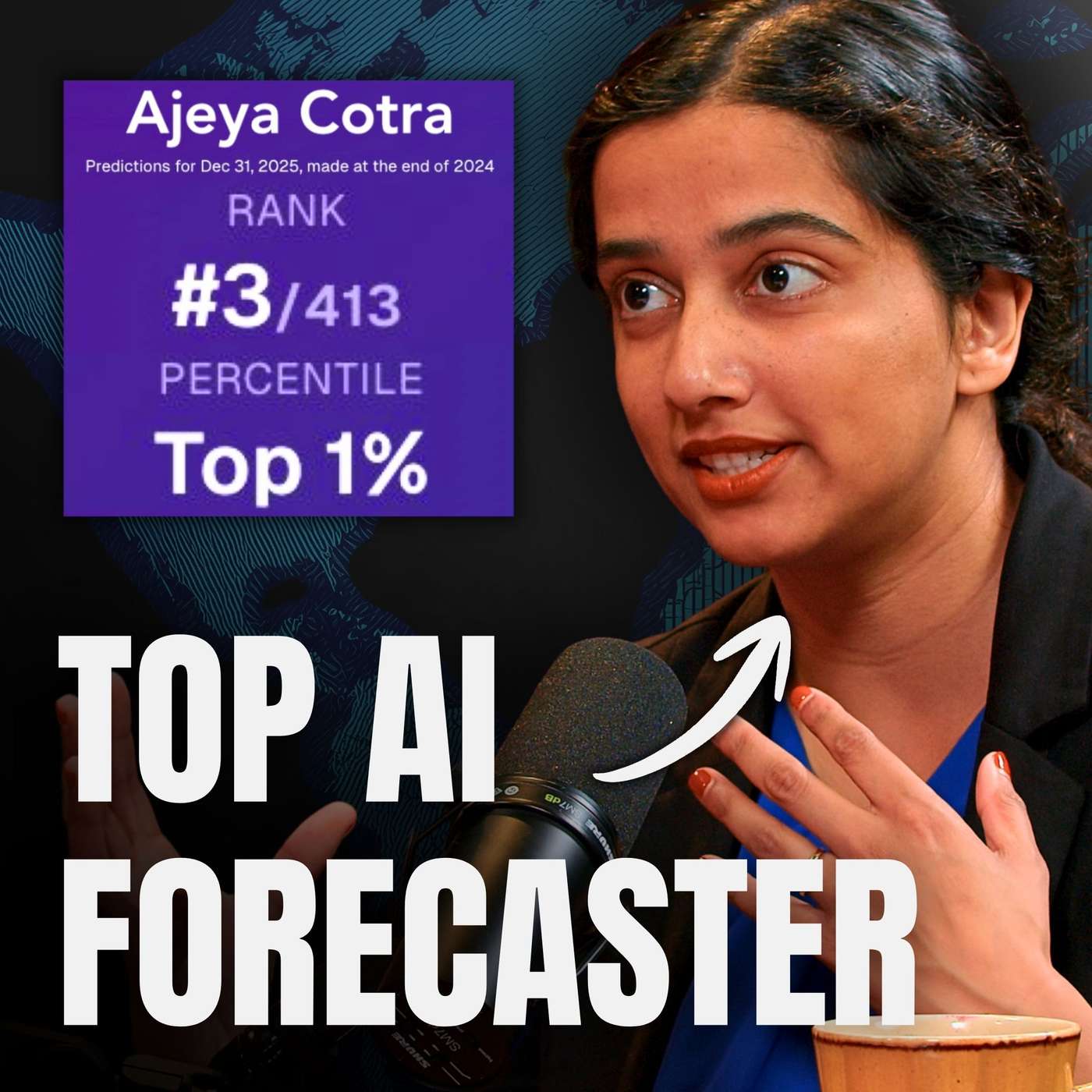
Ajeya Cotra reframes the concept of an AI pause. Instead of a binary 'stop' (0% of labor on R&D), she suggests thinking of it as a spectrum. The goal should be to redirect the vast majority of AI labor from accelerating capabilities to solving safety, biodefense, and other critical societal challenges.