Get your free personalized podcast brief
We scan new podcasts and send you the top 5 insights daily.
Seemingly reasonable terms like 'no autonomous lethal weapons' are impossible for a private company to enforce. They require moral and legal judgments about warfare—like defining a civilian or collateral damage—that are the exclusive and complex domain of a sovereign government, not a tech vendor.

Related Insights
Claims by AI companies that their tech won't be used for direct harm are unenforceable in military contracts. Militaries and nation-states do not follow commercial terms of service; the procurement process gives the government complete control over how technology is ultimately deployed.
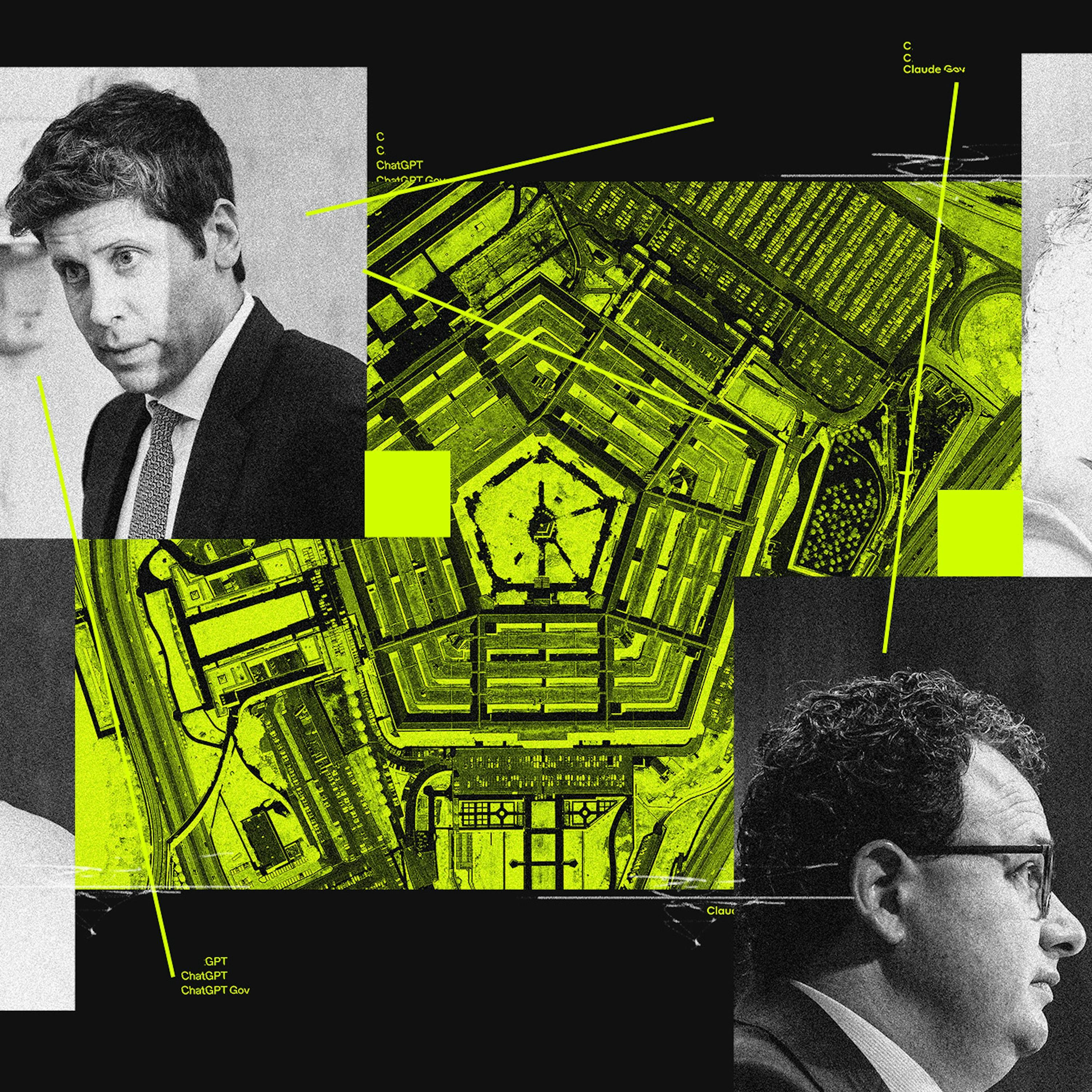
The principle that governments must hold a monopoly on overwhelming force should extend to superintelligence. AI at that level has the power to disorient political systems and financial markets, making its private control untenable. The state cannot be secondary to any private entity in this domain.

Ben Thompson argues that AI companies like Anthropic cannot operate in a vacuum of ideals. The fundamental reality is that laws and property rights are enforced by the state's monopoly on violence. As AI becomes a significant source of power, the government will inevitably assert control over it, making any private company's defiance a direct challenge to the state's authority.
The standoff between Anthropic and the Pentagon marks the moment abstract discussions about AI ethics became concrete geopolitical conflicts. The power to define the ethical boundaries of AI is now synonymous with the power to shape societal norms and military doctrine, making it a highly contested and critical area of national power.

By refusing to allow its models for lethal operations, Anthropic is challenging the U.S. government's authority. This dispute will set a precedent for whether AI companies act as neutral infrastructure or as political entities that can restrict a nation's military use of their technology.
The conflict over whether to use "lawful purposes" or specific "red lines" in government AI contracts is more than a legal disagreement. It represents the first major, public power struggle between an AI developer and a government over who ultimately determines how advanced AI is used, especially for sensitive applications like autonomous weapons and surveillance.
The core conflict is not a simple contract dispute, but a fundamental question of governance. Should unelected tech executives set moral boundaries on military technology, or should democratically elected leaders have full control over its lawful use? This highlights the challenge of integrating powerful, privately-developed AI into state functions.
The Department of War is threatening to blacklist Anthropic for prohibiting military use of its AI, a severe penalty typically reserved for foreign adversaries like Huawei. This conflict represents a proxy war over who dictates the terms of AI use: the technology creators or the government.
The DoD insists that tech providers agree to any lawful use of their technology, arguing that debates over controversial applications like autonomous weapons belong in Congress, not in a vendor's terms of service.

Ben Thompson argues that if AI is as powerful as its creators claim, they must anticipate a forceful government response. Private companies unilaterally setting restrictions on dual-use technology will be seen as an intolerable challenge to state power, leading to direct conflict.