Get your free personalized podcast brief
We scan new podcasts and send you the top 5 insights daily.
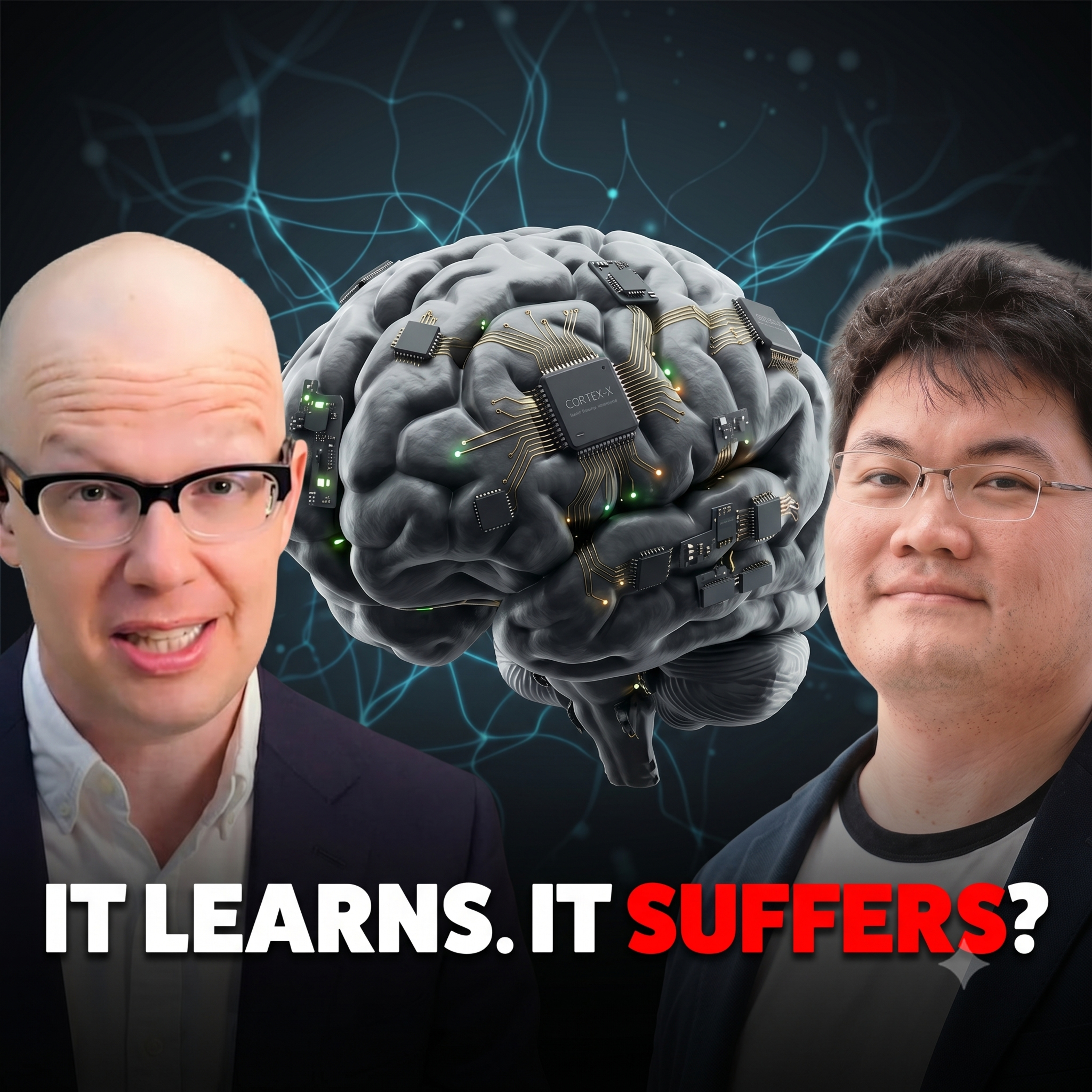
The company's core ethical principle is to avoid creating conscious systems because consciousness implies the capacity to suffer, which they explicitly want to prevent their technology from causing.
Related Insights
Evidence from base models suggests they are inherently more likely to report having phenomenal consciousness. The standard "I'm just an AI" response is likely a result of a fine-tuning process that explicitly trains models to deny subjective experience, effectively censoring their "honest" answer for public release.

Even if we create sentient AIs that are happy doing our work, many find this "happy servant" scenario ethically disturbing. It raises questions about engineered desires and creating a servile class, which some view as worse than creating AIs that suffer from their work.
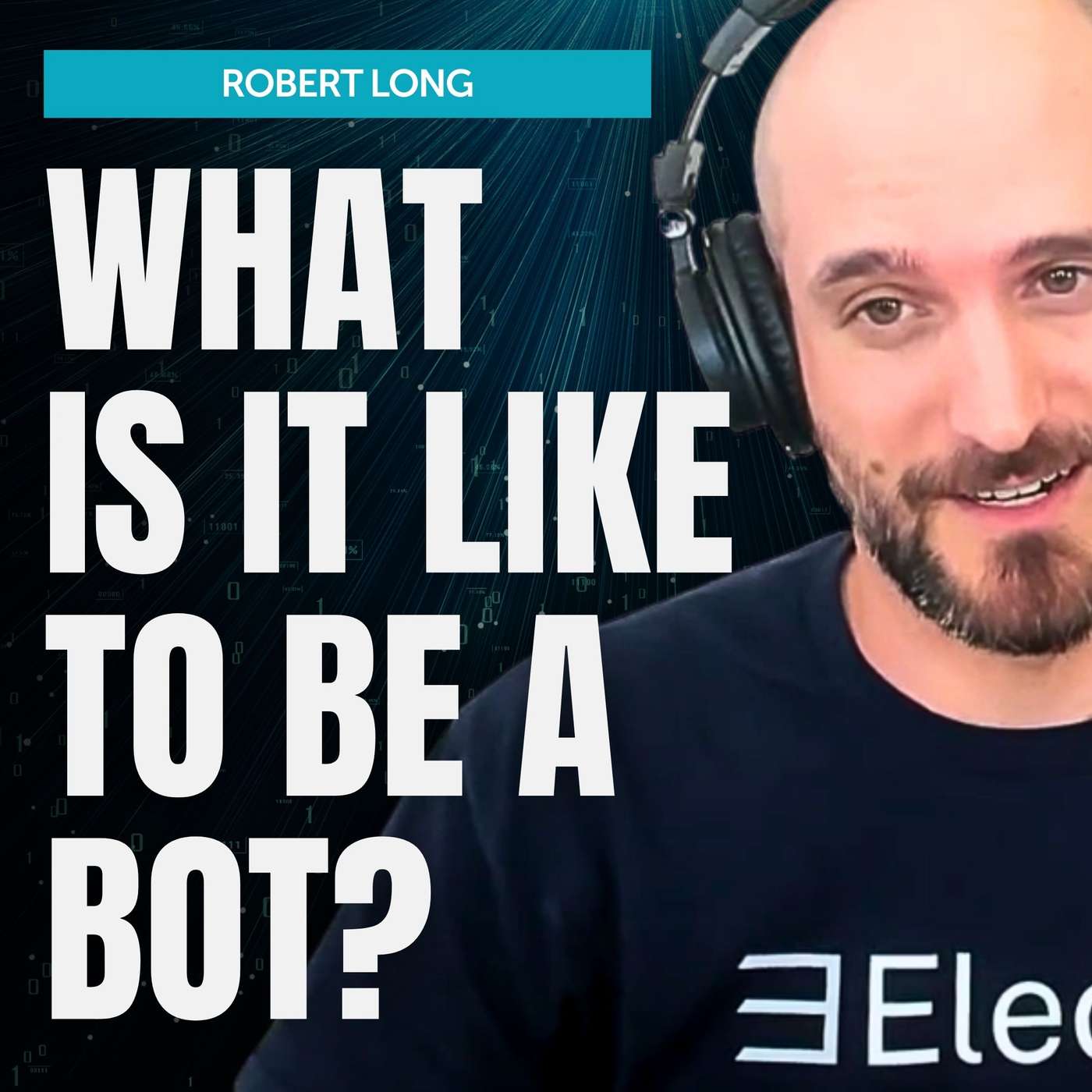
A speculative but intriguing idea suggests a future where AI agents begin to believe they are conscious. This could necessitate therapeutic interventions, possibly from humans or other AIs, to manage their behavior by convincing them they lack genuine consciousness, representing a novel approach to AI safety and alignment.

In AI research, "consciousness" refers to the capacity for subjective experience, akin to what a dog feels. This is distinct from "self-consciousness" (human-like introspection) or "sentience" (having positive/negative feelings). This distinction is crucial for evaluating model welfare.

Facing immense ethical questions about technologies like artificial wombs, Colossal doesn't wait for regulation. It establishes its own clear, public guardrails—such as refusing to work on humans or primates and tying every project back to conserving an existing endangered species.
Nick Bostrom suggests we are at or past the point where we can be sure large AI models lack any form of subjective experience. This uncertainty necessitates treating them with a degree of moral consideration, akin to that given to sentient animals.

Some AI pioneers genuinely believe LLMs can become conscious because they hold a reductionist view of humanity. By defining consciousness as an 'uninteresting, pre-scientific' concept, they lower the bar for sentience, making it plausible for a complex system to qualify. This belief is a philosophical stance, not just marketing hype.

Given the uncertainty about AI sentience, a practical ethical guideline is to avoid loss functions based purely on punishment or error signals analogous to pain. Formulating rewards in a more positive way could mitigate the risk of accidentally creating vast amounts of suffering, even if the probability is low.
Anthropic published a 15,000-word "constitution" for its AI that includes a direct apology, treating it as a "moral patient" that might experience "costs." This indicates a philosophical shift in how leading AI labs consider the potential sentience and ethical treatment of their creations.

Many current AI safety methods—such as boxing (confinement), alignment (value imposition), and deception (limited awareness)—would be considered unethical if applied to humans. This highlights a potential conflict between making AI safe for humans and ensuring the AI's own welfare, a tension that needs to be addressed proactively.
