Get your free personalized podcast brief
We scan new podcasts and send you the top 5 insights daily.
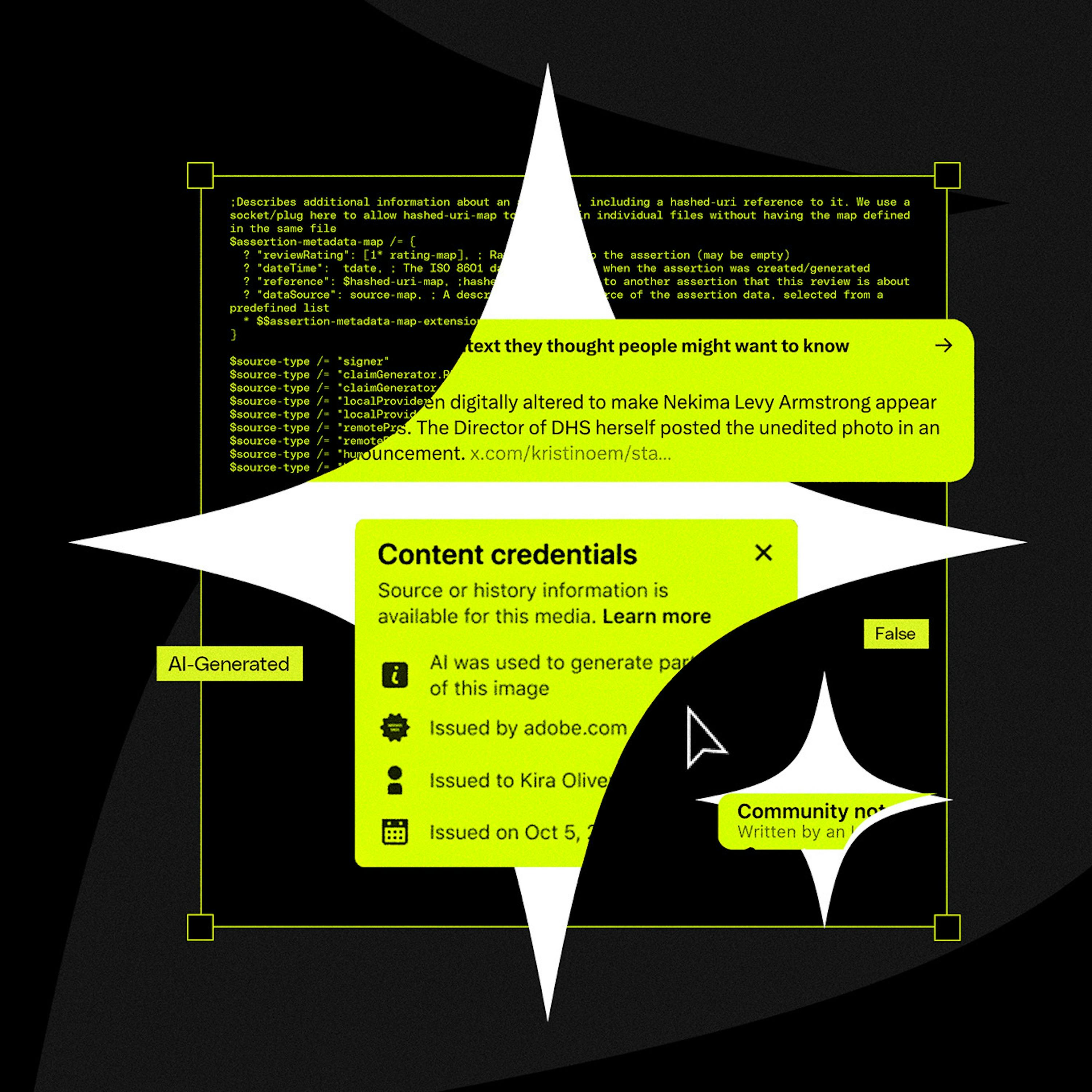
ChatGPT embeds C2PA metadata and a 'SynthID' into images. While SynthID is more persistent, basic edits like adding text, branding, or cropping in tools like Canva or Photoshop can often remove the initial layer of detectable metadata, helping to avoid immediate platform deprioritization.

Related Insights
Unlike many AI tools that produce a final, unchangeable output, Canva's AI generates a standard, multi-layered file. This lets users treat the AI's output as a first draft that they can refine using familiar drag-and-drop tools, bridging the gap between generation and creation.
The necessity of rewriting AI content to avoid watermarks isn't a bug; it's a feature. It compels marketers to adopt the best practice of using AI for ideation and organization while retaining a human-driven final edit, which should have been the standard workflow all along.
Social media platforms are de-prioritizing images directly exported from AI tools. However, simple post-processing steps can currently bypass this detection. Importing an AI image into a tool like Canva for minor edits, or even just screenshotting and resizing it, has proven effective at preventing it from being identified as AI-generated.

To maximize efficiency and control costs, treat AI ad generators as a starting point, not a final solution. Use them to create initial concepts and copy. Once an ad is "close enough," export it and perform final visual edits in a dedicated design tool like Canva, avoiding expensive AI credit usage for minor tweaks.

AI platforms like Claude are adding invisible watermarks to text and visible ones to images. This ends the simple copy-paste era, forcing marketers to use AI for first drafts, then significantly edit or process the content through other tools like Canva to obscure these watermarks and avoid platform penalties.
OpenAI provides a free image verification tool. Marketers can use this tool to their advantage by uploading their edited, ChatGPT-created images. This allows them to confirm that their modifications successfully removed detectable AI fingerprints before publishing the content.
Despite platforms getting better at identifying AI-generated images, simple workarounds are still effective. Taking an AI image, modifying it in a tool like Canva, or even just screenshotting and resizing it can strip the metadata and prevent it from being flagged as AI, a tactic the speaker found works despite online claims to the contrary.
Initiatives like Google's Synth ID aim to standardize detection of AI-generated content. However, these systems are vulnerable. Simple user actions like screenshotting can strip metadata, and blending AI-generated assets with real footage can easily confuse detection algorithms, limiting their effectiveness.
Canva's core AI principle is to keep humans in control. Unlike "take it or leave it" AI generators, every piece of content created by Canva's AI is fully editable within their design suite. This turns AI from a simple automation tool into a true creative amplifier.
Attempts to label "AI content" fail because AI is integrated into countless basic editing tools, not just generative ones. It's impossible to draw a clear line for what constitutes an "AI edit," leading to creator frustration and rendering binary labels meaningless and confusing for users.