Get your free personalized podcast brief
We scan new podcasts and send you the top 5 insights daily.
To optimize recurring tasks like cleaning, determine the number of days (N) it takes for something to reach an undesirable state. Then, schedule the task to occur every N-1 days. This formula ensures you maintain your desired standard with the least possible frequency, preventing problems before they arise.

Related Insights
The best candidates for automation are rote, repetitive tasks where your brain is disengaged. If a process demands constant thought, adaptation, and complex decision-making, it is highly variable and a poor fit for automation, as you will likely never capture all its requirements.

To maximize time saved per dollar, outsource tasks in a specific sequence. Start with meal prep, followed by laundry, and then house cleaning. This order provides the highest initial return on investment before moving to more expensive options like drivers or lawn care.

The most critical step in optimization isn't the "how," but the "what" and "why." Before implementing any efficiency hack, interrogate your underlying goal. Without this, you risk becoming highly efficient at unimportant tasks or chasing goals shaped by external pressures rather than your own values.

Instead of aiming for perfect daily consistency, which is fragile, adopt the rule of "never miss two days in a row." A single missed day is an error, but two missed days marks the beginning of a new, negative habit. This approach builds resilience and combats all-or-nothing thinking.

Traditionally a developer tool, scheduled tasks ('cron jobs') can be adopted by non-technical managers to automate repetitive oversight. For example, a cron job can scan a Slack channel at noon and automatically flag team members who missed their daily check-in.
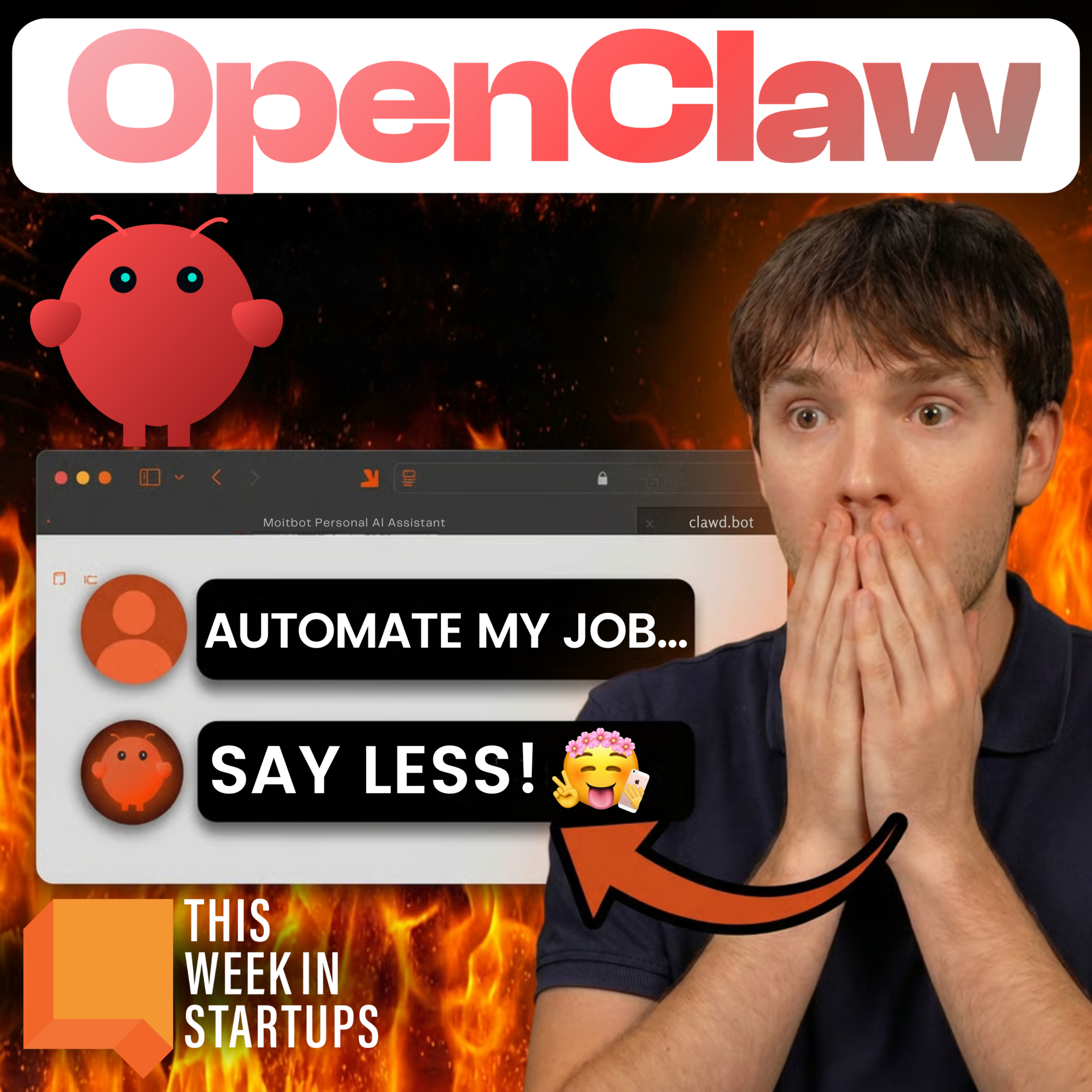
Task your AI agent with its own maintenance by creating a recurring job for it to analyze its own files, skills, and schedules. This allows the AI to proactively identify inefficiencies, suggest optimizations, and find bugs, such as a faulty cron scheduler.
To prevent constant interruptions from automated tasks, schedule recurring AI agents to align with your work week. For example, receive competitive research on Fridays before planning and support summaries on Mondays before the team meeting. This integrates agent output into your natural workflow.

When in an intense "season" focused on one goal, determine the minimum effort required to keep other important life areas (health, relationships) from deteriorating. It's far easier to maintain something than to rebuild it from scratch.

Frame mundane life-maintenance tasks like eating, cleaning, and laundry as "humaning." By systematically outsourcing this work, you eliminate distractions from your primary goals. This allows you to create an environment of extreme focus, effectively doubling your productive output.
Counteract the natural tendency to add complexity by deliberately practicing 'relentless subtraction.' Make it a weekly habit to remove one non-essential item—a feature, a recurring meeting, or an old assumption. This maintains focus and prevents organizational bloat.
