Get your free personalized podcast brief
We scan new podcasts and send you the top 5 insights daily.
To merge DeepMind and Google Brain effectively amid intense competition, Demis Hassabis implemented his "strike team" concept from video game development. This shifted the culture from bottom-up academic research to top-down, product-focused execution, enabling the rapid development of competitive models like Gemini.

Related Insights
Former Google SVP Sridhar Ramaswamy reveals that Google has a history of mobilizing intensely against threats, using all-hands-on-deck initiatives. Its recent AI surge isn't surprising to insiders who know its ability to activate a 'war' footing when challenged.

Google's robotics strategy isn't to build its own hardware, but to provide the dominant AI "brain." CEO Demis Hassabis envisions the Gemini Robotics model being used by many different robot makers, mirroring the Android OS strategy for smartphones.

For mission-driven founders, an acquisition can be a tool to accelerate their life's work. Demis Hassabis justified selling DeepMind by framing the price as irrelevant compared to gaining an extra five years to achieve his ultimate goal of building AGI, asking, "what's a few billion dollars for five years extra of my life?"

The history of innovation at companies like Google shows that 'side quests' are high-risk, high-reward. While many fail, projects once seen as tangential, like the DeepMind acquisition, can evolve to become the most critical part of the core business, arguing against a blanket 'no side quests' policy.
The Gemini project originated from a one-page memo by Jeff Dean arguing Google was fragmenting its best people, compute, and ideas across separate projects in Google Brain and DeepMind. He advocated for a unified effort to build a single powerful multimodal model, leading to the strategic merger that created Gemini.
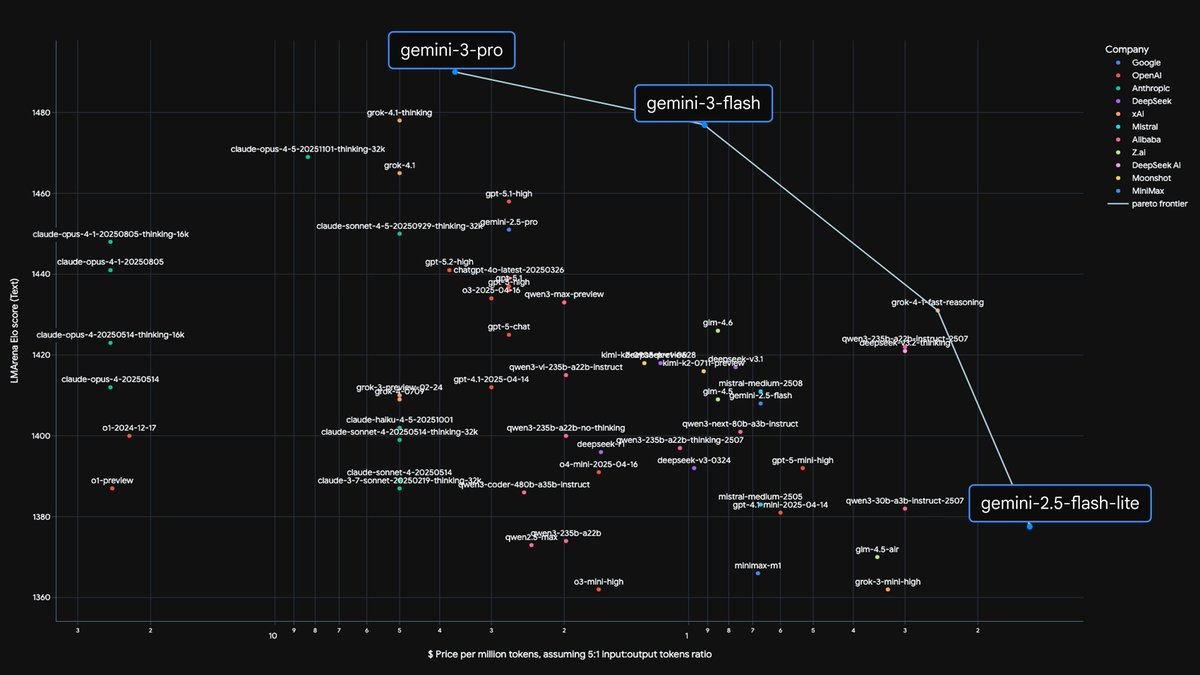
While many credit co-founder Sergey Brin's return for revitalizing Google's AI, the real catalyst was likely CEO Sundar Pichai's less glamorous corporate reorganization. Centralizing AI development by merging units like DeepMind was a classic management move that proved essential for focused execution.
Demis Hassabis chose to sell DeepMind to Google for a reported $650M, despite investor pushback and the potential for a much higher future valuation. He prioritized immediate access to Google's vast computing resources to 'buy' five years of research time, valuing mission acceleration over personal wealth.
By embedding product teams directly within the research organization, Google creates a tight feedback loop. Instead of receiving models "over the wall," product and research teams co-develop them, aligning technical capabilities with customer needs from the start.

DeepMind sets ambitious, top-down research agendas but grants interdisciplinary teams (e.g., bioethicists and neuroscientists) the autonomy to explore solutions. This model, inspired by Bell Labs, the Apollo program, and Pixar, fosters a culture of both directed research and creative freedom.
Demis Hassabis reveals his original vision was to keep AI in the lab longer to solve fundamental scientific problems, like curing cancer. The unexpected commercial success of chatbots created an intense 'race condition' that altered this 'purer' scientific path, bringing both challenges and a massive influx of resources.