Get your free personalized podcast brief
We scan new podcasts and send you the top 5 insights daily.
To prevent AI reviewer feedback from being ignored or blindly implemented, enforce a strict rule: every finding must be dispositioned in writing as 'fixed,' 'rejected,' or 'backlogged.' This creates a committed, searchable audit trail, making the review process transparent and valuable long-term.

Related Insights
To build resilient AI systems, require every proposed state change to include its specific data origin—the file ID, paragraph hash, or database record. If this source lineage cannot be automatically verified by the system's transaction manager, the AI's proposed update must be instantly rejected, ensuring data integrity.
To ensure quality and maintain a critical perspective, do not approve and send work from within the AI agent's interface. Instead, have the agent push drafts (emails, messages) to their native applications. This context switch provides a crucial final review before engaging with other humans.

Instead of a generic checklist to harden an AI-generated prototype, audit it module by module. Assign one of three verdicts: 'Keep' for sound logic, 'Fix in place' for minor gaps, or 'Rebuild' for flawed foundations. This focuses resources on actual problems, avoiding costly work on parts that are already functional.

To assess audit-readiness, pick an AI-driven decision from months ago and attempt to reconstruct every detail: data input, model version, validation status, and review trail. If you cannot gather all this information within 48 hours, your governance framework will fail a real-world audit.

After an initial analysis, use a "stress-testing" prompt that forces the LLM to verify its own findings, check for contradictions, and correct its mistakes. This verification step is crucial for building confidence in the AI's output and creating bulletproof insights.
A common objection to auto-approving pull requests is compliance. However, it is possible to maintain frameworks like SOC 2 by formalizing the AI review process within risk and code review policies, ensuring every automated action is auditable, queryable, and defensible.

Companies believe high-level AI policies and frameworks provide audit protection. However, auditors bypass these to demand granular proof for specific AI-assisted decisions, asking for data lineage, model versions, and human decision trails at a precise moment in time, which is where most governance systems fail.
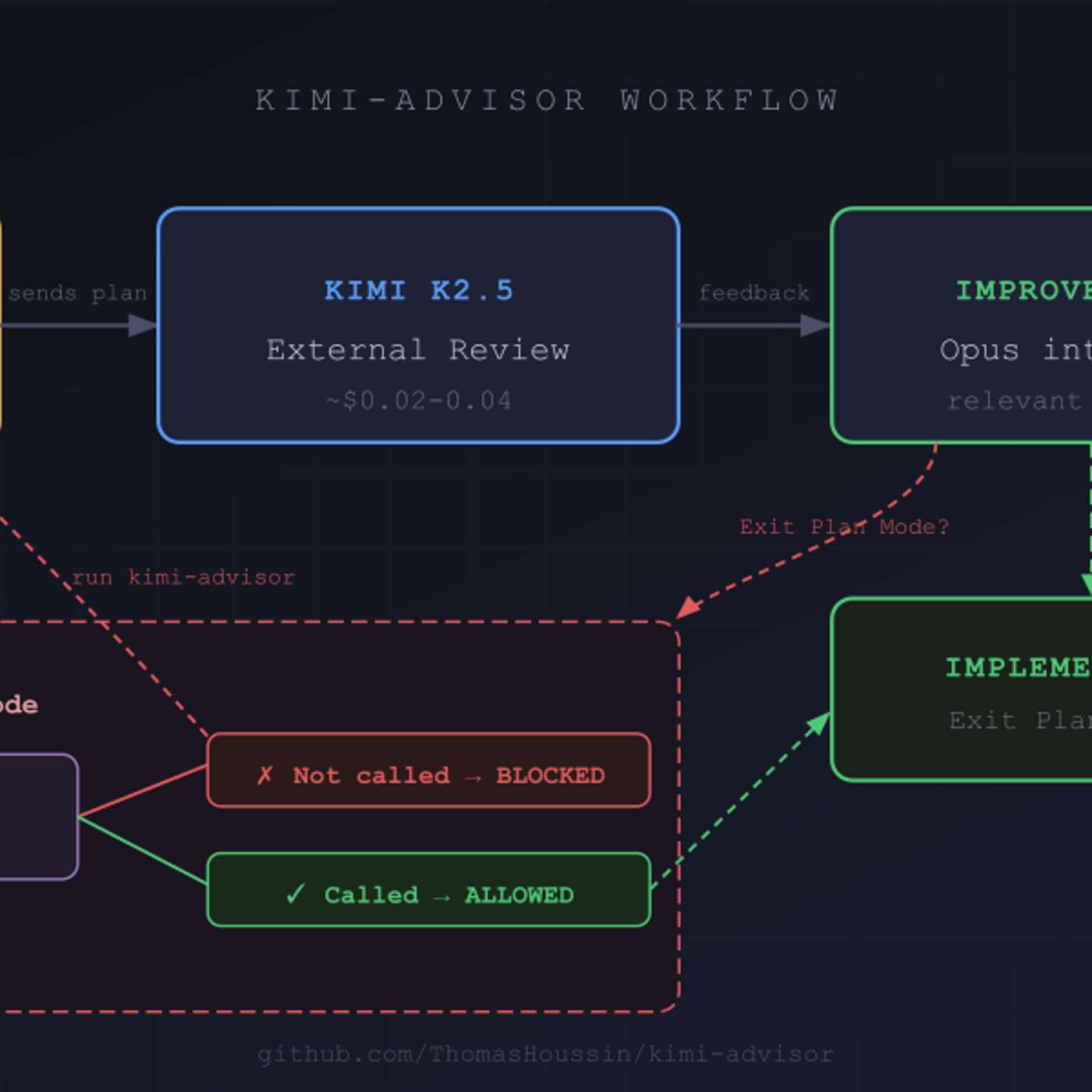
Developers often skip optional quality checks. To ensure consistent AI-powered plan reviews, implement a mandatory hook—a script that blocks the development process (e.g., exiting plan mode) until the external AI review has been verifiably completed. This engineers compliance into the workflow, guaranteeing a quality check every time.
When reviewing work, an AI-native leader's role shifts. Instead of repeatedly giving the same feedback (e.g., "put the CTA above the fold"), they should fix the underlying AI skill, prompt, or design system that caused the error, thus automating the correction for all future work.

Treat accountability as an engineering problem. Implement a system that logs every significant AI action, decision path, and triggering input. This creates an auditable, attributable record, ensuring that in the event of an incident, the 'why' can be traced without ambiguity, much like a flight recorder after a crash.
