Get your free personalized podcast brief
We scan new podcasts and send you the top 5 insights daily.
A common objection to auto-approving pull requests is compliance. However, it is possible to maintain frameworks like SOC 2 by formalizing the AI review process within risk and code review policies, ensuring every automated action is auditable, queryable, and defensible.
Related Insights
Most developers admit to giving pull requests only a cursory glance rather than pulling down the code, testing it, and reviewing every line. AI agents are perfectly suited for this meticulous, time-consuming task, promising a new level of rigor in the code review process.

To scale code review with 8x output, teams should codify and check-in their standards—specs, design systems, style guides—into the repository. AI reviewers can then automatically validate new code against this explicit "statement of what good looks like," reducing the burden on human reviewers.

To meet compliance rules requiring a human approver, an AI bot can perform the full review and signal its approval with a gray checkmark. This transforms the human's role from a time-consuming reviewer into a final approver who can confidently merge the code in two clicks.
Contrary to the belief that AI introduces risk, Intercom's AI code review agent led to a lower revert rate for AI-approved code. This demonstrates that AI can enhance safety and quality, not just speed, by systematically enforcing standards on every pull request.
Modern VRM platforms are moving beyond simple automation. The key differentiator is AI that can ingest and analyze complex documents like SOC2 reports, extracting key findings and flagging risks. This shifts security teams from tedious manual review to strategic analysis, dramatically speeding up vendor onboarding.

Companies believe high-level AI policies and frameworks provide audit protection. However, auditors bypass these to demand granular proof for specific AI-assisted decisions, asking for data lineage, model versions, and human decision trails at a precise moment in time, which is where most governance systems fail.

Configure an AI stop hook to not only run quality checks but also to automatically commit the changes if all checks pass. This creates a fully automated loop: the AI generates code, the hook validates it, and if it's clean, it's committed to the repository with a generated message.
Solo developers can integrate AI tools like BugBot with GitHub to automatically review pull requests. These specialized AIs are trained to find security vulnerabilities and bugs that a solo builder might miss, providing a crucial safety net and peace of mind.

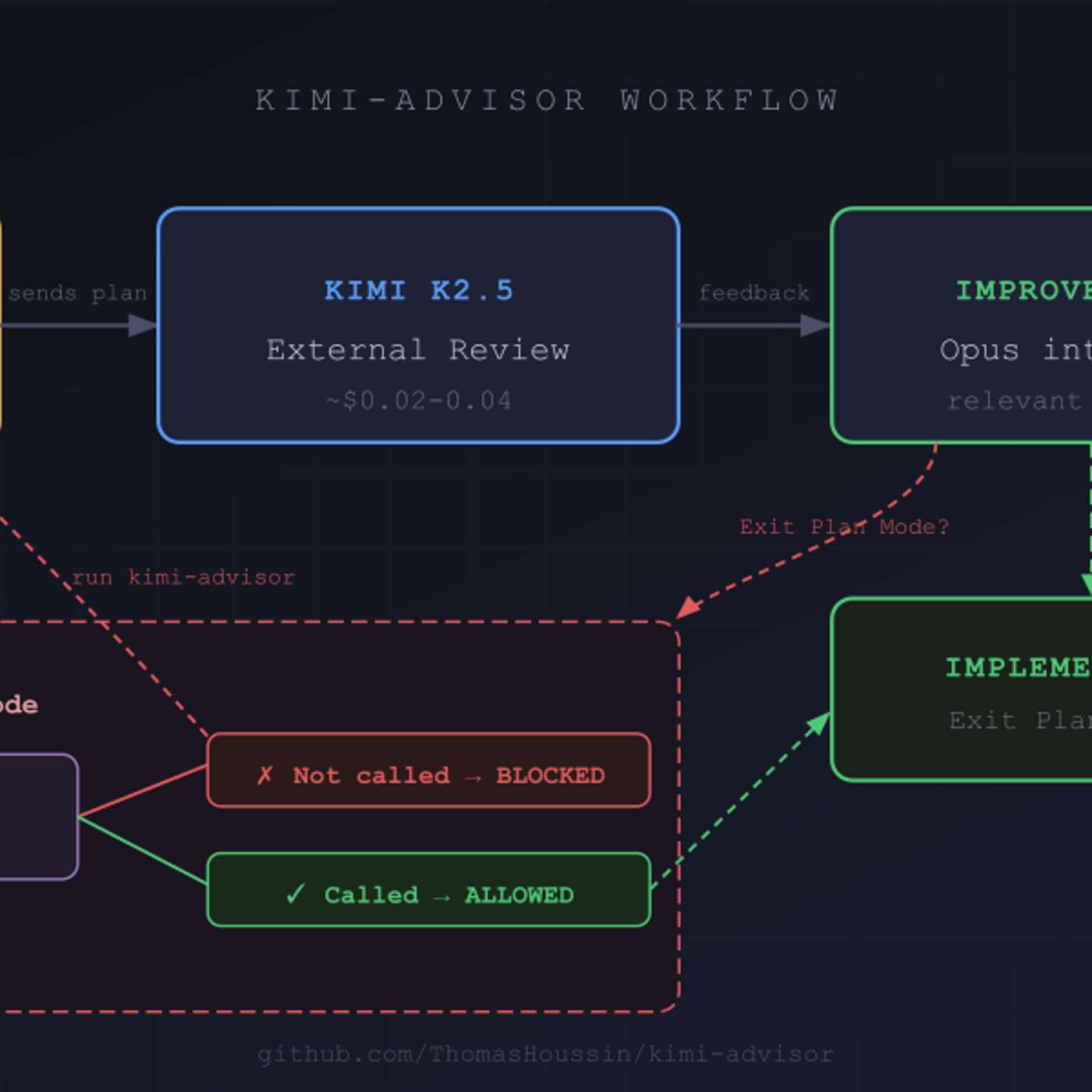
Developers often skip optional quality checks. To ensure consistent AI-powered plan reviews, implement a mandatory hook—a script that blocks the development process (e.g., exiting plan mode) until the external AI review has been verifiably completed. This engineers compliance into the workflow, guaranteeing a quality check every time.
For enterprises, scaling AI content without built-in governance is reckless. Rather than manual policing, guardrails like brand rules, compliance checks, and audit trails must be integrated from the start. The principle is "AI drafts, people approve," ensuring speed without sacrificing safety.
