Get your free personalized podcast brief
We scan new podcasts and send you the top 5 insights daily.
For bench biologists, complex AI models gain trust not just from abstract metrics but from visually compelling results. A key "wow" moment for X-Cell was when heatmaps of its gene expression predictions were placed next to the ground truth data, showing the AI's output was undeniably closer to reality than a linear baseline.
Related Insights
In developing the X-Cell model, Xaira found a clear hierarchy of impact. The quality, scale, and causal nature of the training data provided the most significant performance boost, followed by the choice of AI architecture (e.g., diffusion vs. autoregressive), and lastly, the integration of prior biological knowledge.
Powerful AI models for biology exist, but the industry lacks a breakthrough user interface—a "ChatGPT for science"—that makes them accessible, trustworthy, and integrated into wet lab scientists' workflows. This adoption and translation problem is the biggest hurdle, not the raw capability of the AI models themselves.

Contrary to the belief that AI will replace experimentation, A-Alpha Bio's CEO argues that as models improve, the industry becomes "hungrier" for high-quality wet lab validation data. Better computation creates a greater need for ground-truth data to train, validate, and refine the models.

To convince skeptical medicinal chemists of AI's value, you must deliver a result that surpasses their intuition. It's not about the user interface, but about the model generating a genuinely surprising and effective molecule. This "aha" moment, validated by lab results, is the ultimate way to build trust.
To convince skeptical stakeholders of AI's value, first validate the model against past surveys to show its responses align with human results most of the time. This baseline of trust makes the small percentage of divergent, interesting signals more credible and actionable, rather than being dismissed as model error.

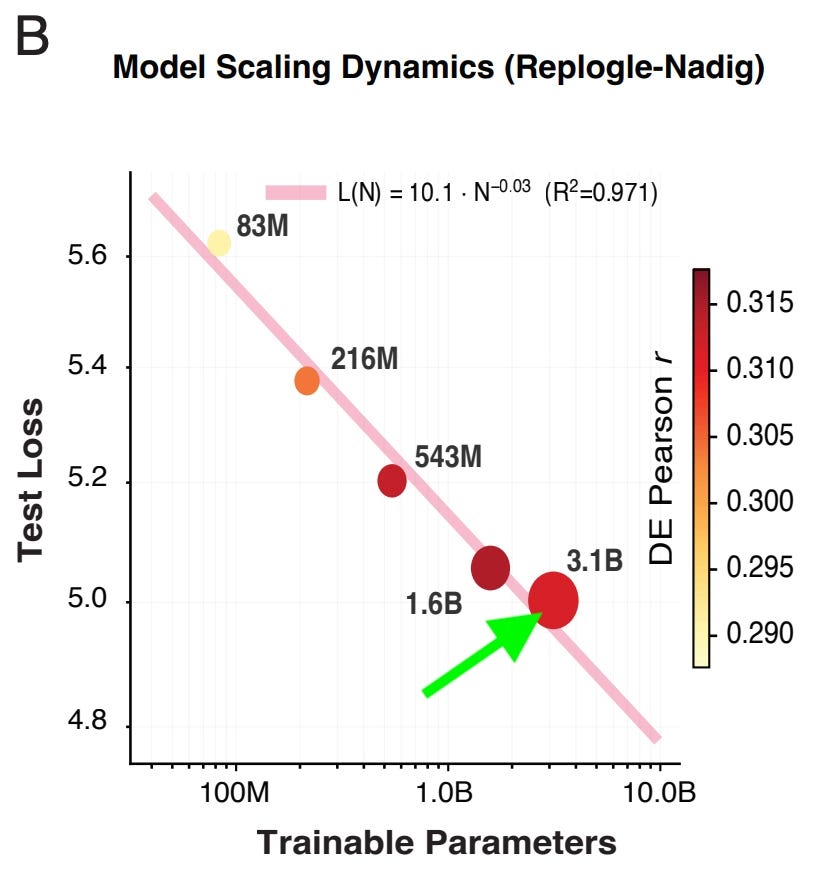
Unlike text-based LLMs where simply increasing parameter count works, Verge Labs found the biggest AI performance gains in biology come from scaling data modalities—adding new types of data like proteomics and imaging. Fusing different data sources is more critical than just making the model bigger.

For an AI optimizing physical infrastructure like buildings, customer adoption hinges on explainability. Product leader John Boothroyd's team had to create visual representations showing how the AI made decisions to gain trust. This proves transparency is essential for automated systems with real-world consequences.

The next frontier in preclinical research involves feeding multi-omics and spatial data from complex 3D cell models into AI algorithms. This synergy will enable a crucial shift from merely observing biological phenomena to accurately predicting therapeutic outcomes and patient responses.

For AI systems to be adopted in scientific labs, they must be interpretable. Researchers need to understand the 'why' behind an AI's experimental plan to validate and trust the process, making interpretability a more critical feature than raw predictive power.

Achieving explainability in AI for drug development isn't about post-hoc analysis. It requires building models from the ground up using inherently interpretable data like RNA sequencing and mutational profiles. When the inputs are explainable, the model's outputs become explainable by design.