Get your free personalized podcast brief
We scan new podcasts and send you the top 5 insights daily.
In an era of constant surveillance, the public's standard of proof has shifted. Neuroscientist Andrew Huberman argues that incidents captured on video have conditioned society to demand visual evidence. Mere accusations or reports are now treated as chatter until a definitive video emerges, raising the bar for what is considered truth.

Related Insights
When officials deny events clearly captured on video, it breaks public trust more severely than standard political spin. This direct contradiction of visible reality unlocks an intense level of citizen anger that feels like a personal, deliberate gaslighting attempt.

For over a century, video has been society's "judge and jury." The rapid rise of convincing AI-generated deepfakes will completely erode this trust within a decade, necessitating a new system for truth verification, likely the blockchain.

Adam Mosseri’s public statement that we can no longer assume photos or videos are real marks a pivotal shift. He suggests moving from a default of trust to a default of skepticism, effectively admitting platforms have lost the war on deepfakes and placing the burden of verification on users.
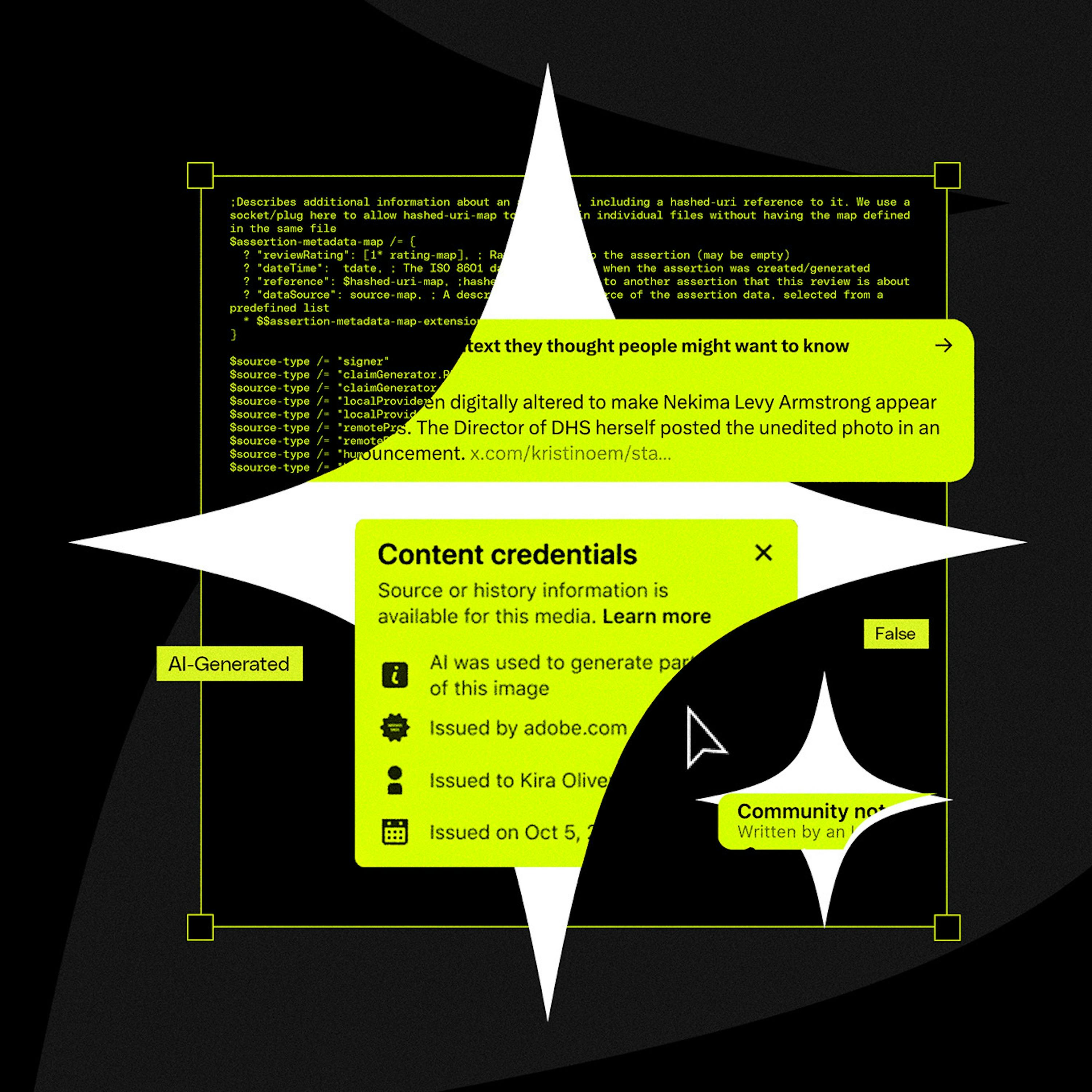
The proliferation of deepfakes is a positive development because it democratizes media manipulation, which was previously exclusive to well-resourced entities. This widespread availability of synthetic media will force the public to become more skeptical of video evidence and less likely to form opinions based on short, decontextualized clips.

Despite everyone seeing the same video footage of a controversial event, society fragments into rival interpretations based on hyper-partisan commentary. This demonstrates that access to the same raw data is no longer sufficient to create a consensus understanding of facts.
The most effective viral videos often start mid-event, capturing the peak of a confrontation but omitting the crucial lead-up. People only start recording when things get interesting, thereby creating a decontextualized clip that is perfect for generating outrage but poor for establishing truth.

The modern media ecosystem is defined by the decomposition of truth. From AI-generated fake images to conspiracy theories blending real and fake documents on X, people are becoming accustomed to an environment where discerning absolute reality is difficult and are willing to live with that ambiguity.

The proliferation of cell phone cameras has fundamentally changed activism. By capturing events from multiple angles, citizens create an irrefutable public record that counters official disinformation and makes the phrase "We see you" a powerful tool for accountability.

The rapid advancement of AI-generated video will soon make it impossible to distinguish real footage from deepfakes. This will cause a societal shift, eroding the concept of 'video proof' which has been a cornerstone of trust for the past century.
The online frenzy over Netanyahu's supposed death was fueled by trivial details like a crease in his palm looking like a sixth finger. In an age where AI makes the public doubt reality, even easily debunked visual artifacts can spiral into massive conspiracy theories.