Get your free personalized podcast brief
We scan new podcasts and send you the top 5 insights daily.
Historians argue the most critical phase of the American Revolution was the decade before 1776. Colonists used economic boycotts and built alternative political and judicial institutions, effectively achieving self-governance before the war, which was simply the British attempt to reclaim control.

Related Insights
According to Ken Burns, democracy was not the revolution's intention but its consequence. Initially an "elitist program," the leaders realized they needed to enlist the masses to win. This forced them to extend the language of liberty to everyone, which, once spoken, could not be taken back and ultimately applied to all.

Widespread suffering alone doesn't trigger a revolution. Historically, successful uprisings require a politically savvy, well-organized group with a clear agenda and influential leadership. Disparate and unorganized populations, no matter how desperate, tend to see their energy dissipate without causing systemic change.

When the Spanish crown passed laws to protect indigenous people, colonial settlers led by Gonzalo Pizarro rebelled. They protested loyalty to the king but demanded the freedom to exploit the land they conquered, mirroring the American colonists' rebellion against a distant government infringing on their local 'rights.'

Ken Burns argues that beyond taxes and representation, the American Revolution was propelled by escalating media rhetoric. The more colonial newspapers labeled the crown tyrannical, the more tyrannical it acted, creating an inflammatory feedback loop that pushed both sides toward conflict.
While public demonstrations build community and raise awareness, they are less feared by power structures than economic withdrawal. In a system driven by consumption and market growth, the most disruptive act an individual can take is not adding their voice to a crowd, but subtracting their money from the economy.

The Montgomery bus strike wasn't a single cinematic moment but an 11-month coordinated carpool campaign. This historical parallel suggests modern boycotts require sustained, collective action and logistical planning to achieve economic impact, rather than relying on isolated acts of defiance.

Political scientist Erika Chenoweth's research, despite her initial skepticism, shows nonviolent campaigns for radical change succeeded about 50% of the time, compared to only 25% for violent counterparts over the last century. This counters the common belief that power flows from the barrel of a gun.
Citing Gandhi and the Civil Rights Movement, the most successful long-term protest strategies rely on peaceful non-resistance. Active resistance, even when justified, often escalates violence and cedes the moral high ground, making it a less effective tool for systemic change compared to disciplined, peaceful protest.

The framers, haunted by the violence of the Revolutionary War, intentionally designed Article V as a mechanism for peaceful change. They saw it as a crucial innovation to prevent future bloody insurrections when the government acts unconstitutionally, offering a path for reform instead of rebellion.

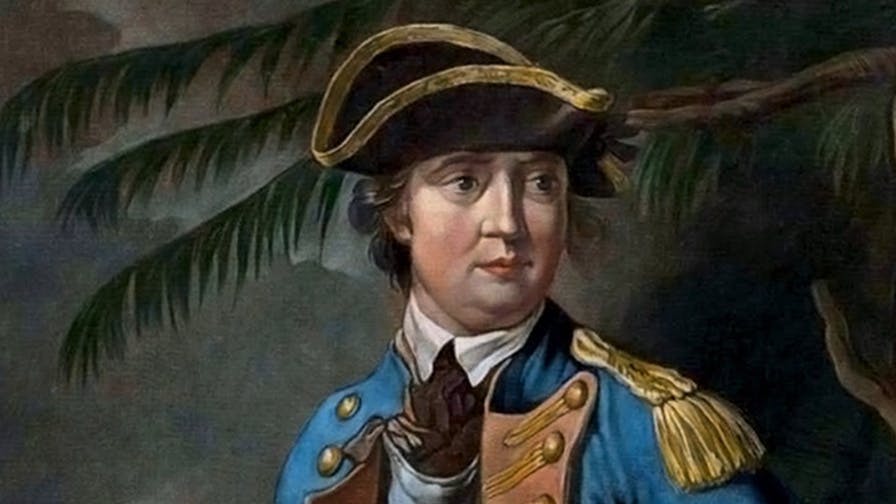
The American Revolution was itself an act of treason against Britain. Benedict Arnold's defection created a singular, despised traitor, allowing the American people to unite against an internal enemy and solidifying their identity beyond simply being rebels against the crown.