Get your free personalized podcast brief
We scan new podcasts and send you the top 5 insights daily.
Instead of debating hypothetical ideas, tools like Vercel's v0 let anyone build and present functional prototypes. This shifts the conversation from prioritizing abstract concepts to evaluating tangible results, allowing teams to defend the merits of an actual working idea.

Related Insights
Guillermo Rauch uses Vercel's V0 tool to build high-fidelity UI components as direct pitches to his team. This moves beyond text-based suggestions, providing a concrete, interactive prototype that communicates vision with perfect clarity, accelerating product development and alignment.

AI tools democratize prototyping, but their true power is in rapidly exploring multiple ideas (divergence) and then testing and refining them (convergence). This dramatically accelerates the creative and validation process before significant engineering resources are committed.
Traditional "writing-first" cultures create communication gaps and translation errors. With modern AI tools, product managers can now build working prototypes in hours. This "show, don't tell" approach gets ideas validated faster, secures project leadership, and overcomes language and team barriers.
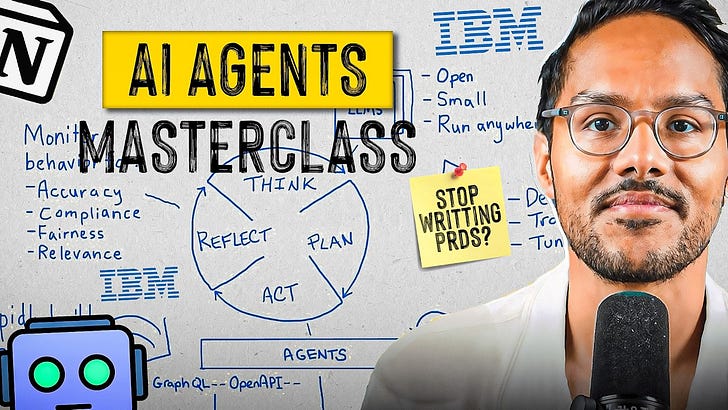
Capable AI coding assistants allow PMs to build and test functional prototypes or "skills" in a single day. This changes the product development philosophy, prioritizing quick validation with users over creating detailed UI mockups and specifications upfront.

AI tools like Vibe Coding remove the traditional dependency on design and engineering for prototyping. Product managers without coding expertise can now build and test functional prototypes with customers in hours, drastically accelerating problem-solution fit validation before committing development resources.

Years of focusing on MVPs has weakened the ability of product teams to imagine magical, delightful features. AI prototyping tools make ambitious ideas easier to build, helping teams reignite their creative muscles and aim for awesome products, not just viable ones.

When an engineering team is hesitant about a new feature due to unfamiliarity (e.g., mobile development), a product leader can use AI tools to build a functional prototype. This proves feasibility and shifts the conversation from a deadlock to a collaborative discussion about productionizing the code.

The V0 team dogfoods their own AI prototyping tool to define and communicate new features internally. Instead of writing specification documents, PMs build and share working prototypes. This provides immediate clarity and sparks more effective, tangible feedback from the entire team.

Don't underestimate the power of a tangible, even if imperfect, prototype. A designer used AI tools to build a working demo of a complex concept (MCP server). This "vibe-coded" project made the abstract value concrete for leadership, directly leading to the technology being prioritized on the company's official roadmap.
In an AI-driven workflow, the primary value of a rapid prototype is not for design exploration but as a communication tool. It makes the product vision tangible for stakeholders in reviews, increasing credibility and buy-in far more effectively than a slide deck.