Get your free personalized podcast brief
We scan new podcasts and send you the top 5 insights daily.
Don't underestimate the power of a tangible, even if imperfect, prototype. A designer used AI tools to build a working demo of a complex concept (MCP server). This "vibe-coded" project made the abstract value concrete for leadership, directly leading to the technology being prioritized on the company's official roadmap.
Related Insights
AI-powered "vibe coding" is reversing the design workflow. Instead of starting in Figma, designers now build functional prototypes directly with code-generating tools. Figma has shifted from being the first step (exploration) to the last step (fine-tuning the final 20% of pixel-perfect details).

Jay Parikh, Microsoft's EVP of Core AI, champions a culture of 'more demos, less memos.' He argues that AI tools enable teams to produce 15 product iterations in 15 minutes, making showing a working demo far more effective and creative than writing a planning memo.

Traditional "writing-first" cultures create communication gaps and translation errors. With modern AI tools, product managers can now build working prototypes in hours. This "show, don't tell" approach gets ideas validated faster, secures project leadership, and overcomes language and team barriers.
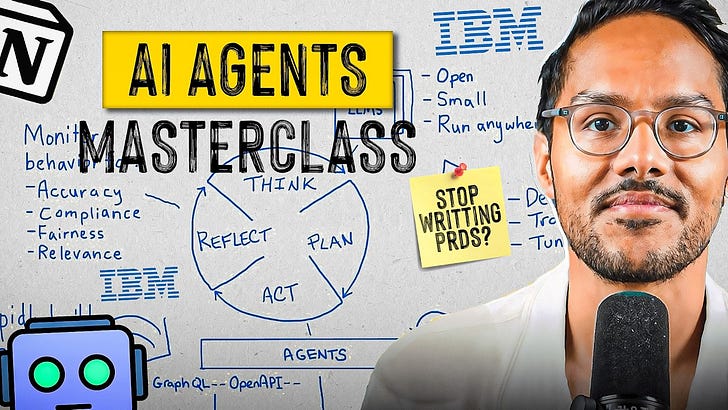
Advanced AI models are blurring the lines between coding, design, and marketing, enabling a new "vibe building" workflow. This paradigm shift allows a single person to manage the entire product stack holistically, moving beyond simple "vibe coding" to full-fledged product creation.

After a sales pitch to a major influencer failed, a 10X engineer built a working version of the proposed app in just four hours. Putting the functional product directly in the influencer's hands immediately vaulted 10X back to the top of their list, demonstrating that rapid AI-enabled prototyping is a powerful sales tool.

At OpenAI, the development cycle is accelerated by a practice called "vibe coding." Designers and PMs build functional prototypes directly with AI tools like Codex. This visual, interactive method is often faster and more effective for communicating ideas than writing traditional product specifications.

Product Requirement Documents (PRDs) are often written and then ignored. AI-generated prototypes change this dynamic by serving as powerful internal communication tools. Putting an interactive model in front of engineering and design teams sparks better, more tangible conversations and ideas than a flat document ever could.

For complex features, a 17-page requirements document is inefficient for alignment. An interactive AI-generated prototype allows stakeholders to see and use the product, making it a more effective source of truth for gathering feedback and defining requirements than static documentation.
When an engineering team is hesitant about a new feature due to unfamiliarity (e.g., mobile development), a product leader can use AI tools to build a functional prototype. This proves feasibility and shifts the conversation from a deadlock to a collaborative discussion about productionizing the code.
The V0 team dogfoods their own AI prototyping tool to define and communicate new features internally. Instead of writing specification documents, PMs build and share working prototypes. This provides immediate clarity and sparks more effective, tangible feedback from the entire team.
