Get your free personalized podcast brief
We scan new podcasts and send you the top 5 insights daily.
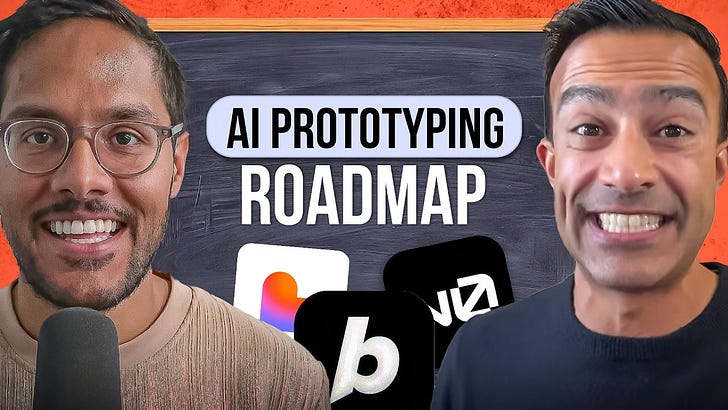
The "vibe coding" trend, where non-technical staff use AI to rapidly build prototypes, is a legitimate accelerator for innovation. However, it's not yet a substitute for professional engineers when building scalable, mission-critical systems that are ready for deployment.
Related Insights
The trend of 'vibe coding'—casually using prompts to generate code without rigor—is creating low-quality, unmaintainable software. The AI engineering community has reached its limit with this approach and is actively searching for a new development paradigm that marries AI's speed with traditional engineering's craft and reliability.
![⚡ [AIE CODE Preview] Inside Google Labs: Building The Gemini Coding Agent — Jed Borovik, Jules thumbnail](https://assets.flightcast.com/V2Uploads/nvaja2542wefzb8rjg5f519m/01K4D8FB4MNA071BM5ZDSMH34N/square.jpg)
Exploratory AI coding, or 'vibe coding,' proved catastrophic for production environments. The most effective developers adapted by treating AI like a junior engineer, providing lightweight specifications, tests, and guardrails to ensure the output was viable and reliable.

Contrary to claims that "handoff is dead," designers at top companies use AI-generated prototypes as highly detailed specs. These interactive prototypes provide more information than static designs but are still handed off to developers for implementation, rather than being merged directly into production.

AI coding agents enable "vibe coding," where non-engineers like designers can build functional prototypes without deep technical expertise. This accelerates iteration by allowing designers to translate ideas directly into interactive surfaces for testing.

AI coding tools can rapidly build the first 70% of an application, but the final 30%—the complex, unique features that define your vision—will consume the vast majority of your development time. This is a critical reality check for anyone starting with these tools.

Don't dismiss AI-generated code for being buggy. Its purpose isn't to build a scalable product, but to rapidly test ideas and find user demand. Crashing under heavy load is a success signal that justifies hiring engineers for a proper rebuild.

'Vibe coding' describes using AI to generate code for tasks outside one's expertise. While it accelerates development and enables non-specialists, it relies on a 'vibe' that the code is correct, potentially introducing subtle bugs or bad practices that an expert would spot.

Braintrust's CEO argues that developer productivity is already 'tapped out.' Even if AI models become 5% better at writing code, it won't dramatically increase output because the true bottleneck is the human capacity to manage, test, deploy, and respond to user feedback—not the speed of code generation itself.

AI coding tools provide massive acceleration, turning projects that once took weeks or a dev shop into a weekend sprint. However, they are not a one-click solution. These tools still require significant, focused human expertise and effort to guide the process and deliver a final, functional product.
Resist the temptation to treat AI-generated prototype code as production-ready. Its purpose is discovery—validating ideas and user experiences. The code is not built to be scalable, maintainable, or robust. Let your engineering team translate the validated prototype into production-level code.