Get your free personalized podcast brief
We scan new podcasts and send you the top 5 insights daily.
Palmer Luckey, a self-described 'hardware nerd' and 'shape rotator,' believes AI code generation is most beneficial for non-software experts. It allows founders focused on hardware, mechanics, or product integration to quickly build necessary software without spending years learning to code, thereby accelerating their core innovation.

Related Insights
Modern AI coding agents allow non-technical and technical users alike to rapidly translate business problems into functional software. This shift means the primary question is no longer 'What tool can I use?' but 'Can I build a custom solution for this right now?' This dramatically shortens the cycle from idea to execution for everyone.

AI coding agents enable "vibe coding," where non-engineers like designers can build functional prototypes without deep technical expertise. This accelerates iteration by allowing designers to translate ideas directly into interactive surfaces for testing.
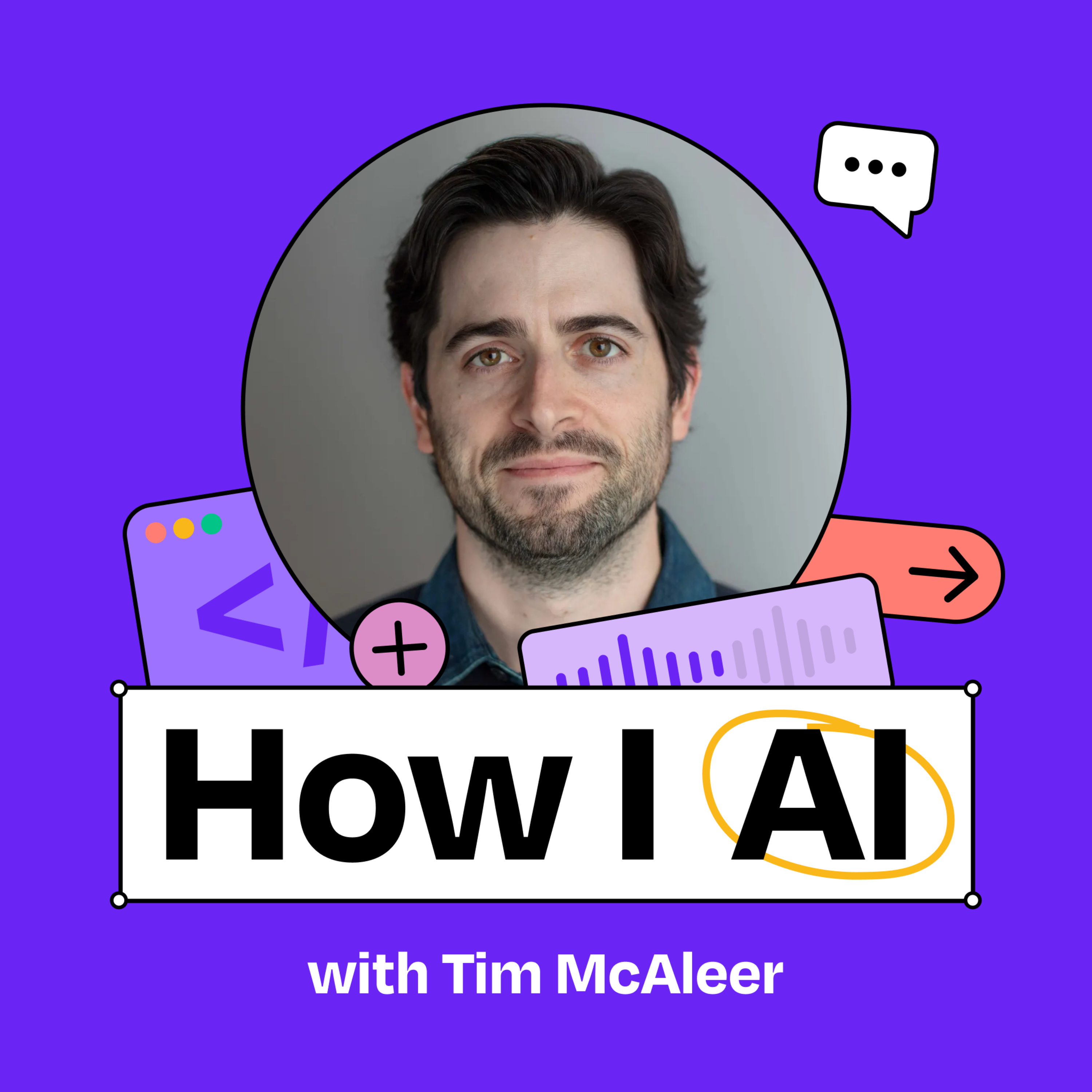
Tim McLear used AI coding assistants to build custom apps for niche workflows, like partial document transcription and field research photo logging. He emphasizes that "no one was going to make me this app." The ability for non-specialists to quickly create such hyper-specific internal tools is a key, empowering benefit of AI-assisted development.
Lovable employs a full-time "vibe coder," a non-engineer who is an expert at using AI tools to build functional product prototypes, templates, and internal applications. This new role collapses the idea-to-feedback loop, allowing teams to prototype and ship at unprecedented speeds without relying on engineering resources for initial builds.

AI agents like OpenClaw dramatically lower the barrier to creating software. Founders with no prior coding experience can now build complex applications simply by issuing conversational commands, effectively making software development feel 'free' and accessible to anyone with an idea.
Jack Dorsey champions "vibe coding," using AI to generate code, allowing developers to operate at a higher level of abstraction. This shifts focus from syntax (like semicolons) to orchestration, making software creation more accessible and freeing developers to be more creative.

Designers have historically been limited by their reliance on engineers. AI-powered coding tools eliminate this bottleneck, enabling designers with strong taste to "vibe code" and build functional applications themselves. This creates a new, highly effective archetype of a design-led builder.

Palmer Luckey, a self-described poor programmer, argues AI coding assistants are most beneficial for hardware-focused builders, not software engineers. It allows them to quickly create software without diverting years to master a skill outside their core competency, thus accelerating product development.

AI-assisted development, or "vibe coding," is re-engaging executives who coded earlier in their careers. It removes the time-consuming friction of going from idea to MVP, allowing them to quickly build personal tools and reconnect with the craft of software creation, even with demanding schedules.

The creator of "Last 30 Days" is not a professional software engineer. He built the tool by using AI (Claude Code, ChatGPT) as his development partner, feeding it errors via screenshots and iterating on its suggestions. This workflow empowers non-technical individuals to create and ship valuable software.
