Get your free personalized podcast brief
We scan new podcasts and send you the top 5 insights daily.
The creator of "Last 30 Days" is not a professional software engineer. He built the tool by using AI (Claude Code, ChatGPT) as his development partner, feeding it errors via screenshots and iterating on its suggestions. This workflow empowers non-technical individuals to create and ship valuable software.

Related Insights
Block's AI agent, Goose, has an accessible UI that allows non-technical employees in roles like sales and finance to build their own software dashboards and tools. This democratizes software creation within the enterprise, turning domain experts into citizen developers.

Monologue's developer treats AI tools like Claude Code and GPT-5 as his engineering team. He credits GPT-5's ability to navigate poorly documented, legacy Mac code from the 1980s as a "biggest unlock," enabling him to build a production-grade app without hiring specialist developers.

AI can now handle complex coding tasks, leaving ecosystem-specific knowledge like using GitHub as the final barrier. As these last 'nerdy' steps get abstracted away by AI tools, truly non-technical individuals will be able to build and deploy sophisticated applications within months.

Ben Tossel, a non-technical person, codes from his phone by using a GitHub app to manage pull requests and a Telegram bot to trigger his AI agent to make fixes or add features. This creates a powerful mobile coding workflow, treating the AI like a remote human programmer.
A professional with a non-technical background used "vibe coding" (low/no-code AI development) to instantly build highly personalized apps for her own life. These included a house-shopping comparison tool based on her specific trade-offs and a custom meal planner for a friend's diet, showing a new level of personal software creation.

Modern AI coding agents allow non-technical and technical users alike to rapidly translate business problems into functional software. This shift means the primary question is no longer 'What tool can I use?' but 'Can I build a custom solution for this right now?' This dramatically shortens the cycle from idea to execution for everyone.

Tim McLear used AI coding assistants to build custom apps for niche workflows, like partial document transcription and field research photo logging. He emphasizes that "no one was going to make me this app." The ability for non-specialists to quickly create such hyper-specific internal tools is a key, empowering benefit of AI-assisted development.
Tools like Claude Code are democratizing software development. Product managers without a coding background can use these AI assistants to work in the terminal, manage databases, and deploy apps. This accelerates prototyping and deepens technical understanding, improving collaboration with engineers.
Prototyping and even shipping complex AI applications is now possible without writing code. By combining a no-code front-end (Lovable), a workflow automation back-end (N8N), and LLM APIs, non-technical builders can create functional AI products quickly.
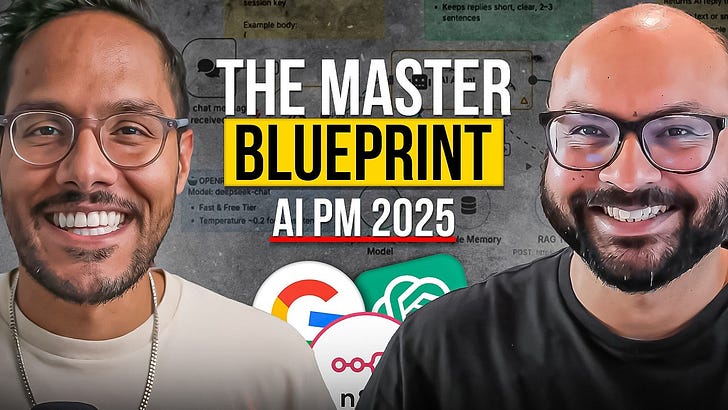
Using AI platforms like Lovable, business leaders can build custom internal apps simply by describing what they want in plain English. The host created a bespoke org chart tool in 10 minutes, a process that previously required a lengthy and frustrating cycle with developers, showcasing a dramatic acceleration in productivity.