Get your free personalized podcast brief
We scan new podcasts and send you the top 5 insights daily.
AI is evolving from a coding tool to a proactive product contributor. Claude analyzes user feedback, bug reports, and telemetry to autonomously suggest bug fixes and new features, acting more like a product-aware coworker than a simple code generator.

Related Insights
The development of Claude Cowork demonstrates a massive acceleration in product velocity. The entire application was written by its underlying AI agent, Claude Code, in just a week and a half. This showcases how AI-driven coding is collapsing development cycles for new software products.

Agentic coding tools like Claude Code represent a new, distinct modality of AI interaction, as significant as the advent of image generation or chatbots. This shift is creating a new category of power users who integrate AI into their daily workflows not just for queries, but for proactive, complex task execution.

Moving beyond chatbots, tools like Claude Cowork empower non-coders to create complex, multi-step autonomous workflows using natural language. This 'agentic' capability—connecting documents, searches, and data—is a key trend that will democratize automation and software creation for all knowledge workers.

Claude Code can take a high-level goal, ask clarifying questions, and then independently work for over an hour to generate code and deploy a working website. This signals a shift from AI as a simple tool to AI as an autonomous agent capable of complex, multi-step projects.
Recent updates from Anthropic's Claude mark a fundamental shift. AI is no longer a simple tool for single tasks but has become a system of autonomous "agents" that you orchestrate and manage to achieve complex outcomes, much like a human team.
Claude Cowork demonstrates a significant evolution from conversational AI by functioning as an agent that creates finished deliverables. Instead of just suggesting a strategy in text, it can be prompted to write the underlying code to build a complete presentation deck with charts and custom files.
The recent leap in AI coding isn't solely from a more powerful base model. The true innovation is a product layer that enables agent-like behavior: the system constantly evaluates and refines its own output, leading to far more complex and complete results than the LLM could achieve alone.

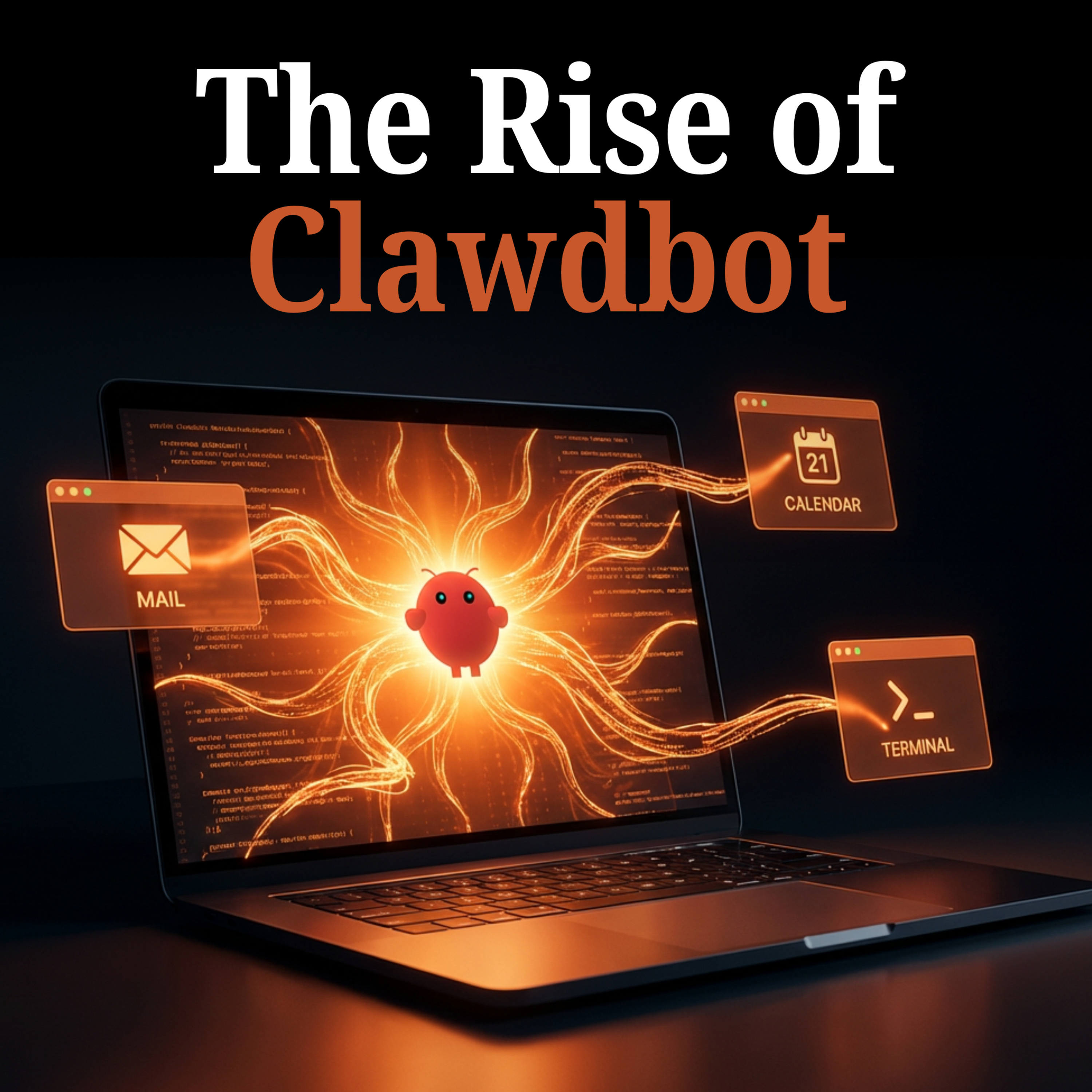
Clawdbot can autonomously identify market trends (like X's new article feature), propose new product features, and even write the code for them, acting more like a chief of staff than a simple task-doer.
A new product development principle for AI is to observe the model's "latent demand"—what it attempts to do on its own. Instead of just reacting to user hacks, Anthropic builds tools to facilitate the model's innate tendencies, inverting the traditional user-centric approach.
Anthropic's upcoming 'Agent Mode' for Claude moves beyond simple text prompts to a structured interface for delegating and monitoring tasks like research, analysis, and coding. This productizes common workflows, representing a major evolution from conversational AI to autonomous, goal-oriented agents, simplifying complex user needs.
