Get your free personalized podcast brief
We scan new podcasts and send you the top 5 insights daily.
Investors will often be polite and say a startup is "too early." However, founders should ignore these words and instead analyze the investor's portfolio. If an investor has no history of funding pre-product companies, their feedback is irrelevant; they were never a real prospect.

Related Insights
Founders can accurately gauge an investor's future helpfulness by their actions during the pre-investment courtship phase. If an investor is unwilling to provide value when they are most motivated to win the deal, they are unlikely to be a helpful partner later on.
![Jesse Zhang - Building Decagon - [Invest Like the Best, EP.443] thumbnail](https://megaphone.imgix.net/podcasts/2cc4da2a-a266-11f0-ac41-9f5060c6f4ef/image/7df6dc347b875d4b90ae98f397bf1cb1.jpg?ixlib=rails-4.3.1&max-w=3000&max-h=3000&fit=crop&auto=format,compress)
Founders often feel fundraising is a marketplace with weak signals. The reality is that it's a sales process. The founder's job is to qualify leads by researching an investor's portfolio, check size, and investment thesis to find a genuine fit, rather than hoping for a match.
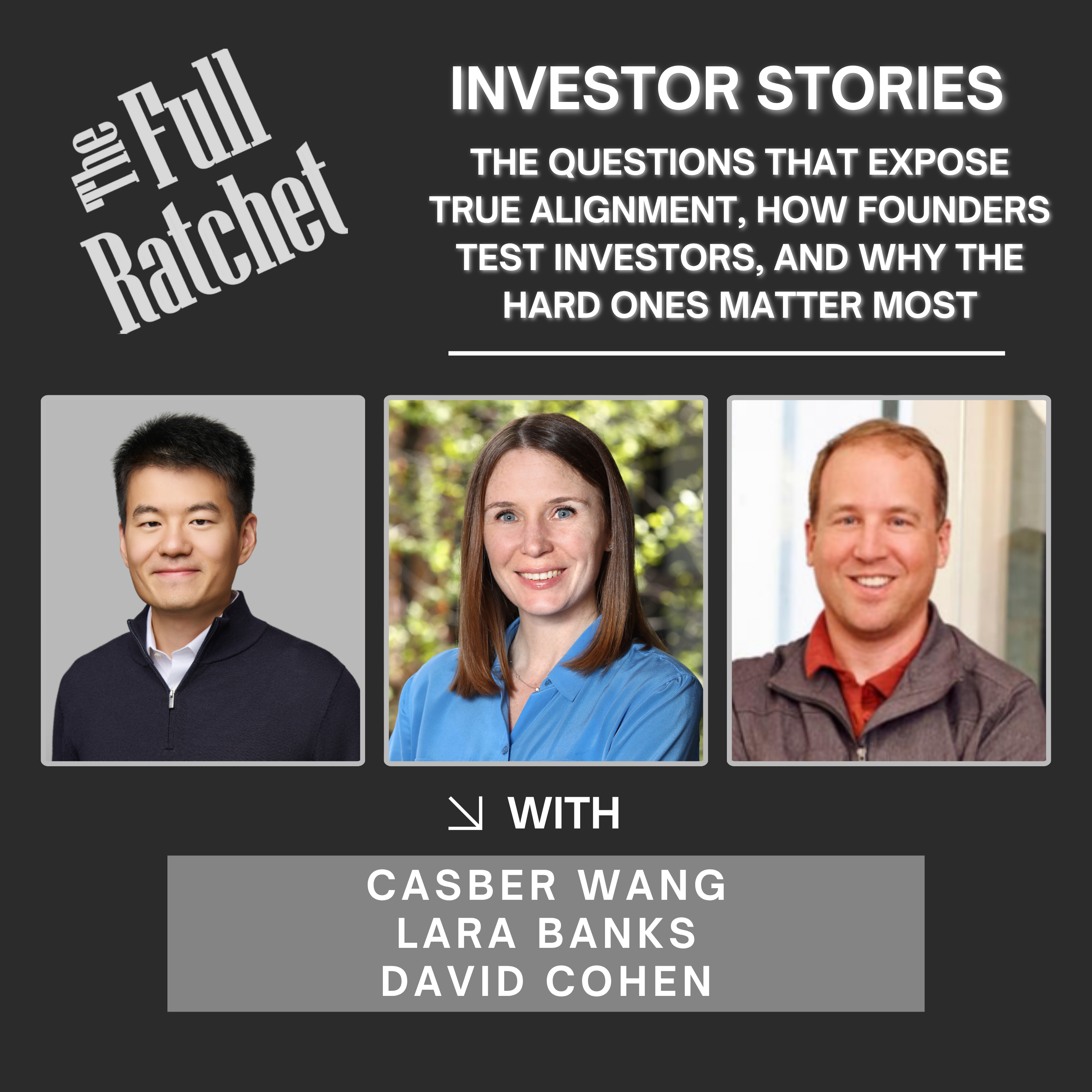
David Cohen of Techstars advises founders to request references from a VC's failed investments. This reveals how an investor behaves during difficult times, providing a more honest assessment of their character and support level than speaking only with successful founders.
An investor's best career P&L winners are not immediate yeses. They often involve an initial pass by either the investor or the company. This shows that timing and building relationships over multiple rounds can be more crucial than a single early-stage decision, as a 'missed round' isn't a 'missed company'.

Much online startup advice comes from founders with a single lucky success or a large pre-existing audience, making their advice often not repeatable. Seek guidance from those who have demonstrated success multiple times, proving their methods are based on skill and strategy, not just luck or circumstance.

Vaynerchuk learned that investing based on an idea or founders' educational background is a trap. He now waits until there's a tangible product to evaluate—even a small, early version (a "pony"). Seeing the product in action is a much better predictor of success than a polished pitch.

An even more compelling signal than a portfolio founder investing is when a founder you passed on becomes an LP. It proves your firm's feedback and rejection process are so constructive and respectful that it builds a strong reputation, even with those you don't fund.

Reframe the pitch meeting from a judgment session to a mutual evaluation. Founders are selecting a partner for 7-10 years and must assess the investor for chemistry and fit, rather than just seeking capital from a position of need.

During due diligence on a venture firm, asking portfolio founders why they chose that investor is critical. If the answer is simply "they had money," it implies the VC offers no strategic value—like recruiting help or corporate relationships—and is not a top-tier partner.

When passing on a deal, VCs often cite external factors like market size or competition. Trae Stephens reveals this is often a fabrication to avoid the difficult, personal feedback that they simply don't have conviction in the founder's ability to succeed.