Get your free personalized podcast brief
We scan new podcasts and send you the top 5 insights daily.
David Cohen of Techstars advises founders to request references from a VC's failed investments. This reveals how an investor behaves during difficult times, providing a more honest assessment of their character and support level than speaking only with successful founders.

Related Insights
In a non-control deal, an investor cannot fire management. Therefore, the primary diligence focus must shift from the business itself to the founder's character and the potential for a strong partnership, as this relationship is the ultimate determinant of success.

During due diligence, the most revealing portfolio company reference checks involve asking CEOs leading questions. Frame inquiries to suggest the private equity sponsor is taking undue credit for successes. This tactic encourages frankness and uncovers the true dynamics of value creation and deal sourcing.

To truly understand a potential financial partner, the Chomps team went beyond the supplied references. They found a founder whose company didn't succeed under the PE firm's investment. His positive review of the partner's character, despite the negative outcome, provided the most powerful signal of trust.

With high partner turnover at large venture firms, a key diligence question for founders is whether the specific partner joining their board is likely to remain at that firm. A partner's departure can be highly disruptive, making their stability more important than firm brand.

Value-add isn't a pitch deck slide. Truly helpful investors are either former operators who can empathize with the 0-to-1 struggle, or they actively help you get your first customers. They are the first call in a crisis or the ones who will vouch for you on a reference call when you have no other credibility.

Techstars founder David Cohen attributes the success of their most exceptional programs, some producing multiple unicorns from a single cohort, directly to the quality and dedication of the individual Managing Director. This highlights that in venture, the person on the ground leading the program is far more critical than the overarching brand or process.
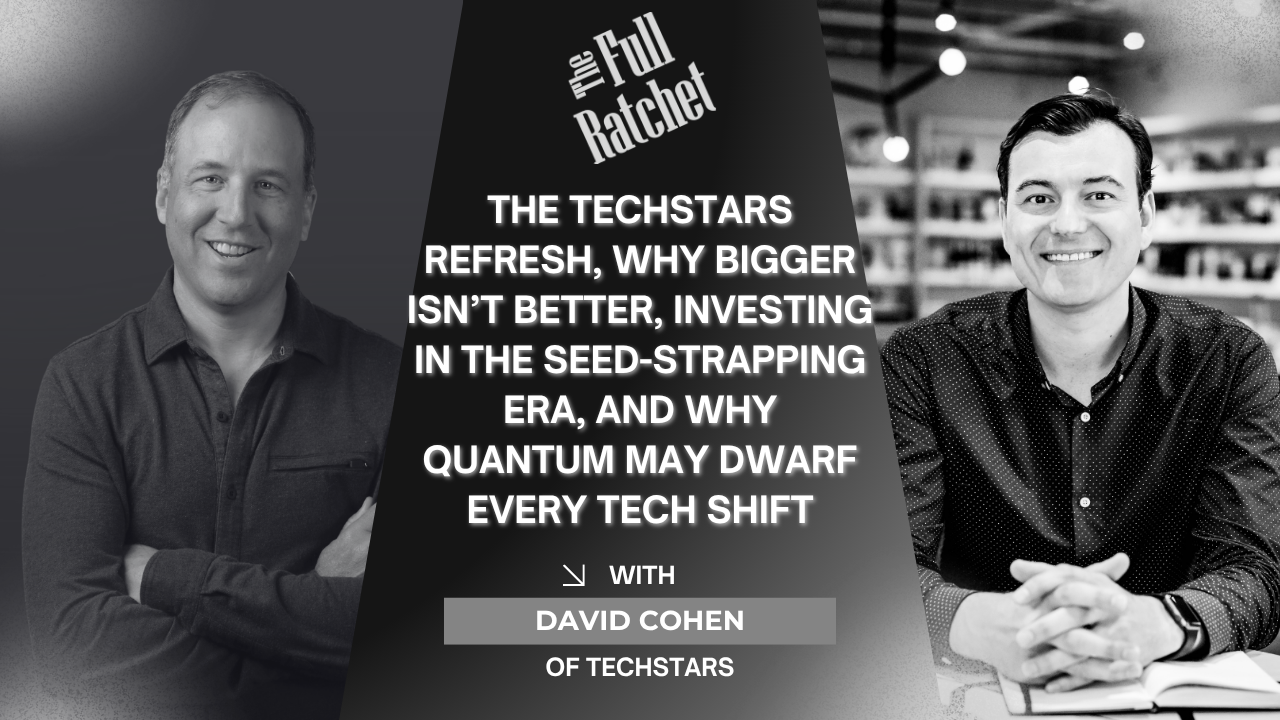
David Cohen reveals that some savvy LPs investigate a General Partner's personal life, such as their marriage. While seemingly invasive, this is a strategic move to gauge stability and de-risk their investment, as significant personal disruptions can detract from a GP's focus and fund performance.
A rising tide lifts all boats. The true test of a founder partnership emerges during downturns. Diligence should focus on teasing out traits like adaptability, humility, and accountability, which predict how a founder will react when plans inevitably go awry.
Meritech co-founder Paul Madera warns against relying on others for due diligence, even if the referral comes from a top-tier firm. Investors must personally understand the company's internal dynamics and its sector to make sound decisions. Outsourcing this fundamental work inevitably leads to bad investments.

Standard reference checks yield polite platitudes. To elicit honesty, frame the call around the high stakes for both your company and the candidate. Emphasize that a bad fit hurts the candidate's career and wastes everyone's time. This forces the reference to provide a more candid, risk-assessed answer.
![Martín Escobari - Inside General Atlantic - [Invest Like the Best, EP.449] thumbnail](https://megaphone.imgix.net/podcasts/90e6e3e6-c984-11f0-ae5f-27bb851bdc56/image/608fac468f77cb3014e96336896d96de.jpg?ixlib=rails-4.3.1&max-w=3000&max-h=3000&fit=crop&auto=format,compress)