Get your free personalized podcast brief
We scan new podcasts and send you the top 5 insights daily.
Long strategy documents are no longer credible proof of thought, as AI can generate them. Tara Seshan now prioritizes interactive mocks, prototypes, and A/B test results as more effective tools for communicating and validating ideas.

Related Insights
Instead of using written narratives to clarify thinking, product managers should leverage AI prototyping tools to go directly from idea to a testable prototype. Documentation can then be generated from the validated prototype in a fraction of the time, dramatically speeding up the feedback loop.

Traditional "writing-first" cultures create communication gaps and translation errors. With modern AI tools, product managers can now build working prototypes in hours. This "show, don't tell" approach gets ideas validated faster, secures project leadership, and overcomes language and team barriers.
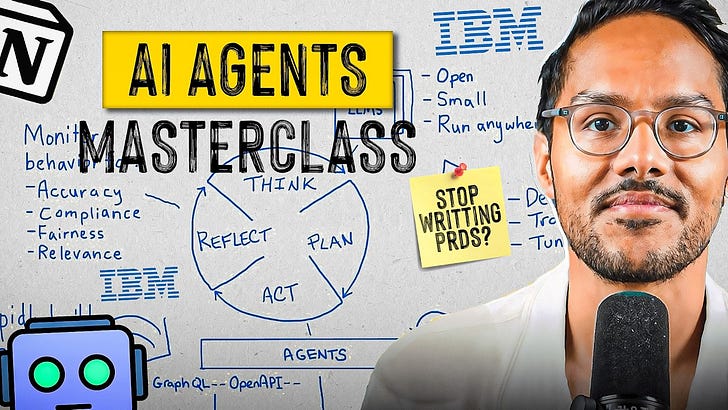
The traditional workflow (Idea -> PRD -> Alignment) is outdated. Now, PMs first create a functional AI prototype. This visual, interactive artifact is then brought to engineers and scientists for debate, accelerating alignment and making the development process more creative and collaborative from the start.

AI tools are breaking down communication silos. Marketers no longer need to write lengthy briefs to describe their vision; they can use AI to generate functional prototypes and landing pages, visually demonstrating exactly what's in their head and revolutionizing cross-team collaboration.

Accessible prototyping tools are changing product norms. The expectation is shifting from presenting detailed Product Requirements Documents to sharing interactive prototypes. This visual, hands-on approach accelerates discussions, improves decision quality, and makes ideas tangible for a wider audience.

Product Requirement Documents (PRDs) are often written and then ignored. AI-generated prototypes change this dynamic by serving as powerful internal communication tools. Putting an interactive model in front of engineering and design teams sparks better, more tangible conversations and ideas than a flat document ever could.

The product management workflow is evolving from documentation to creation. With AI tools lowering the barrier to build, PMs can now develop and share functional prototypes to communicate ideas and test assumptions, a much higher-fidelity approach than traditional written documents.

For complex features, a 17-page requirements document is inefficient for alignment. An interactive AI-generated prototype allows stakeholders to see and use the product, making it a more effective source of truth for gathering feedback and defining requirements than static documentation.
Designers are no longer confined to static formats. AI coding assistants make it easy to embed interactive elements, like data sliders or mini-apps, directly into traditional documents or presentations. This creates a new 'middle ground' of persuasive, dynamic artifacts that raises the ceiling for effective storytelling.
In an AI-driven workflow, the primary value of a rapid prototype is not for design exploration but as a communication tool. It makes the product vision tangible for stakeholders in reviews, increasing credibility and buy-in far more effectively than a slide deck.