Get your free personalized podcast brief
We scan new podcasts and send you the top 5 insights daily.
After leaving his parents' doomsday community, Indy Austin tested whether he would harm people without a system. He found an internal sense of right and concluded most rules are collectively chosen. People settle into mental channels like rivers carving the same course. He treats boundaries as play, not fate.
Related Insights
Many perceived rules governing society and business are merely suggestions or conventions, not hard laws. Recognizing this malleability is a key entrepreneurial trait. The consequences for bending these norms are often minimal or even positive, allowing for non-obvious paths to success.

Living like a Non-Player Character (NPC) means adopting the pre-written belief systems of your social tribes (political, cultural, familial) instead of thinking for yourself. This is an easier path that ensures belonging but ultimately prevents you from authoring your own life story.

Most people pick their identities from pre-canned societal boxes like "hipster" or "redneck." High-agency individuals, however, build their lives deliberately by questioning every choice. This creates a unique combination of traits that makes them interesting and authentic.

Kate Somerville's life changed when a mentor explicitly told her she could choose her future—a concept she hadn't considered because chaos was her normal. This shows that for those from unstable backgrounds, the realization of personal agency is often a taught, not intuitive, concept.
We often fail to recognize how differently people experience reality because social norms compress our outward behavior into a narrow, acceptable range. This illusion of uniformity hides vast internal psychological differences, making a diverse toolkit for self-improvement essential.

Agency is often mistaken for ambition or willpower. A more accurate definition is the dual capacity to first see degrees of freedom where others see constraints—noticing that rules are optional—and then having the courage to act on that realization. It is about freedom, not just achievement.
Societies with codified laws allow for more personal freedom and "weirdness." When the rules are clear, anything not explicitly forbidden is permitted. In contrast, societies governed by unwritten norms demand constant conformity, as any deviation can be punished by the group.
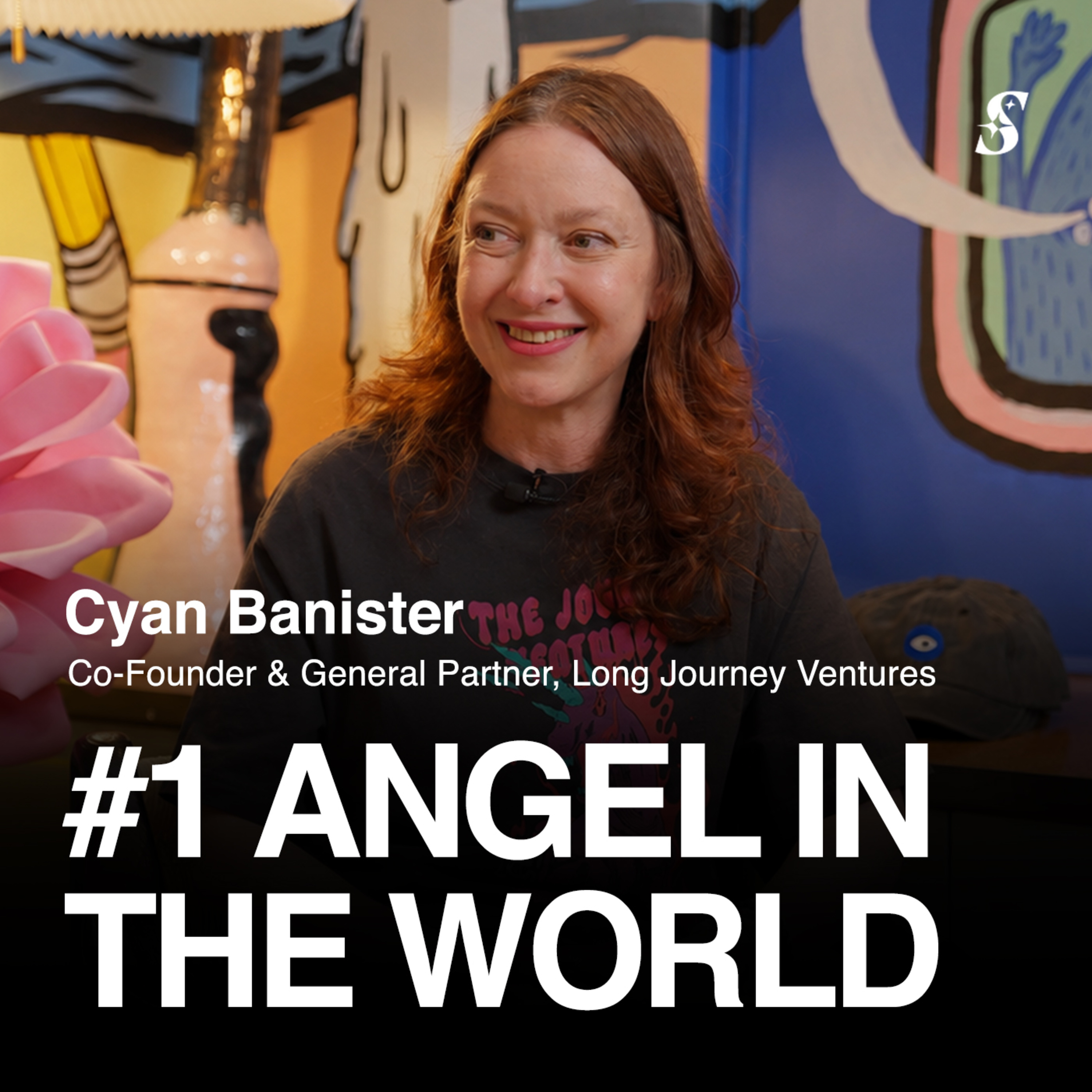
Cyan Banister rejects excuses for behavior based on fixed traits (e.g., "I'm a Scorpio"). She argues you can surgically alter your personality through deep introspection, consciously closing the gap between your stated values and your actual actions.
We often believe rules are external, but as adults, we invent most of them ourselves. These self-imposed limitations are designed to prevent embarrassment or shame, but they ultimately confine us to a small box of our own design, preventing growth and achievement.

Hormozi distinguishes between written laws that carry enforceable consequences and informal social expectations that carry artificial weight. Recognizing that breaking unspoken cultural or familial rules carries minimal real consequences frees individuals to set their own standards.
