Get your free personalized podcast brief
We scan new podcasts and send you the top 5 insights daily.
Traditional software testing fails because developers can't anticipate every failure mode. Antithesis inverts this by running applications in a deterministic simulation of a hostile real world. By "throwing the kitchen sink" at software—simulating crashes, bad users, and hackers—it empirically discovers rare, critical bugs that manual test cases would miss.

Related Insights
The rapid evolution of AI makes reactive security obsolete. The new approach involves testing models in high-fidelity simulated environments to observe emergent behaviors from the outside. This allows mapping attack surfaces even without fully understanding the model's internal mechanics.

To ensure AI reliability, Salesforce builds environments that mimic enterprise CRM workflows, not game worlds. They use synthetic data and introduce corner cases like background noise, accents, or conflicting user requests to find and fix agent failure points before deployment, closing the "reality gap."

Unlike human attackers, AI can ingest a company's entire API surface to find and exploit combinations of access patterns that individual, siloed development teams would never notice. This makes it a powerful tool for discovering hidden security holes that arise from a lack of cross-team coordination.
Insurers lack the historical loss data required to price novel AI risks. The solution is to use red teaming and systematic evaluations to create a large pool of "synthetic data" on how an AI product behaves and fails. This data on failure frequency and severity can be directly plugged into traditional actuarial models.

As AI generates more code than humans can review, the validation bottleneck emerges. The solution is providing agents with dedicated, sandboxed environments to run tests and verify functionality before a human sees the code, shifting review from process to outcome.

Unlike previous models that frequently failed, Opus 4.5 allows for a fluid, uninterrupted coding process. The AI can build complex applications from a simple prompt and autonomously fix its own errors, representing a significant leap in capability and reliability for developers.
Treating AI evaluation like a final exam is a mistake. For critical enterprise systems, evaluations should be embedded at every step of an agent's workflow (e.g., after planning, before action). This is akin to unit testing in classic software development and is essential for building trustworthy, production-ready agents.
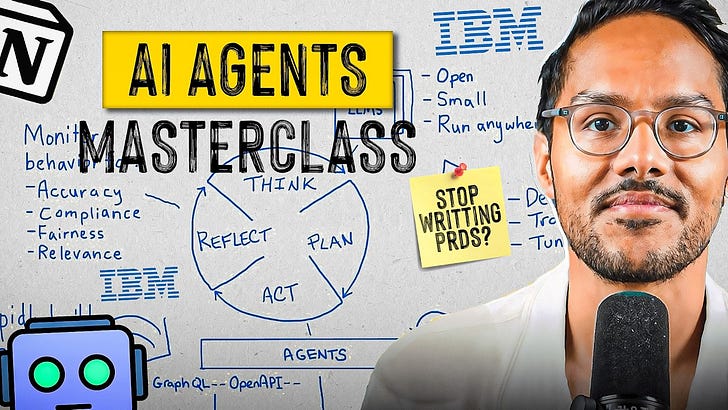
The common mistake in building AI evals is jumping straight to writing automated tests. The correct first step is a manual process called "error analysis" or "open coding," where a product expert reviews real user interaction logs to understand what's actually going wrong. This grounds your entire evaluation process in reality.

To improve the quality and accuracy of an AI agent's output, spawn multiple sub-agents with competing or adversarial roles. For example, a code review agent finds bugs, while several "auditor" agents check for false positives, resulting in a more reliable final analysis.
Unlike testing simpler tools, the best way to evaluate a professional-grade AI coding agent is to apply it to your most difficult, real-world problems. Don't dumb down the task; use it on a complex bug or a massive, imperfect codebase to see its true reasoning and problem-solving capabilities.