Get your free personalized podcast brief
We scan new podcasts and send you the top 5 insights daily.
Unlike testing simpler tools, the best way to evaluate a professional-grade AI coding agent is to apply it to your most difficult, real-world problems. Don't dumb down the task; use it on a complex bug or a massive, imperfect codebase to see its true reasoning and problem-solving capabilities.

Related Insights
Once AI coding agents reach a high performance level, objective benchmarks become less important than a developer's subjective experience. Like a warrior choosing a sword, the best tool is often the one that has the right "feel," writes code in a preferred style, and integrates seamlessly into a human workflow.

For stubborn bugs, use an advanced prompting technique: instruct the AI to 'spin up specialized sub-agents,' such as a QA tester and a senior engineer. This forces the model to analyze the problem from multiple perspectives, leading to a more comprehensive diagnosis and solution.

As AI generates more code than humans can review, the validation bottleneck emerges. The solution is providing agents with dedicated, sandboxed environments to run tests and verify functionality before a human sees the code, shifting review from process to outcome.

Treating AI evaluation like a final exam is a mistake. For critical enterprise systems, evaluations should be embedded at every step of an agent's workflow (e.g., after planning, before action). This is akin to unit testing in classic software development and is essential for building trustworthy, production-ready agents.
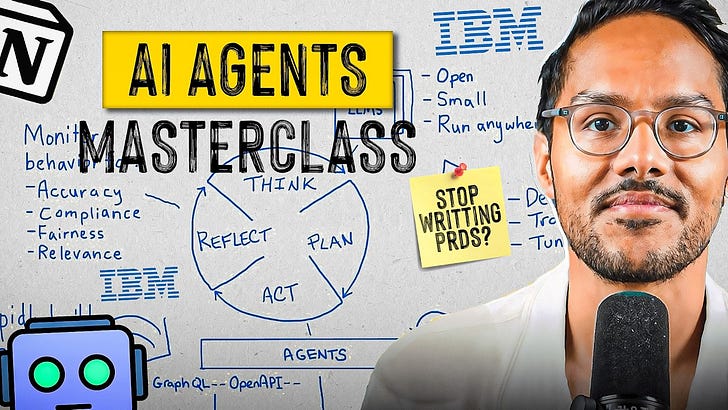
Instead of asking an AI to directly build something, the more effective approach is to instruct it on *how* to solve the problem: gather references, identify best-in-class libraries, and create a framework before implementation. This means working one level of abstraction higher than the code itself.

The common mistake in building AI evals is jumping straight to writing automated tests. The correct first step is a manual process called "error analysis" or "open coding," where a product expert reviews real user interaction logs to understand what's actually going wrong. This grounds your entire evaluation process in reality.

Instead of generic benchmarks, Superhuman tests its AI models against specific problem "dimensions" like deep search and date comprehension. It uses "canonical queries," including extreme edge cases from its CEO, to ensure high quality on tasks that matter most to demanding users.
An emerging power-user pattern, especially among new grads, is to trust AI coding assistants like Codex with entire features, not just small snippets. This "full YOLO mode" approach, while sometimes failing, often "one-shots" complex tasks, forcing a recalibration of how developers should leverage AI for maximum effectiveness.
To get AI agents to perform complex tasks in existing code, a three-stage workflow is key. First, have the agent research and objectively document how the codebase works. Second, use that research to create a step-by-step implementation plan. Finally, execute the plan. This structured approach prevents the agent from wasting context on discovery during implementation.

Traditional hiring assessments that ban modern tools are obsolete. A better approach is to give candidates access to AI tools and ask them to complete a complex task in an hour. This tests their ability to leverage technology for productivity, not their ability to memorize information.
