Get your free personalized podcast brief
We scan new podcasts and send you the top 5 insights daily.
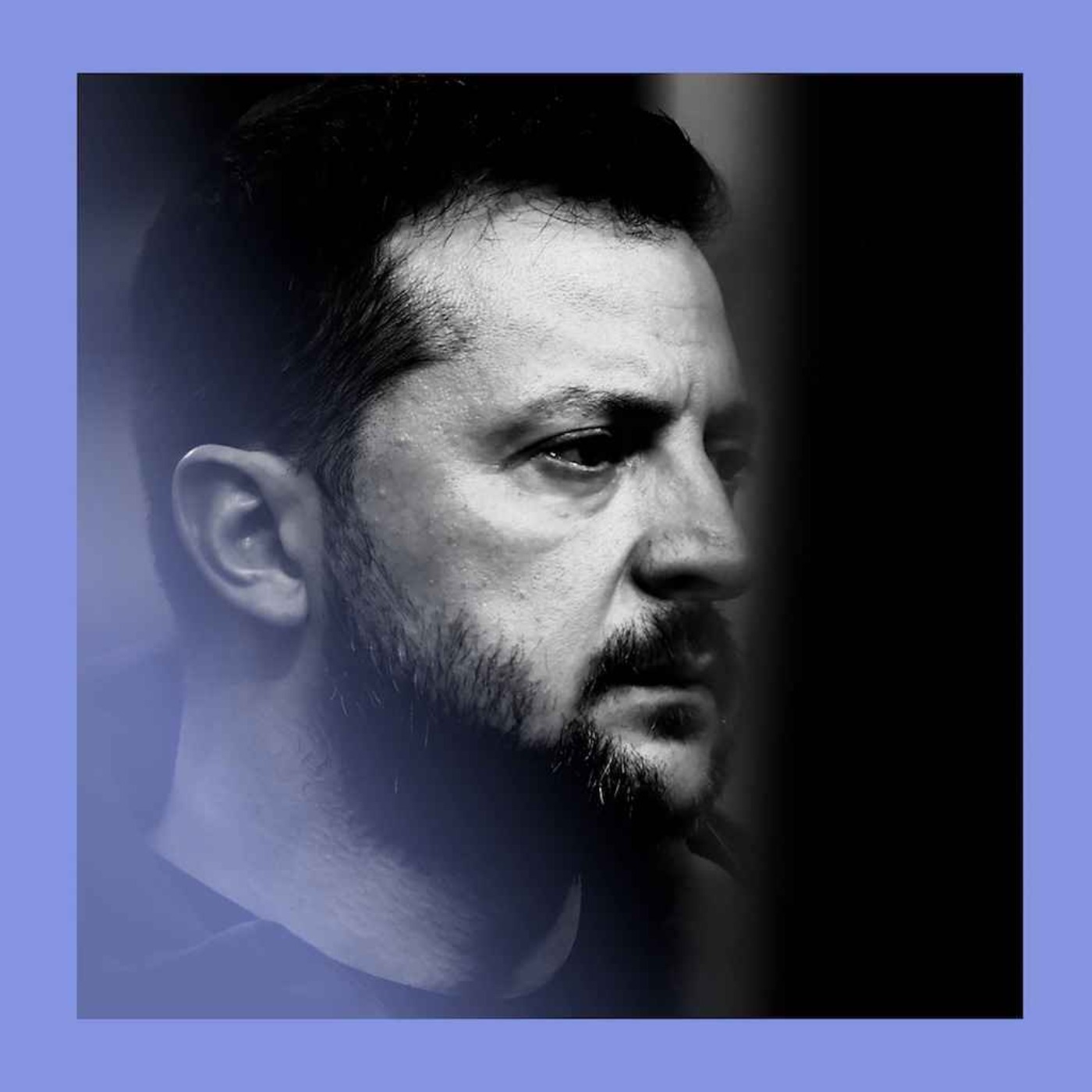
In Ukraine's corruption scandal, pressure is mounting on President Zelenskyy to fire his powerful, unelected chief of staff, Andrei Yermak. This highlights how such "gatekeeper" advisors can become political liabilities and scapegoats, embodying systemic issues and absorbing public anger meant for the administration.
Related Insights
History’s most shocking atrocities are defined less by their authoritarian leaders and more by the 'giant blob of enablers' who facilitate them. The current political climate demonstrates this, where professionals and politicians abdicate their expertise and principles to avoid conflict, becoming complicit in the process and allowing destructive ideologies to gain power.

The White House and Pentagon are deliberately shifting blame for a controversial military strike onto a subordinate admiral. This tactic insulates political leaders like the Secretary of Defense, whose rocky tenure and past blunders created the context for such controversial actions, from accountability.

A strategic reason for a leader to resign is to de-escalate public tension. After a crisis, the leader can become a symbol of that difficult period. By stepping down, they absorb the negative sentiment, lower the political temperature, and allow their organization to move forward.

The Ukrainian President's office tried to neutralize anti-corruption bodies by passing a bill to place them under a pliant prosecutor, which would have killed the investigation. However, thousands of citizens protested, forcing President Zelenskyy to reverse the decision, an act an investigator credited with saving the entire operation.

The controversy around David Sacks's government role highlights a key governance dilemma. While experts are needed to regulate complex industries like AI, their industry ties inevitably raise concerns about conflicts of interest and preferential treatment, creating a difficult balance for any administration.

When a politician suddenly makes a previously ignored issue intensely important, they are likely employing misdirection. The goal is to control the news cycle and public attention, either to distract from a more significant action happening elsewhere or to advance a hidden agenda unrelated to the stated crisis.

When the investigation reached the President's inner circle, the government machine mobilized against the anti-corruption bodies. Ukraine's security services arrested several detectives involved in the probe, accusing them of collaborating with Russia. This tactic attempts to reframe a legitimate investigation as a threat to national security.
A peace plan, largely drafted without Ukrainian input and containing unfavorable terms, has emerged just as President Zelenskyy's government faces its biggest corruption crisis. This timing suggests the US may be using Ukraine's internal turmoil to push for otherwise unacceptable concessions.
Journalists frequently misinterpret high-profile departures because the true dynamics are known only to a few insiders. An exit reported as a major loss might internally be a welcome change that unblocks an organization, but the public narrative rarely reflects this complexity.

An administration has no incentive to fully resolve a major public scandal because its unresolved nature makes it a perfect "red herring." It can be used repeatedly to distract the public and media from current policy failures or other damaging news, making perpetual ambiguity more politically useful than transparency.