Get your free personalized podcast brief
We scan new podcasts and send you the top 5 insights daily.
An internal, general-purpose OpenAI model solved a famous combinatorial geometry problem without specialized training or scaffolding. Unlike task-specific AIs, this achievement demonstrates a significant advance in abstract reasoning, suggesting models are progressing towards more general intelligence faster than anticipated.

Related Insights
Generative AI can produce the "miraculous" insights needed for formal proofs, like finding an inductive invariant, which traditionally required a PhD. It achieves this by training on vast libraries of existing mathematical proofs and generalizing their underlying patterns, effectively automating the creative leap needed for verification.

An AI model solved a complex gravity problem by being "seeded" with a recent paper on gluons. The AI understood the conceptual framework and successfully applied it to a different mathematical area, showing it can transfer high-level insights to accelerate follow-up research.
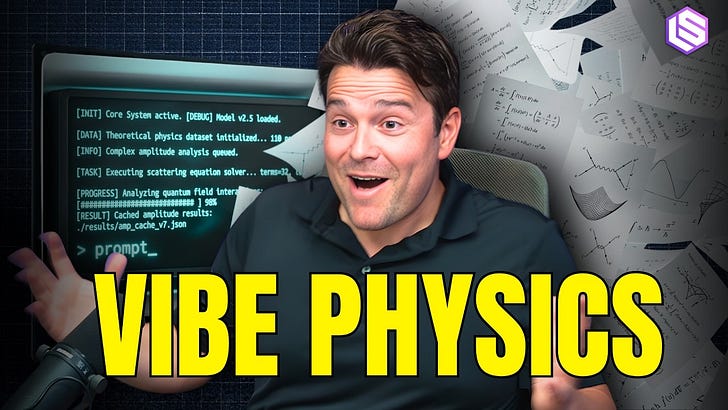
A remarkable feature of the current LLM era is that AI researchers can contribute to solving grand challenges in highly specialized domains, such as winning an IMO Gold medal, without possessing deep personal knowledge of that field. The model acts as a universal tool that transcends the operator's expertise.

An AI model solved a particle physics problem that stumped scientists by simplifying a complex formula and proposing a general solution. This marks a shift from AI as a mere computational tool to a creative partner in theoretical research, which the physicists described as a "collaborator."

AI has reached a milestone by solving a theoretical physics problem that human experts were unable to resolve for over a year. This demonstrates AI's emerging superhuman capabilities in highly specialized scientific domains, marking a profound shift in research.
Success on constraint-satisfaction puzzles like Sudoku signals a shift from current AI that summarizes existing information to a new class capable of 'generative strategy.' These models can analyze constraints and creatively propose novel solutions, tackling real-world planning problems in medicine, law, and operations rather than just describing what's already known.
Just as neural networks replaced hand-crafted features, large generalist models are replacing narrow, task-specific ones. Jeff Dean notes the era of unified models is "really upon us." A single, large model that can generalize across domains like math and language is proving more powerful than bespoke solutions for each, a modern take on the "bitter lesson."
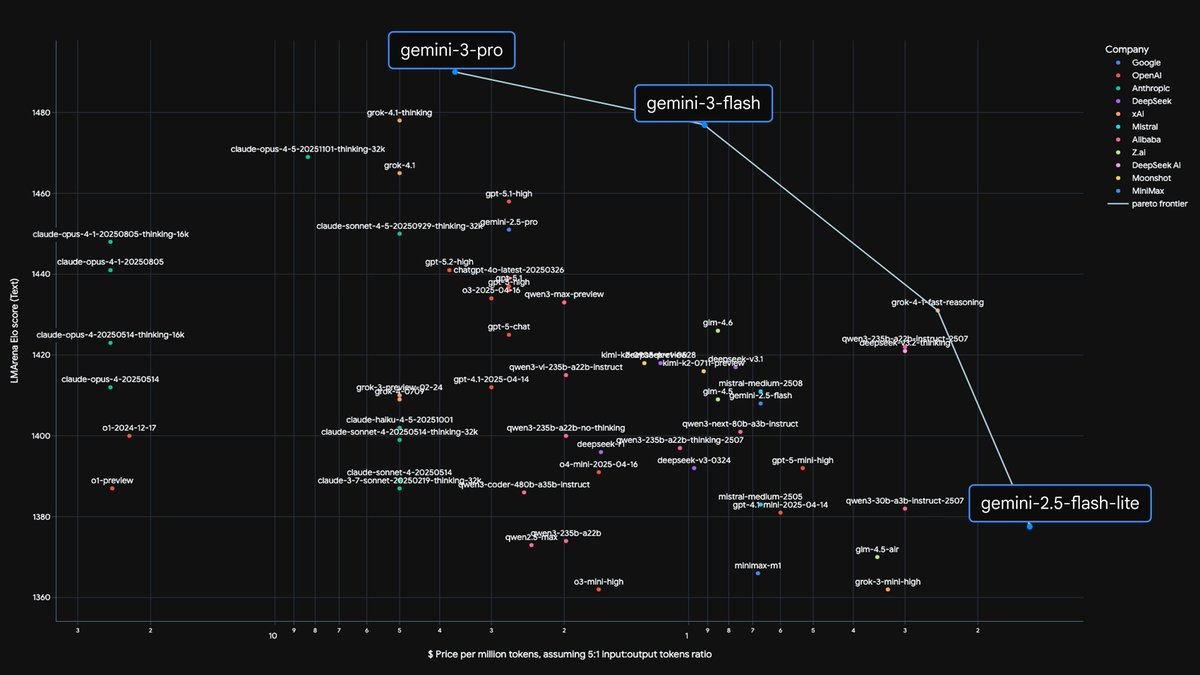
A key decision behind Google DeepMind's IMO Gold medal was abandoning their successful specialized system (AlphaGeometry) for an end-to-end LLM. This reflects a core AGI philosophy: a truly general model must solve complex problems without needing separate, specialized tools.
Harmonic, co-founded by Vlad Tenev to build mathematical superintelligence, has seen its model 'Aristotle' advance faster than anticipated. Initially targeting competition-level math, Aristotle is already assisting with or solving previously unsolved 'Erdős problems,' accelerating the timeline towards tackling foundational scientific challenges.

Adam's team discovered their internal, general-purpose agent (built for tasks like PR management) produced better CAD models than their highly specialized, domain-specific AI. This suggests that a more generally powerful AI with basic primitives can outperform a narrowly focused one.
