Get your free personalized podcast brief
We scan new podcasts and send you the top 5 insights daily.
While starting with a vertically integrated system is fine, enterprises inevitably need two key components: an LLM Gateway to manage and route traffic to various models, and an MCP Gateway to securely connect those models to real-world systems.
Related Insights
Model-Context Protocol (MCP) is a standardized layer that allows an LLM to communicate with various software tools without needing custom integrations for each. It acts like a universal translator, enabling the LLM to 'speak English' while the MCP handles communication with each tool's unique API.

Agent Skills and the Model Context Protocol (MCP) are complementary, not redundant. Skills package internal, repeatable workflows for 'doing the thing,' while MCP provides the open standard for connecting to external systems like databases and APIs for 'reaching the thing.'
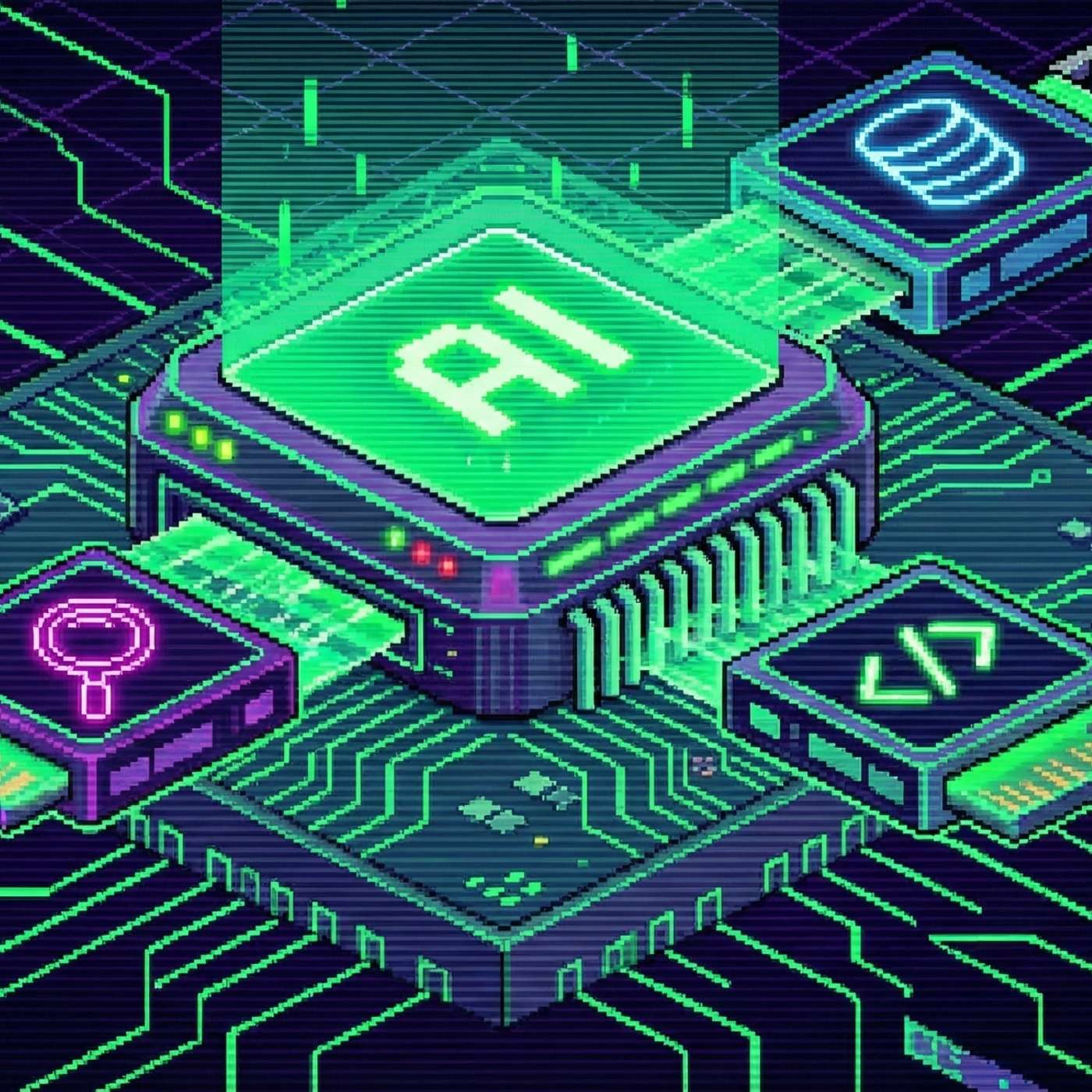
MCP formalizes the interaction between LLMs and enterprise data in simple natural language terms. This creates a controlled boundary, allowing value to flow in both directions while enabling essential security guardrails and controls.
A key value proposition for vertical AI applications is being model-agnostic. They act as a strategic layer for enterprises, allowing them to route tasks to the best available LLM at any given time. This de-risks enterprise AI strategy from being locked into a single model provider whose performance may be surpassed.

An autonomous agent is a complete software system, not merely a feature of an LLM. Dell's CTO defines it by four key components: an LLM (for reasoning), a knowledge graph (for specialized memory), MCP (for tool use), and A2A protocols (for agent collaboration).

Samsara built a central endpoint that abstracts away complexities of using different LLMs like OpenAI or Gemini. This gateway handles cost, security, and compliance, allowing any product engineer to quickly build and deploy AI features without specialized expertise.
Instead of direct API calls, build Model-Controlled Program (MCP) servers. They act as better guardrails for the AI, allowing it to interact with external data more effectively and even suggest novel use cases based on API documentation.

Enterprises will shift from relying on a single large language model to using orchestration platforms. These platforms will allow them to 'hot swap' various models—including smaller, specialized ones—for different tasks within a single system, optimizing for performance, cost, and use case without being locked into one provider.

MCP provides a standardized way to connect AI models with external tools, actions, and data. It functions like an API layer, enabling agents in environments like Claude Code or Cursor to pull analytics data from Amplitude, file tickets in Linear, or perform other external actions seamlessly.
Salesforce's Chief AI Scientist explains that a true enterprise agent comprises four key parts: Memory (RAG), a Brain (reasoning engine), Actuators (API calls), and an Interface. A simple LLM is insufficient for enterprise tasks; the surrounding infrastructure provides the real functionality.
