Get your free personalized podcast brief
We scan new podcasts and send you the top 5 insights daily.
Benchmark, a firm renowned for its decades-long focus on pure early-stage venture capital, has raised $2 billion, including its first dedicated growth fund. This marks a significant evolution for one of the industry's most disciplined firms.

Related Insights
Benchmark learned that large funds create an "overhang of misfit" with the practice of early-stage investing. The pressure to deploy massive capital volumes conflicts with the hands-on, shoulder-to-shoulder partnership that early founders need, leading to less joy and purpose.

In response to skyrocketing seed valuations, VCs are shifting their portfolio construction models. Instead of targeting a specific ownership percentage, the key decision is now what percentage of the total fund to deploy into a single deal. The focus has moved from ownership to the magnitude of the bet relative to the fund size.

A core part of a16z's growth fund strategy is to invest in companies the firm's early-stage team passed on. This acts as an internal "fix the mistake fund," providing a structured way to correct errors of omission and get a second chance at breakout companies.

Benchmark Partner Ev Randall argues that large, multi-billion dollar VC funds struggle to generate the high-multiple returns (e.g., 5x net) that LPs seek from venture capital. He claims the sheer size of these funds "defies the laws of physics," positioning smaller, more constrained funds like Benchmark as better able to deliver traditional venture-like returns.

A large, multi-stage VC firm's growth fund serves as a risk mitigation tool. The ability to concentrate capital into late-stage winners covers losses from a higher volume of early-stage mistakes, allowing the firm to be more "promiscuous" and take more shots at Series A.

Ilya Sutskever's new company, focused on fundamental AI research, is attracting growth-stage capital for a high-risk, venture-style bet. This model—allocating massive funds to exploratory research with paradigm-shifting potential—blurs the lines between traditional venture and growth equity investing.

Specialized seed-stage VC is an incredibly difficult asset class to sustain. Firms that succeed often 'graduate' to raising larger growth funds, abandoning their seed focus. Those that don't adapt to new founder archetypes and technologies fall by the wayside, leaving few persistent, specialized players.

Redpoint's early-growth fund concentrates on Series B deals, entering after product-market fit is established but before explosive growth becomes apparent in the metrics. The strategy is to invest "a half step before something becomes obvious in the numbers," capturing value at a critical turning point.
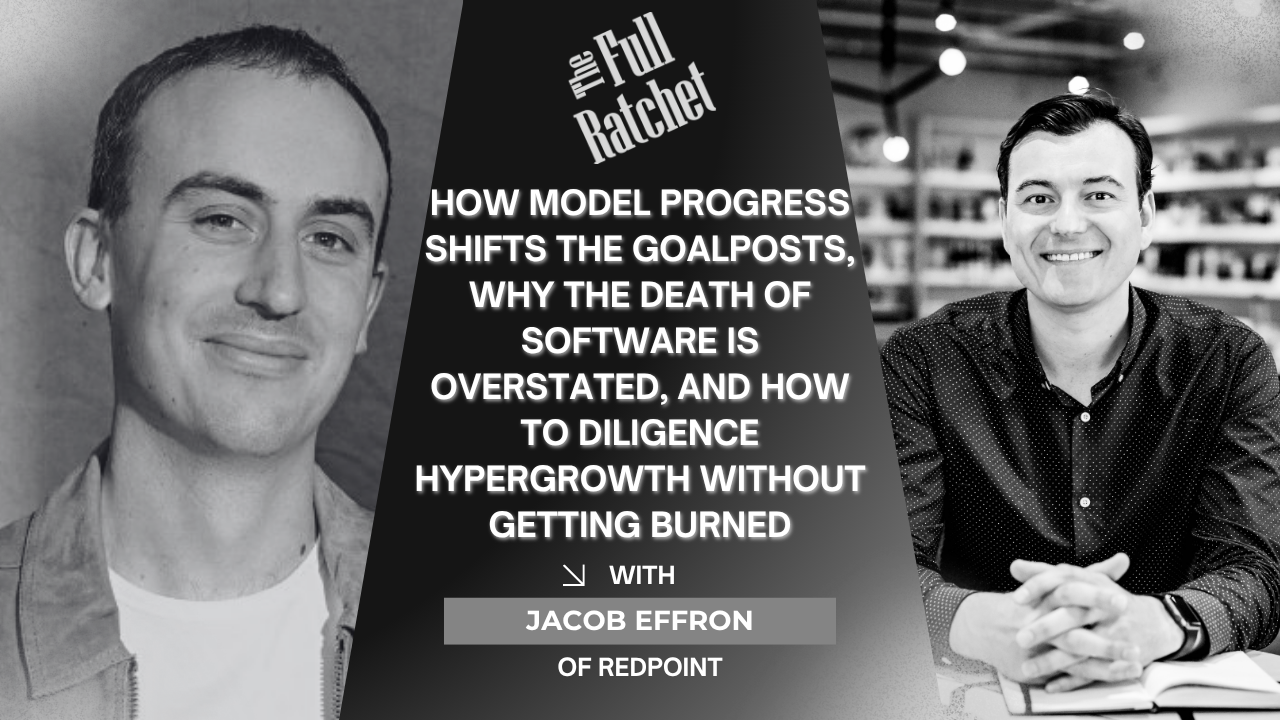
With a massive increase in the types and availability of capital, money itself is less of a differentiator for growth investors. According to Eric Byunn, the competitive edge now lies in specialized knowledge, operational expertise, and the ability to foster a "cross-pollination" of ideas to help founders build their companies.

Venture firm Benchmark, known for consumer tech like Uber and Snap, making a highly successful 12x return on chipmaker Cerebras indicates a strategic shift. Generalist VCs are now validating and pursuing moonshot AI infrastructure investments, a category once left to specialists.
