Get your free personalized podcast brief
We scan new podcasts and send you the top 5 insights daily.
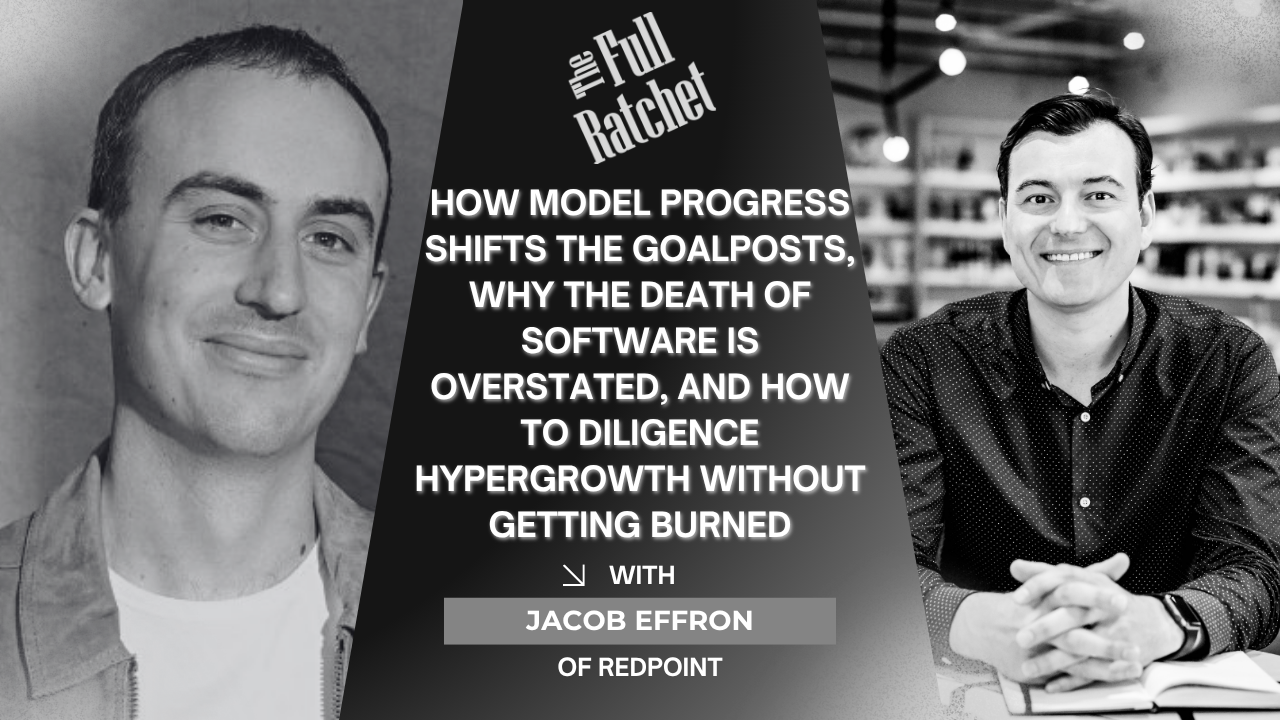
Redpoint's early-growth fund concentrates on Series B deals, entering after product-market fit is established but before explosive growth becomes apparent in the metrics. The strategy is to invest "a half step before something becomes obvious in the numbers," capturing value at a critical turning point.
Related Insights
At its Series A, ServiceUp had "concept-market fit"—the core idea was compelling enough to attract investors and early customers—but not yet product-market fit. The product didn't fully solve the problem, but the vision was strong enough to secure the capital needed to continue building towards it.

Contrary to the 'get in early' mantra, the certainty of a 3-5x return on a category-defining company like Databricks can be a more attractive investment than a high-risk seed deal. The time and risk-adjusted returns for late-stage winners are often superior.

The deadliest startup phase is the 'sapling' stage: post-launch but pre-repeatability (under ~$5M ARR). Unlike the seed stage (planting) or scale stage (tree), this phase requires bespoke, non-scalable help to navigate the maze of finding the right customer and problem before the company withers.

Top growth investors deliberately allocate more of their diligence effort to understanding and underwriting massive upside scenarios (10x+ returns) rather than concentrating on mitigating potential downside. The power-law nature of venture returns makes this a rational focus for generating exceptional performance.

The most dangerous venture stage is the "breakout" middle ground ($500M-$2B valuations). This segment is flooded with capital, leading firms to write large checks into companies that may not have durable product-market fit. This creates a high risk of capital loss, as companies are capitalized as if they are already proven winners.

To win highly sought-after deals, growth investors must build relationships years in advance. This involves providing tangible help with hiring, customer introductions, and strategic advice, effectively acting as an investor long before deploying capital.
![David George - Building a16z Growth, Investing Across the AI Stack, and Why Markets Misprice Growth - [Invest Like the Best, EP.450] thumbnail](https://megaphone.imgix.net/podcasts/8da7dbd8-ceeb-11f0-941c-ef83bcdd4c9f/image/d44107bc94719f78fbe91befb141073e.jpg?ixlib=rails-4.3.1&max-w=3000&max-h=3000&fit=crop&auto=format,compress)
Despite headlines about rapid-growth companies, the typical startup journey is slowing dramatically. The median time between Series A and B rounds is now close to 1,000 days (almost 3 years), creating a barbell market where a few companies raise quickly while the majority face a much longer path to their next milestone.

Thrive's late-stage philosophy starts with qualitative conviction in the team and product. Quantitative analysis is used to confirm this hypothesis, not generate it. This approach builds resilience against short-term metric fluctuations that cause purely quantitative investors to lose confidence, allowing for bolder, long-term bets.
'Gifted TVPI' comes from consensus deals with pedigreed founders who easily raise follow-on capital. 'Earned TVPI' comes from non-consensus founders whose strong metrics eventually prove out the investment. A healthy early-stage portfolio requires a deliberate balance of both.
A core investment framework is to distinguish between 'pull' companies, where the market organically and virally demands the product, and 'push' companies that have to force their solution onto the market. The former indicates stronger product-market fit and a higher potential for efficient, scalable growth.