Get your free personalized podcast brief
We scan new podcasts and send you the top 5 insights daily.
While Coinbase's stock is tied to volatile crypto prices, Robinhood's shares tripled by diversifying and aggressively launching new products. Its prediction markets, launched in late 2024, capitalized on a favorable regulatory environment and became the company's fastest-growing business line in its history.

Related Insights
The explosive growth of prediction markets is driven by regulatory arbitrage. They capture immense value from the highly-regulated sports betting industry by operating under different, less restrictive rules for 'prediction markets,' despite significant product overlap.
Though functionally similar to users, prediction markets and sports betting operate under different regulatory frameworks. Prediction markets are lightly regulated by the federal government, while sports betting is heavily regulated state-by-state. This distinction allows prediction markets to legally operate in jurisdictions where sports betting is banned, fueling rapid growth.

CEO Vlad Tenev views prediction markets as a tool to disrupt massive industries like insurance. He highlights using weather markets to hedge against fire or hurricane risk, creating bespoke, competitive financial products that bypass the cumbersome, expensive traditional insurance brokerage process.
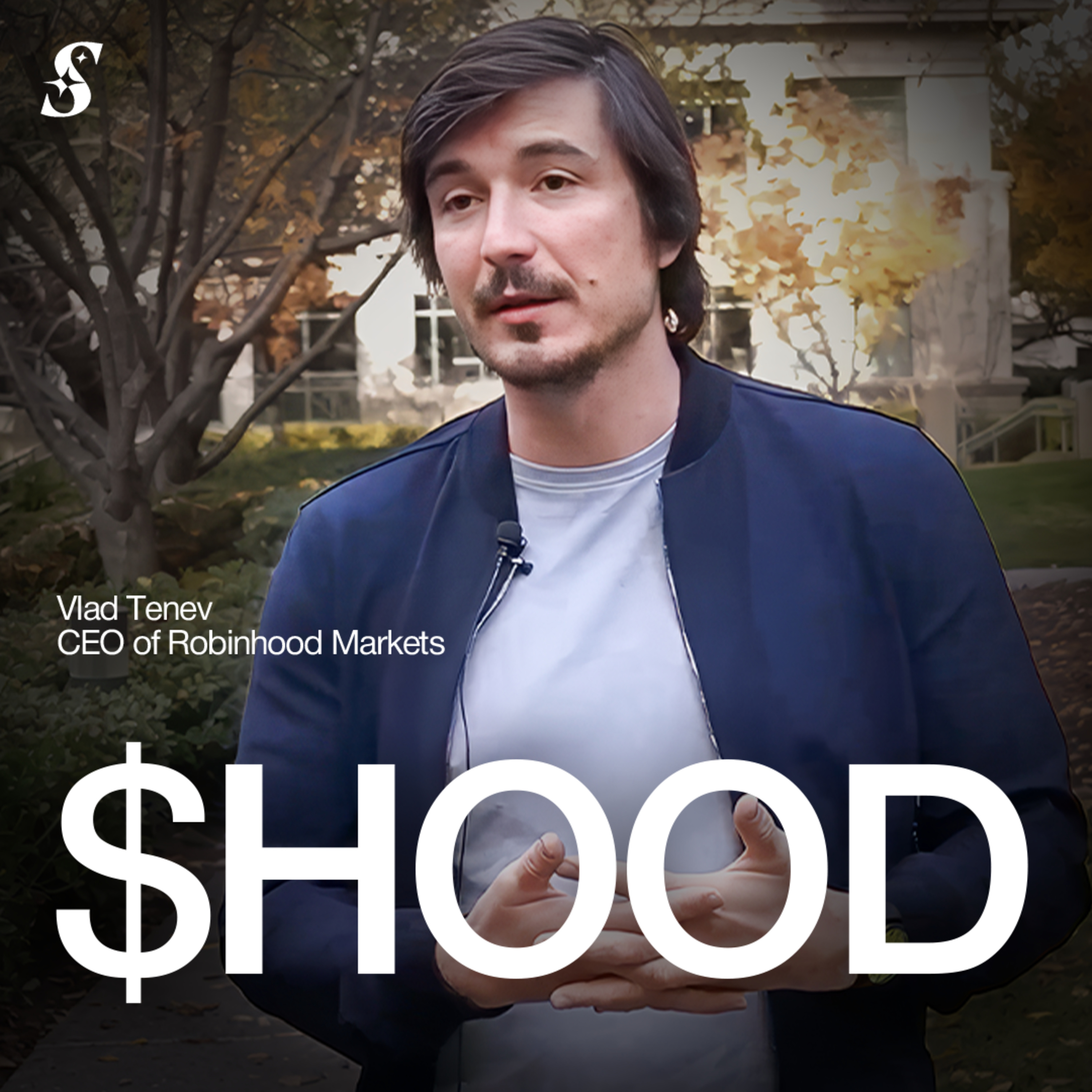
While both involve risk, prediction markets like Polymarket allow for bets on real-world events where an individual can have a genuine analytical edge. This contrasts with the uninformed, "degenerate" speculation common in meme coins, offering a potentially more rational outlet for risk capital.

Robinhood CEO Vlad Tenev revealed prediction markets were a distant "2026 plan" until a Supreme Court decision legalized presidential betting. This single regulatory catalyst prompted Robinhood to rush the product to market, where it became a massive success, showing how external events can dramatically accelerate product adoption.

Robinhood strategically expanded from a trading-focused, cyclical business into one with 11 revenue lines over $100M each. This pivot to a more diversified, "all-weather" model was a direct response to the risk of rising interest rates and market downturns, ensuring resilience beyond bull markets.
Prediction markets have existed for decades. Their recent popularity surge isn't due to a technological breakthrough but to success in legalizing them. The primary obstacle was always legal prohibition, not a lack of product-market fit or superior technology.

CEO Vlad Tenev considers 2022 the "refounding" of Robinhood. The business model strategically shifted from catering primarily to first-time investors to focusing on more sophisticated, resilient active traders. This pivot drove a 5x increase in product velocity (from one to five major new products per year) and built a more cycle-agnostic business.
![Robinhood: Mobile First, Margins Later - [Business Breakdowns, EP.233] thumbnail](https://megaphone.imgix.net/podcasts/943e2e96-b60b-11f0-9176-5bf614c23973/image/074f062475dc76689adfc59319a4e04d.jpg?ixlib=rails-4.3.1&max-w=3000&max-h=3000&fit=crop&auto=format,compress)
Beyond speculation, Robinhood frames prediction markets as a precise hedging tool for real-world risks. A consumer could use a weather contract to financially protect their home from a hurricane, for example, bypassing the high cost and complexity of traditional insurance policies.
The next evolution in fintech is a single, unified platform where users can leverage one pool of capital to trade seamlessly across equities, crypto, and prediction markets. This eliminates the friction of managing separate accounts and KYC processes for different asset classes.