Get your free personalized podcast brief
We scan new podcasts and send you the top 5 insights daily.
Entrepreneurs often focus on topics they find interesting, like sales techniques, rather than addressing the actual bottleneck in their business. The tasks we enjoy most are rarely the ones holding the business back, leading to wasted effort on low-impact activities.

Related Insights
Founders often fall into damaging extremes. Some constantly chase novelty and never commit, while others cling to their comfort zone (e.g., coding) and neglect vital business needs like sales. The goal is to find a balance, pushing boundaries when necessary but also focusing to execute.

Overwhelmed entrepreneurs can clarify priorities by categorizing every issue as either a supply or demand constraint. A demand constraint is needing more leads and sales. A supply constraint is being unable to fulfill existing orders. This binary focus clarifies the company's single most important priority.

As companies scale, the supply of obvious, valuable work dwindles. To stay busy, employees engage in "hyper-realistic work-like activities"—tasks that mimic real work (e.g., meetings to review decks for other meetings) but generate no value. It's a leader's job to create a sufficient supply of *known valuable work*.
A practical way to combat procrastination is to review your weekly accomplishments and calendar. Ask what activities were genuinely pushing the business forward (e.g., talking to customers) versus what was busywork created to avoid the simple, uncomfortable tasks that truly matter.

Maximum growth occurs during 'boring' periods of repetitive execution, not exciting periods of innovation. Many leaders, craving novelty, mistake this valuable stability for stagnation and prematurely introduce disruptive changes that hurt the compounding returns of a team mastering its craft.
Many entrepreneurs love their core business but lose motivation as their role expands to include responsibilities they dislike (e.g., finance, operations). The solution is to reinvest early profits into hiring employees to handle these tasks, freeing the founder to focus on their strengths and passions.

Many teams fall into a "busyness trap," engaging in activities that don't advance core objectives. This creates a hidden tax on productivity, as effort is spent on work that doesn't move the needle. The key is shifting focus from simply being busy to working on the right, high-impact tasks.
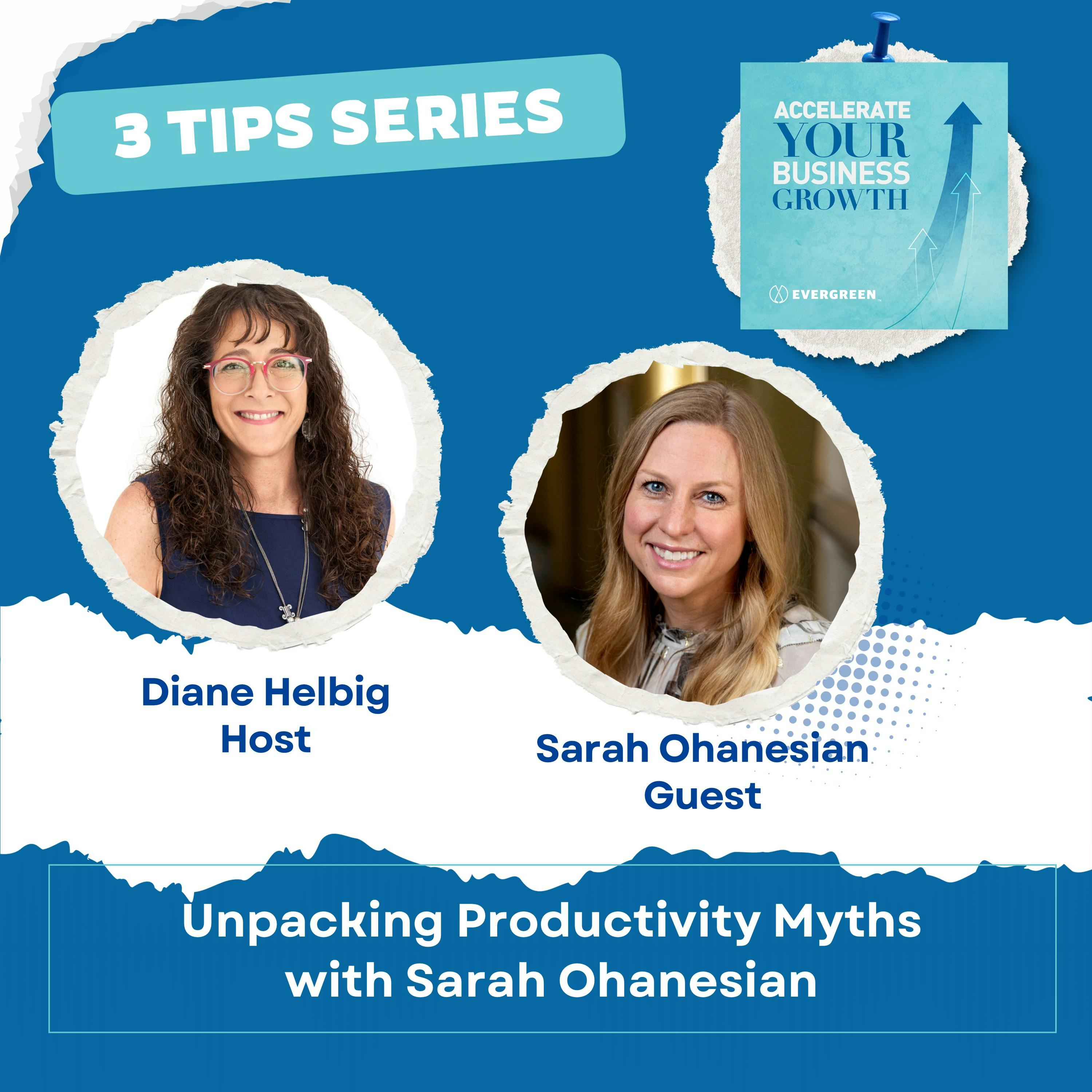
Most entrepreneurs are trapped doing things they believe they *should* do, leading to burnout with minimal results. The Pareto Principle suggests 80% of your results come from 20% of your efforts. By auditing your activities to find that 20%, you can eliminate busywork and focus only on what truly moves the needle.

Applying the Theory of Constraints, a startup's growth is limited by a single bottleneck in its factory (pipeline, sales, or delivery). Improving onboarding is useless if you have one sales call a month. All focus must be on solving that single constraint to make progress.
'Strict productivity' for a founder is work centered on the startup's single biggest bottleneck, approached with a direct strategy, and executed with intense focus ('goblin mode'). Any other activity, from pitch competitions to unfocused work on non-bottlenecks, should be considered 'performative' and a distraction from making real progress.