Get your free personalized podcast brief
We scan new podcasts and send you the top 5 insights daily.
Zipline's CEO argues that gaining public acceptance requires new technology to be superior in every way, including being quieter and less intrusive than the alternative (cars), not just faster or cleaner.
Related Insights
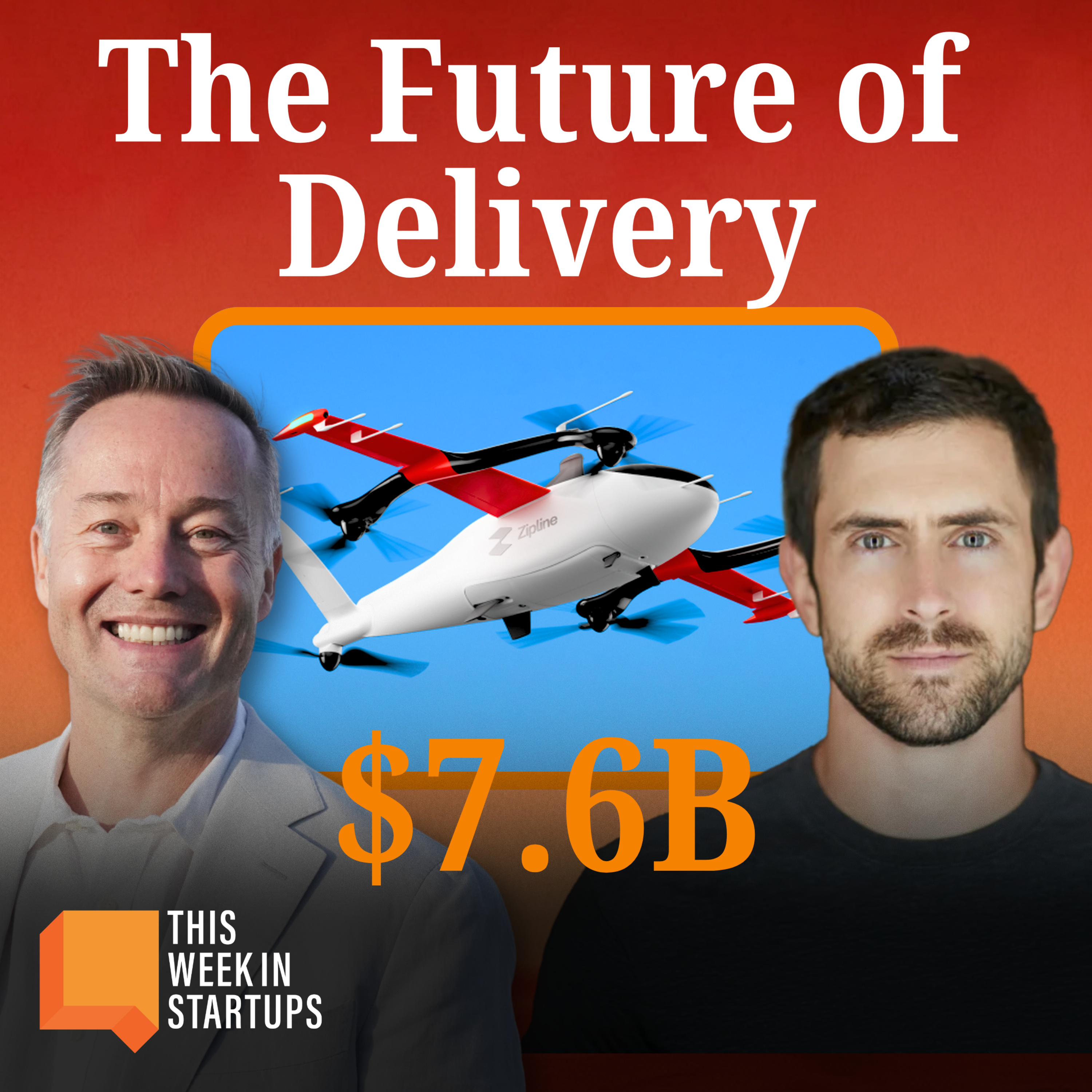
Zipline counters safety concerns by highlighting its zero-incident record over 135M miles, contrasting it with the hundreds of crashes and multiple fatalities cars would have over the same distance. This reframes drones as a safer alternative.
Against investor advice and industry trends favoring VTOL (vertical takeoff and landing) drones, Zipline opted for a fixed-wing airplane design. They realized their customers valued range above all else, and a simple airplane could fly 10-30x farther, solving the core problem more effectively.
Zipline's CEO reveals the aircraft is a small part of their solution. The real challenge and value lie in the vertically integrated network: ground infrastructure, traffic management, regulatory approval, and customer-facing apps.
New technology is magical for about a week before it becomes a mundane utility. A nurse complaining that a life-saving blood delivery drone was 30 seconds late illustrates how quickly users normalize revolutionary services and build new, higher expectations.

Zipline's CEO argues from first principles that current delivery logistics are absurdly inefficient. Replacing a human-driven, gas-powered car with a small, autonomous electric drone is not just an incremental improvement but a fundamental paradigm shift dictated by physics.
Zipline's CEO argues the US can't compete with China's scale on simple drones. The winning strategy is to innovate on complex, state-of-the-art aircraft where America leads, and then scale that manufacturing advantage.
The cautious and sometimes slow nature of current driverless AI makes it unsuitable for passengers in a hurry. This technological limitation has created a specific market: users who prioritize a calm, private experience over speed, such as for a relaxed evening out rather than a time-sensitive commute.

The public holds new technologies to a much higher safety standard than human performance. Waymo could deploy cars that are statistically safer than human drivers, but society would not accept them killing tens of thousands of people annually, even if it's an improvement. This demonstrates the need for near-perfection in high-stakes tech launches.

Joby recognized that noise, not just cost, limits helicopter scalability. They invested early in the fundamental physics of acoustics to create a quiet aircraft. This 'second-order' innovation is key to integrating their service into communities and achieving widespread adoption where helicopters have failed.
The design philosophy for the OpenAI and LoveFrom hardware is explicitly anti-attention economy. Jony Ive and Sam Altman are marketing their device not on features, but as a tranquil alternative to the chaotic, ad-driven 'Times Square' experience of the modern internet.
