Get your free personalized podcast brief
We scan new podcasts and send you the top 5 insights daily.
Turbine's pharma partners consistently praised the deep biological competence of its science team. This ability to engage as scientific peers, not just data scientists, built essential trust for early deals when the AI platform was still largely unvalidated.

Related Insights
Voyager CEO Al Sandrock views partnerships as more than just revenue. He emphasizes that strong scientific collaborations are invaluable because direct interaction between partner scientists accelerates learning and overall progress for both organizations. This intellectual cross-pollination is a key, often overlooked, benefit of partnering out platform technology.

Instead of viewing partnerships like Nvidia and Eli Lilly as a competitive threat, Recursion's CEO sees it as powerful validation for the AI drug discovery space. This activity shifts the industry conversation from skepticism ('Will this work?') to urgency ('Who will win?'), benefiting pioneering companies like Recursion by confirming their founding thesis and attracting more investment and attention to the field.
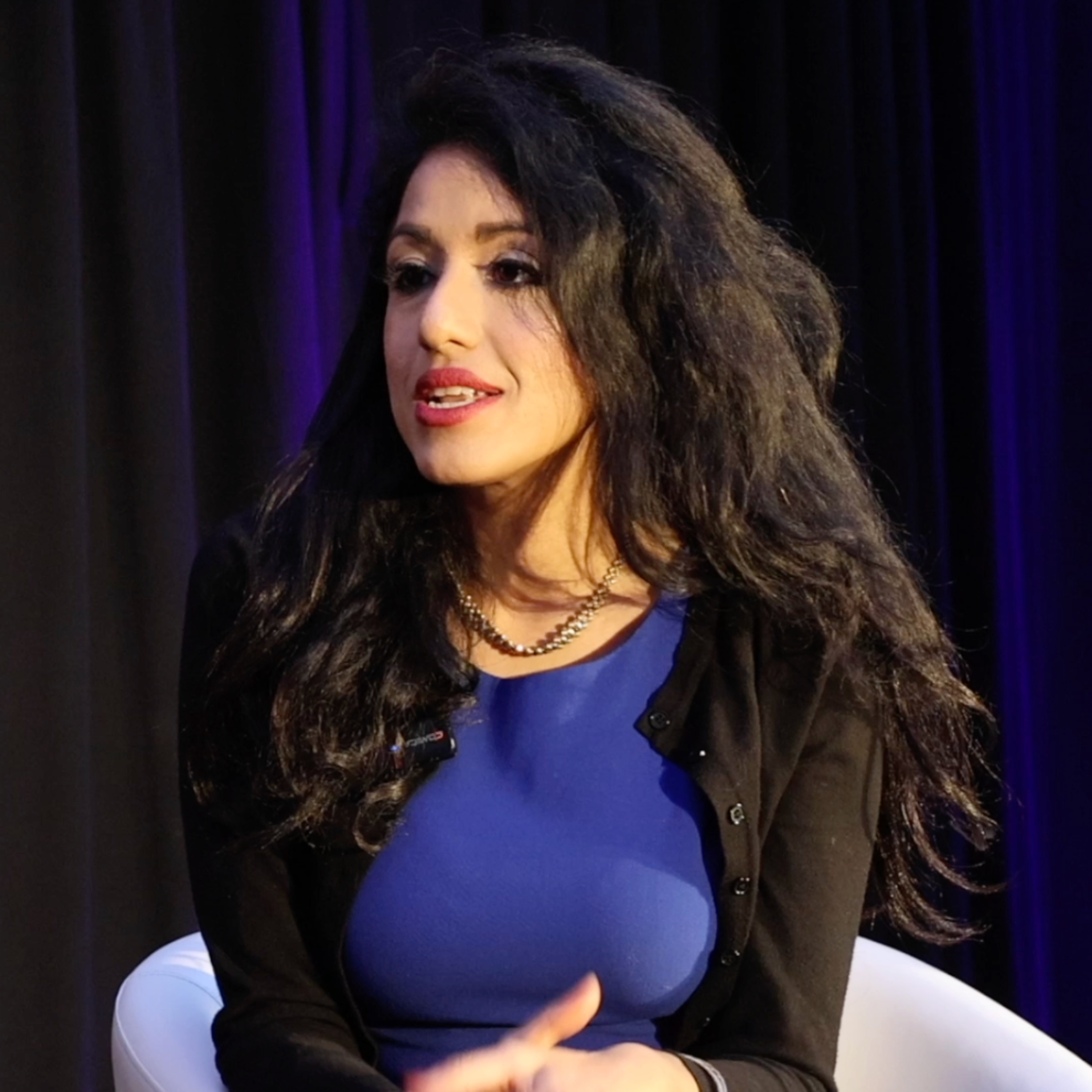
Recursion's CEO Najat Khan argues that the key to success in tech-bio is not just hiring scientists and engineers, but cultivating a 'bilingual' culture. This requires scientists who understand AI's limitations and AI experts who appreciate the humility needed for science. This integrated talent and culture is a core competitive advantage that is difficult for larger, more siloed organizations to replicate.
To convince skeptical medicinal chemists of AI's value, you must deliver a result that surpasses their intuition. It's not about the user interface, but about the model generating a genuinely surprising and effective molecule. This "aha" moment, validated by lab results, is the ultimate way to build trust.
Today's AI-first drug companies must bridge the gap between separate AI and biology experts. The future competitive advantage will belong to a new generation of scientists who are trained from the start to be fluent in both disciplines, eliminating the "accent" of learning one as a second language.

A key skill in building a deep tech team is identifying individuals who can bridge the gap between complex science and business reality. These "translators" can articulate highly technical concepts in plain English, clarifying clinical relevance and commercial viability for decision-makers.

While patient outcomes are the ultimate goal, the immediate user of a biotech AI tool is the drug discovery scientist. Turbine's CEO clarifies that success hinges on solving their immediate problems and limitations with existing tools like lab models and animal experiments.
To land large pharma partnerships, Turbine raised its first round to self-fund at-risk validation and early drug discovery. Proving their platform could generate novel, druggable IP was more persuasive than simply demonstrating predictive accuracy on existing experiments.
The relationship between AI startups and pharma is evolving rapidly. Previously, pharma engaged AI firms on a project-by-project, consulting-style basis. Now, as AI models for drug discovery become more robust, pharma giants are seeking to license them as enterprise-wide software suites for internal deployment, signaling a major inflection point in AI integration.

The primary barrier to successful AI implementation in pharma isn't technical; it's cultural. Scientists' inherent skepticism and resistance to new workflows lead to brilliant AI tools going unused. Overcoming this requires building 'informed trust' and effective change management.
