Get your free personalized podcast brief
We scan new podcasts and send you the top 5 insights daily.
Fears of a forced spinoff of Google Chrome depressed Alphabet's stock. The actual outcome was a much softer restriction on distribution agreements, demonstrating that worst-case regulatory scenarios rarely materialize for dominant tech companies, creating potential investment opportunities from the uncertainty.

Related Insights
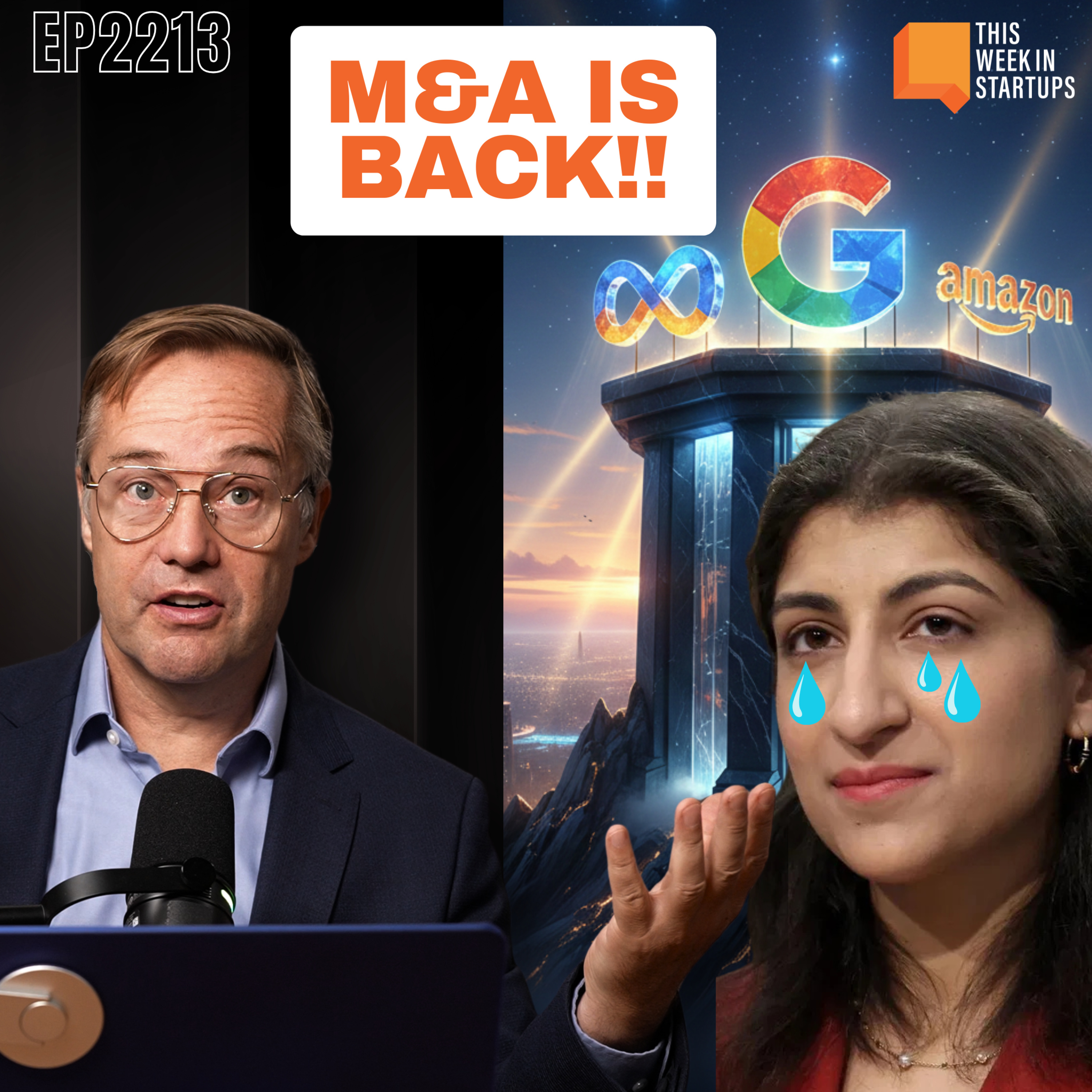
Recent antitrust lawsuits against Meta and Google resulted in minimal consequences ("nothing burgers"), signaling a more permissive regulatory environment. Combined with anticipated economic stimulus, this creates ideal conditions for a wave of large-scale M&A ($25B-$250B) among major tech companies in the coming year.
By launching agentic AI features in Chrome, Google creates a defensive moat. This move, framed as a response to OpenAI's Atlas browser, provides "competitive cover" to deeply integrate its AI, potentially avoiding antitrust concerns while leveraging its browser monopoly for data and distribution.

Constant litigation and regulatory scrutiny are not just a cost of doing business, but a strong signal of an extraordinarily dominant monopoly. As outlined in Peter Thiel's book 'Zero to One', a company's efforts to downplay its market power often prove its strength.
While politicians focus on taxing corporations, the real threat to tech monopolies is breaking them up. Forcing divisions like Google Search, Maps, and YouTube to compete independently dismantles their 'strategic monopoly,' a far more terrifying prospect for them than paying more tax on consolidated profits.

Meta's victory over the FTC's antitrust challenge is not just a legal footnote; it signals the end of a highly restrictive regulatory era. This will likely trigger a massive wave of M&A, as large tech companies are now emboldened to acquire stagnant, late-stage private "unicorns" that have been stuck without an exit path.

Despite having billions of users on Chrome, Google is hesitant to fully integrate its Gemini superapp into the browser due to antitrust risks. This caution creates a massive strategic opening for competitors like OpenAI to establish their own platforms.

A federal judge ruled against divesting Google's ad tech business, partly because the evidence was from the 2010s and is now outdated. The judge worried that a breakup in today's vastly different market—where publishers are already threatened by new tools like AI Overviews—could cause more harm than good.

The settlement, while imposing penalties, leaves Live Nation's core business intact. This removes major regulatory overhang, much like Google's case, after which its stock surged 60%. This precedent suggests a similar upward trajectory for Live Nation as the "monopoly discount" risk is removed.

The DOJ's investigation into Nvidia's $20B Grok deal highlights a widespread Big Tech strategy. By structuring talent and technology acquisitions as "non-exclusive licensing agreements," companies like Nvidia, Google, and Meta can consolidate resources and market power while avoiding the automatic regulatory review triggered by traditional mergers.

The FTC's failure to prove Meta held a monopoly set a powerful legal precedent, signaling that regulators face a high burden of proof. This has effectively given a green light to large-scale acquisitions, kicking off a "golden age of M&A" as companies feel emboldened to pursue mega-deals without fear of being blocked.
