Get your free personalized podcast brief
We scan new podcasts and send you the top 5 insights daily.
The Plessy v. Ferguson decision institutionalized segregation by arguing that if segregation created a 'badge of inferiority,' it was not due to the law itself. The court claimed it was because the 'colored race chooses to put that construction upon it,' blaming victims for their interpretation of discrimination.

Related Insights
The current conflict between universal rights and ethno-nationalism isn't new; it is a direct resurgence of a counter-narrative crafted in the 1830s by Southern intellectuals who argued that only the Anglo-Saxon race could handle liberty, in order to defend slavery.

The legal strategy to defend segregation in Brown v. Board was explicitly originalist, arguing the 14th Amendment's framers never intended to desegregate schools. This argument, architected by lawyer David J. Mays, formed an intellectual bridge to the formal originalism developed by Robert Bork in the 1970s.

It's critical to decouple the reality of systemic issues from a personal identity of victimhood. You can recognize and call out societal barriers without letting them become the all-encompassing excuse for why you cannot achieve your goals. Both truths can coexist.

The infamous Supreme Court decision, which denied Black people citizenship, was more than a legal precedent; it was a political accelerant. The ruling galvanized Northern anger against slavery's expansion, directly fueling the rise of the new Republican party and Abraham Lincoln, setting the stage for the Civil War.

People often frame a person's situation as a "choice" to justify punishment or unsympathetic treatment. This linguistic move shifts blame onto the individual, providing a moral license to enact punishment. This pattern is prevalent in contexts ranging from airline policies to broader political discourse.

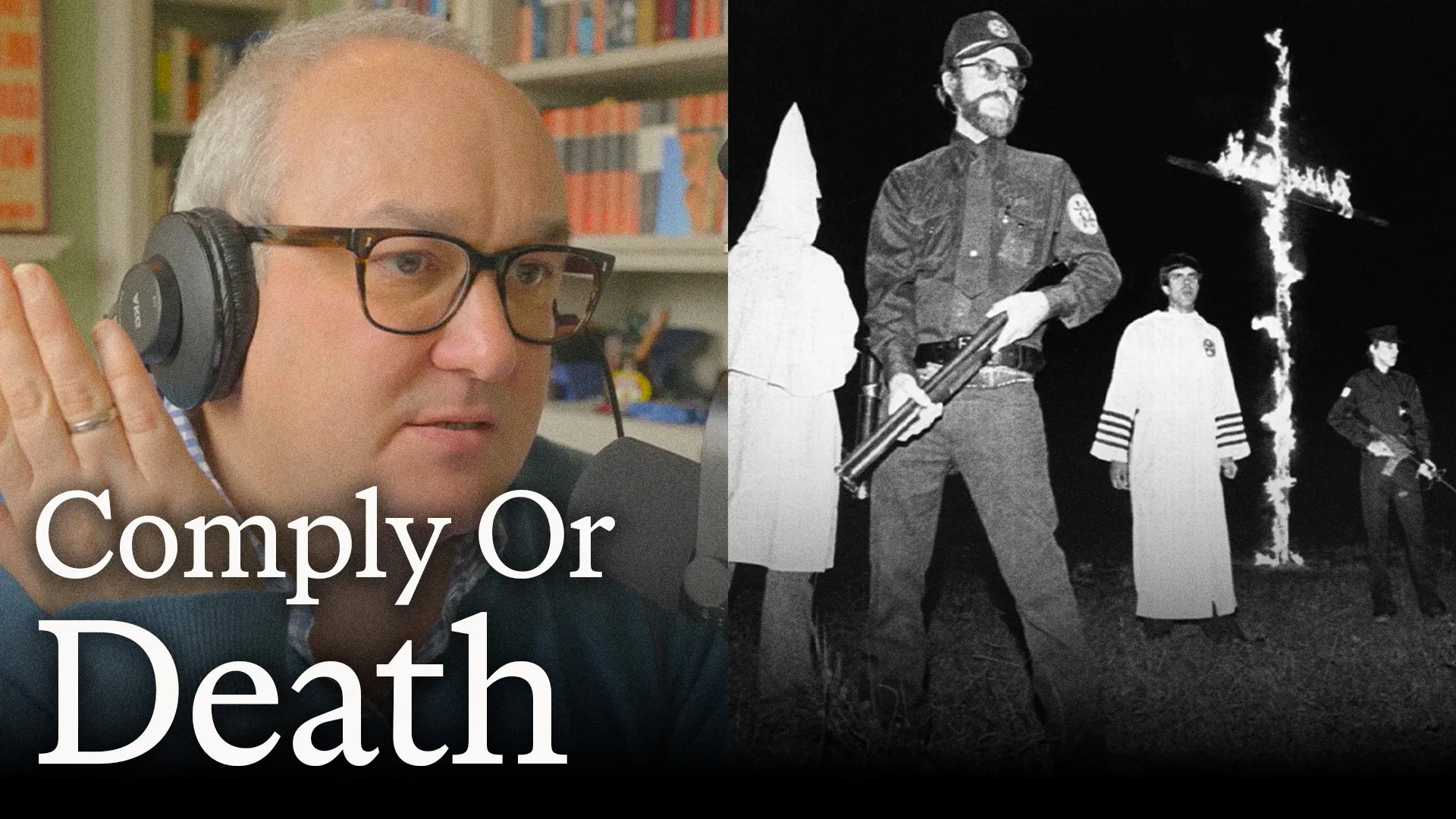
The Klan's terror campaign was a holistic effort to restore pre-war racial hierarchy. Beyond suppressing votes, they targeted Black churches, schools, landowners, and even women who displayed self-respect. This reveals a broader goal: to crush any sign of Black autonomy and re-establish total white supremacy in every aspect of Southern life.
Broad economic trends, like manufacturing's decline or housing market collapses, disproportionately harm Black communities due to initial economic disadvantages. This widens inequality even without explicit discriminatory intent, often due to tragically bad timing on a generational scale.

The idea that growing wealth and education automatically lead to more compassionate values is historically false. Wealthy societies, from the Roman Empire to 18th-century Europe and Belle Époque France, have often been the most deeply committed to slavery and colonialism, using their resources to create more efficient systems of oppression.
In the 19th and early 20th centuries, racism was not just socially acceptable but academically esteemed. Fields like phrenology and eugenics were considered legitimate sciences pursued by the era's leading intellectuals. This presents a stark inversion of modern values, where intellectualism is aligned with anti-racism.

Policies that once legally barred married women from working have a lasting legacy. Modern workplace challenges for mothers, such as being pushed out or lacking support, are not individual failings but are rooted in this historical, systemic discrimination.
