Get your free personalized podcast brief
We scan new podcasts and send you the top 5 insights daily.
The Houthi's missile attacks on Israel are militarily minor. Their real power lies in attacking commercial shipping in the Red Sea, which would disrupt Saudi oil exports and could double the global oil shortfall, causing a massive price spike.
Related Insights
By attacking just a few ships, Iran creates enough perceived risk to make insurance carriers unwilling to cover vessels transiting the Strait of Hormuz. This effectively disrupts 20% of the world's oil supply without needing a large-scale military blockade, a key tactic in asymmetric economic warfare.

The 20 million barrels of oil flowing daily through the Strait of Hormuz represent 20% of global supply. A blockade constitutes a disruption four times larger than the Iranian Revolution or Yom Kippur War embargoes, with no simple replacement.

Even a brief closure of the Strait of Hormuz has immediate, lasting effects. Shutting in millions of barrels of oil and LNG damages production facilities, which can take over 60 days to bring back online, ensuring a recession even if the conflict ends quickly.

Major container lines will divert entire fleets on longer, more expensive routes around continents based solely on the threat of attack, as seen with the Houthis in the Red Sea. The perception of risk, not just the occurrence of incidents, is a primary driver of costly, system-wide disruptions in logistics.

Iran doesn't need a naval blockade to close the Strait of Hormuz. The mere threat of drone and missile attacks is enough to deter shippers and insurers, creating a "de facto closure." This asymmetrical strategy highlights how psychological warfare can be as effective as direct military action in disrupting global trade.
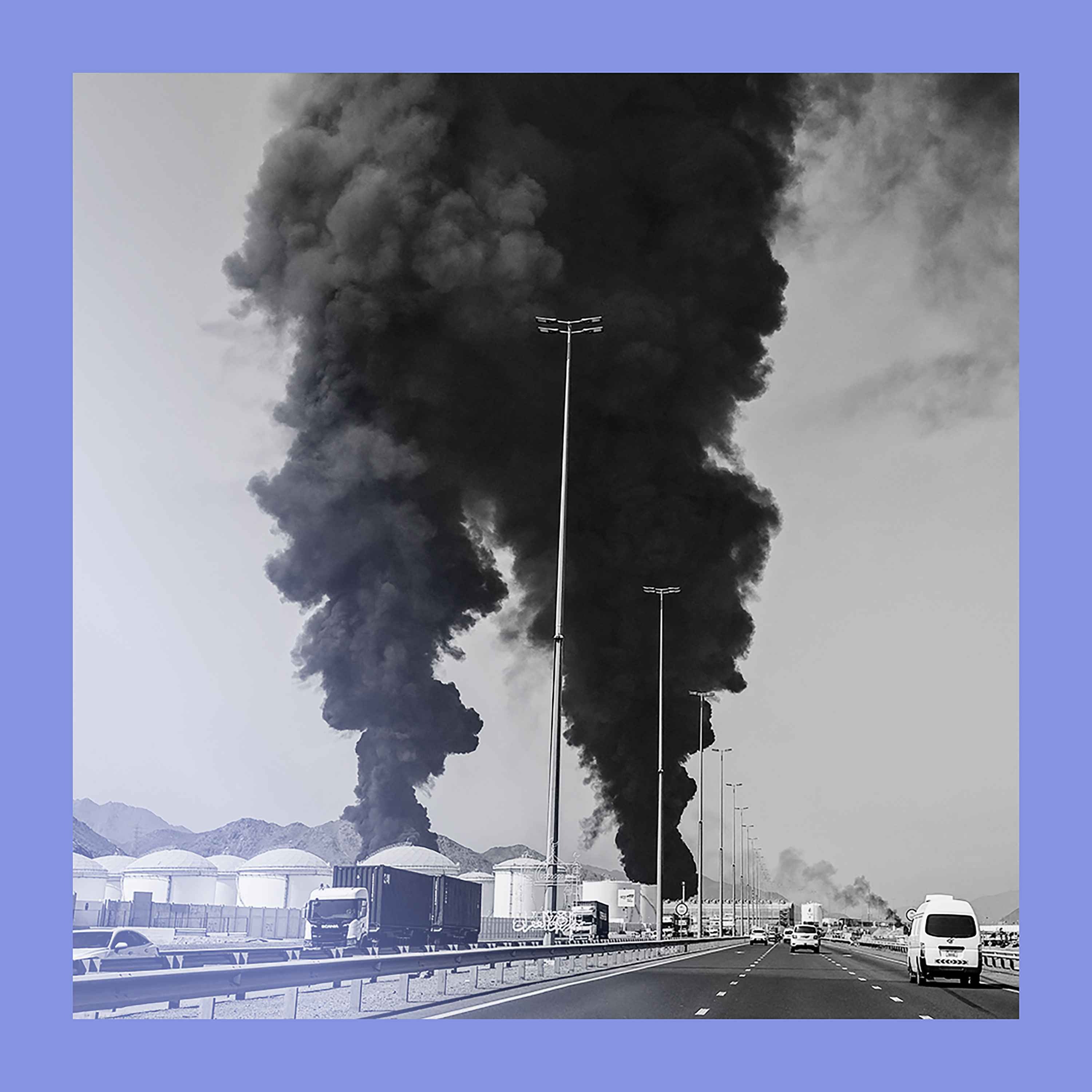
The Middle East conflict has moved beyond risk to a physical blockade of the Strait of Hormuz. With commercial tankers no longer transiting, nearly 20% of global oil is cut off from markets. This supply disruption, not just a risk premium, is driving oil prices toward $100/barrel.

Major historical oil price movements were triggered by supply-demand imbalances of just 2-3 million barrels per day. A disruption at the Strait of Hormuz would impact 20 million barrels daily, a scale that dwarfs previous crises and renders standard analytical models inadequate.

Iran's victory condition isn't military dominance but strategic disruption. By using asymmetric warfare—mines, drones, and missiles—to create chaos in the Strait of Hormuz, it can halt the flow of oil. This cracks the petrodollar system and achieves its primary geopolitical objective without needing to defeat the US Navy in a conventional battle.

The Houthis' lack of involvement in the initial conflict is a deliberate Iranian strategy. Iran is preserving them as a key asset in its "back pocket" to be used later for greater leverage, such as escalating the conflict by threatening maritime security in the Red Sea.

While global spare oil capacity exists as a buffer, it is heavily concentrated in Saudi Arabia, the UAE, and Kuwait. During a conflict, if the Strait of Hormuz is effectively closed, this capacity becomes physically trapped and cannot be deployed to global markets, nullifying its role as a price stabilizer.
