Get your free personalized podcast brief
We scan new podcasts and send you the top 5 insights daily.
Nations are moving beyond the rhetoric of 'sovereign AI.' It now represents a concrete strategy to secure bargaining power across the AI stack through diverse means like domestic substitution (China), regulation (Europe), and infrastructure hosting (Gulf states).
Related Insights
The White House's Michael Kratsios reframes "AI sovereignty" as owning American-built hardware and infrastructure, not renting access to US cloud models. This strategy encourages partner nations to buy the AI stack ("They build it. It's yours.") rather than remaining dependent on subscriptions.

The conversation around AI and government has evolved past regulation. Now, the immense demand for power and hardware to fuel AI development directly influences international policy, resource competition, and even provides justification for military actions, making AI a core driver of geopolitics.

Beyond the US and China, Saudi Arabia is positioned to become the third-largest AI infrastructure country. The national strategy leverages its abundance of land and power not just for oil exports, but to lead the world in "energy exports via tokens," effectively selling compute power globally.

Relying solely on imported AI technology from superpowers like the US and China is a path to economic and political dependency. Governments must foster local AI innovation and infrastructure to maintain economic sovereignty and global competitiveness.

The contest for AI dominance is no longer just about having the best models or blocking chip access. The real power now lies in controlling the entire ecosystem: financing, hosting, powering, securing, and regulating AI across its full stack.
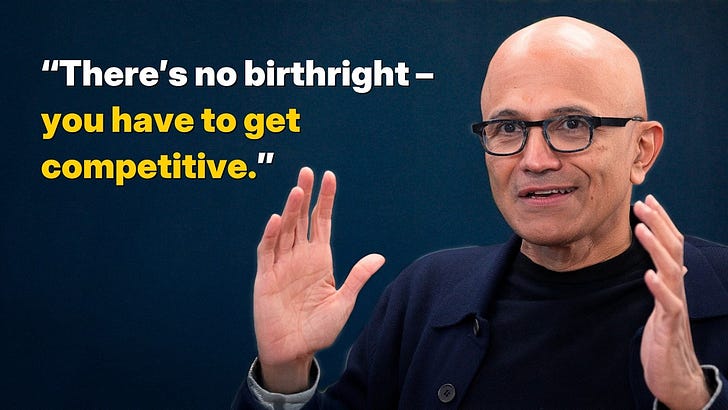
As countries from Europe to India demand sovereign control over AI, Microsoft leverages its decades of experience with local regulation and data centers. It builds sovereign clouds and offers services that give nations control, turning a potential geopolitical challenge into a competitive advantage.
Beyond simple security concerns, the US government is poised to use its control over frontier AI model deployment to pursue broader strategic interests. Access could be withheld from allies to gain leverage in unrelated negotiations, such as trade deals, turning AI into a tool of foreign policy.

The push for sovereign AI clouds extends beyond data privacy. The core geopolitical driver is a fear of becoming a "net importer of intelligence." Nations view domestic AI production as critical infrastructure, akin to energy or water, to avoid dependency on the US or China, similar to how the Middle East controls oil.

Sovereign AI is not just about where data centers are located. It's a holistic approach encompassing control over infrastructure, data, the models themselves, and governance. This ensures the AI system reflects an organization's unique values, laws, and culture, making accountability possible.

The scale of the AI revolution, seen by some analysts as bigger than the internet, is creating existential fear among governments. They worry that foundational AI models will become society-level institutions they don't control. This fear, more than just economic competition, is driving the global push for sovereign AI initiatives.
