Get your free personalized podcast brief
We scan new podcasts and send you the top 5 insights daily.
Scott Heimendinger discovered that while equations exist for ultrasonic resonance in simple shapes like cylinders, they are useless for a complex shape like a chef's knife. This forced him to abandon pure modeling and rely entirely on extensive physical prototyping and testing.

Related Insights
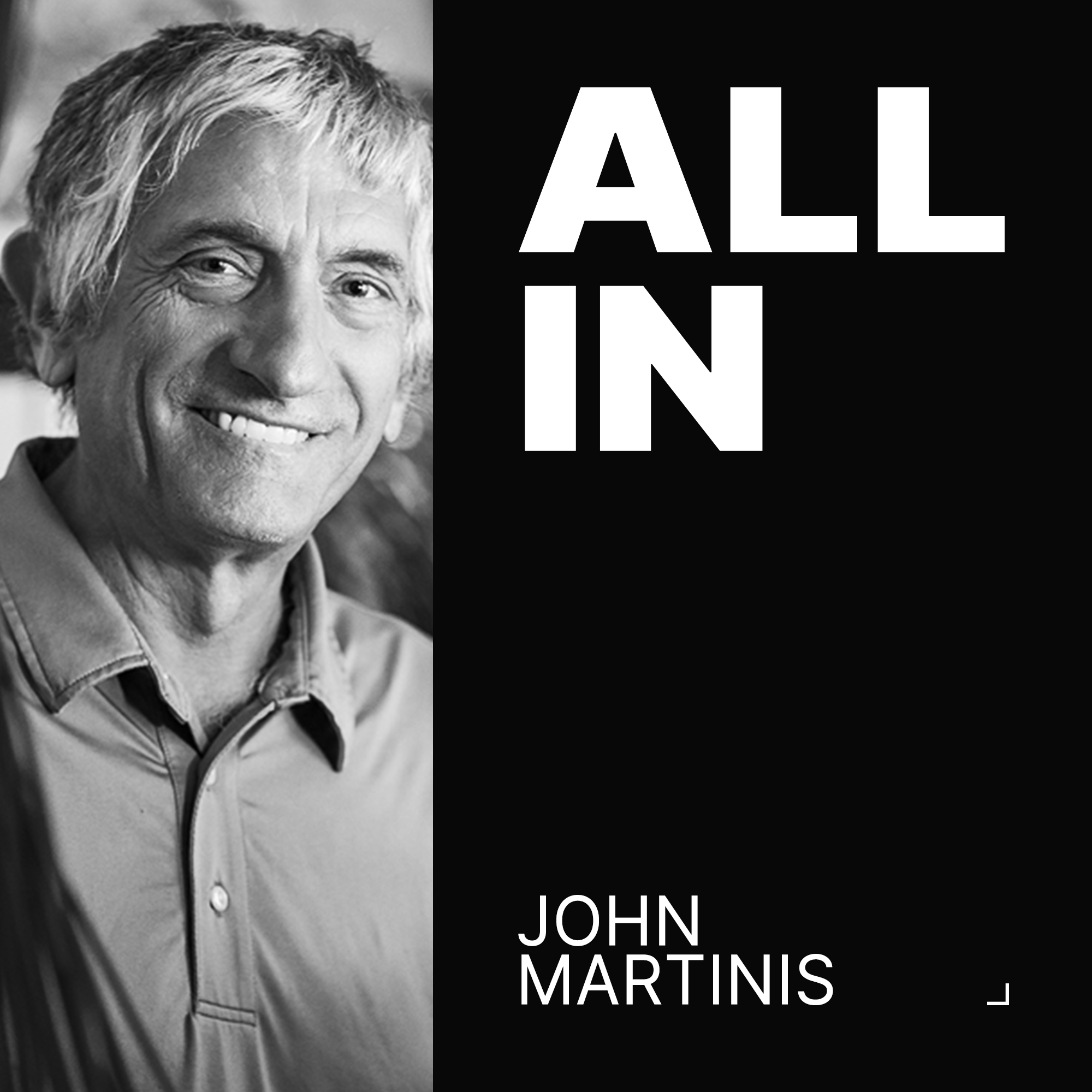
Nobel laureate John Martinis attributes his success to growing up building things with his father. This hands-on experience gave him an intuitive, empirical understanding of physics that proved invaluable for designing and building novel experiments, highlighting the value of practical skills in a theoretical field.
At NASA, the design process involves building multiple quick prototypes and deliberately failing them to learn their limits. This deep understanding, gained through intentional destruction, is considered essential before attempting to build the final, mission-critical version of a component like those on the Mars Rover.

An ultrasonic knife feels "slippery" and releases food easily because its microscopic surface oscillations cause food to experience the lower coefficient of kinetic friction, not static friction. This non-stick effect is a key benefit beyond simply reducing cutting force.
For field trials, Rainbird creates 'production intent' parts using 'soft tooling'—cheaper, lower-volume molds made from softer steel. Unlike 3D prints, these parts have the same manufacturing limitations as the final product, providing far more realistic feedback on form, fit, and durability before investing in expensive production molds.

Frustrated by subjective chef's knife reviews, Scott Heimendinger built a robotic test rig with force sensors to gather objective performance data. He then open-sourced the data, creating a new benchmark and powerful marketing asset for his own product.
Scott Heimendinger secured a role at Modernist Cuisine not via a resume, but by demonstrating his creative misuse of a laser cutter for culinary experiments (e.g., etching pumpkins). This showed the founder he shared the same innovative and unconventional mindset.
Current LLMs fail at science because they lack the ability to iterate. True scientific inquiry is a loop: form a hypothesis, conduct an experiment, analyze the result (even if incorrect), and refine. AI needs this same iterative capability with the real world to make genuine discoveries.

To visualize the imperceptible vibrations on his ultrasonic knife, Scott Heimendinger substituted a $10,000/week Laser Doppler Vibrometer with $3 worth of fine-grained popcorn salt. The salt forms visible patterns (Chladni figures) at the vibration nodes, providing an effective low-cost measurement.
The founder of AI and robotics firm Medra argues that scientific progress is not limited by a lack of ideas or AI-generated hypotheses. Instead, the critical constraint is the physical capacity to test these ideas and generate high-quality data to train better AI models.
Turning intuition into precise mathematics is vital because the math can reveal consequences the theory's creator never anticipated. Einstein himself didn't foresee and initially rejected the existence of black holes, a direct prediction from his own equations.
