/
© 2026 RiffOn. All rights reserved.
  1. All-In with Chamath, Jason, Sacks & Friedberg
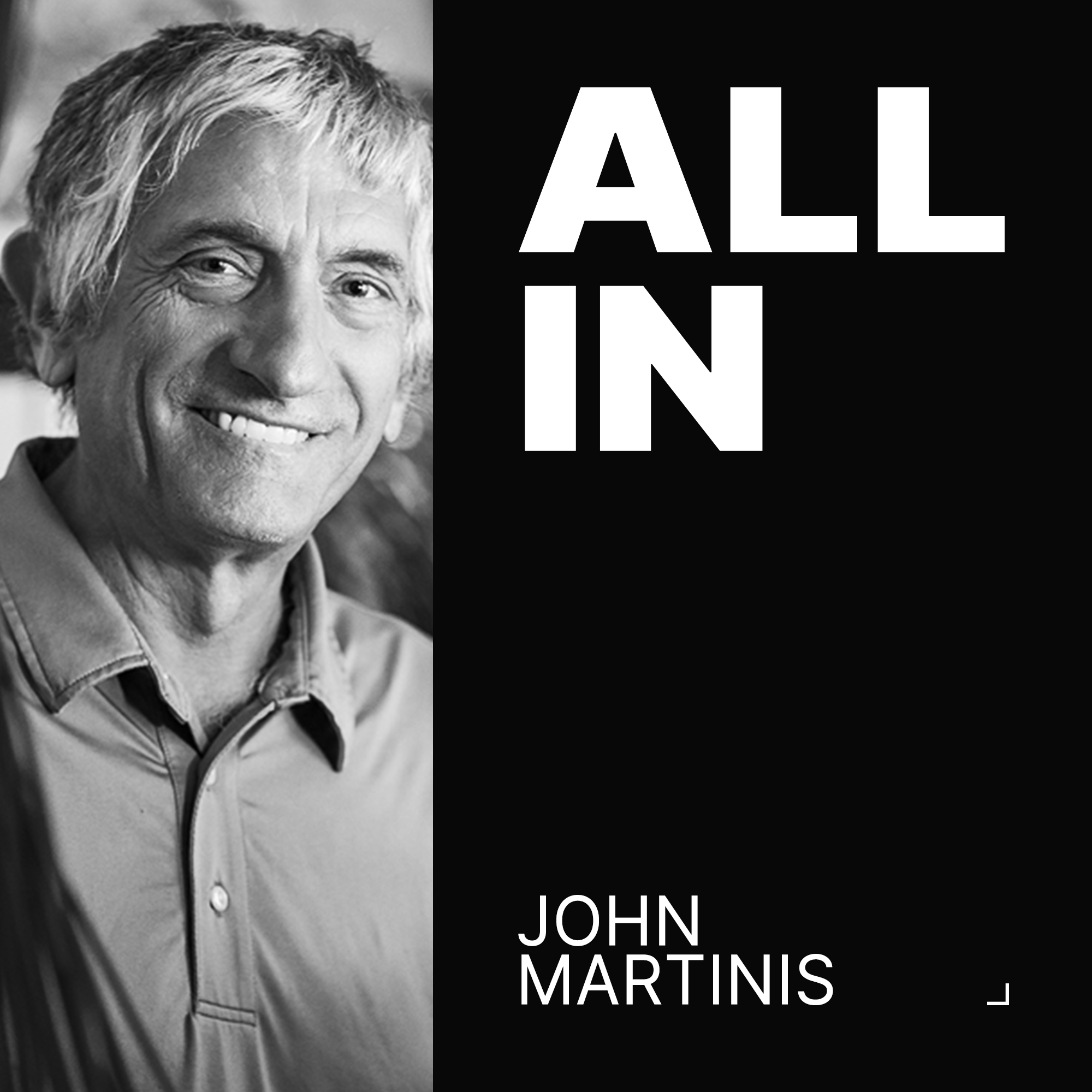
  2. Nobel Prize in Physics Winner: John Martinis on the State of Quantum
Nobel Prize in Physics Winner: John Martinis on the State of Quantum

Nobel Prize in Physics Winner: John Martinis on the State of Quantum

All-In with Chamath, Jason, Sacks & Friedberg · Oct 27, 2025

Nobel Laureate John Martinis discusses his prize-winning work, the origins of quantum computing, and the 10-year path to its practical use.

A "Garage Tinkerer" Mindset Is a Superpower for Experimental Physicists

Nobel laureate John Martinis attributes his success to growing up building things with his father. This hands-on experience gave him an intuitive, empirical understanding of physics that proved invaluable for designing and building novel experiments, highlighting the value of practical skills in a theoretical field.

Nobel Prize in Physics Winner: John Martinis on the State of Quantum thumbnail

Nobel Prize in Physics Winner: John Martinis on the State of Quantum

All-In with Chamath, Jason, Sacks & Friedberg·4 months ago

Schrödinger's Cat Was a Testable Hypothesis, Not Just a Thought Experiment

Physicist Anthony Leggett argued that the Schrödinger's Cat paradox only exists if one assumes a macroscopic object can be in a quantum superposition. He pointed out there was no experimental evidence for this, reframing the famous paradox as a testable scientific question that spurred real-world research.

Nobel Prize in Physics Winner: John Martinis on the State of Quantum thumbnail

Nobel Prize in Physics Winner: John Martinis on the State of Quantum

All-In with Chamath, Jason, Sacks & Friedberg·4 months ago

The Nobel Committee Uses Symposiums as a "Soft Interview" for Potential Winners

John Martinis reveals that the Nobel system uses specialized symposiums not just to assess a scientific field's importance, but also to vet potential laureates. These events allow the committee to evaluate candidates' presentation skills and suitability as public representatives for science, acting as an informal screening process.

Nobel Prize in Physics Winner: John Martinis on the State of Quantum thumbnail

Nobel Prize in Physics Winner: John Martinis on the State of Quantum

All-In with Chamath, Jason, Sacks & Friedberg·4 months ago

Nobel-Winning Discoveries Often Need Decades to Reveal Their True Impact

John Martinis's 1985 experiment demonstrating quantum mechanics at a macro scale was noteworthy but not seen as a Nobel-worthy breakthrough at the time. Its significance grew over decades as it became the foundation for the burgeoning field of quantum computing, showing the long-tail impact of foundational research.

Nobel Prize in Physics Winner: John Martinis on the State of Quantum thumbnail

Nobel Prize in Physics Winner: John Martinis on the State of Quantum

All-In with Chamath, Jason, Sacks & Friedberg·4 months ago

Nobel Laureate Is Using US-Only Semiconductor Tech to Leapfrog China in Quantum Computing

To accelerate progress and maintain a competitive lead over China, John Martinis's new company is partnering with Applied Materials. They are leveraging modern, 300mm semiconductor fabrication tools—which are restricted from China—to build next-generation quantum devices with higher quality and scalability.

Nobel Prize in Physics Winner: John Martinis on the State of Quantum thumbnail

Nobel Prize in Physics Winner: John Martinis on the State of Quantum

All-In with Chamath, Jason, Sacks & Friedberg·4 months ago

Quantum Computing Originated From a Single Philosophical Question About Macro-Scale Physics

The entire field of quantum computing was sparked by physicist Anthony Leggett's provocative question: "Do macroscopic objects behave quantum mechanically?" This question directly inspired John Martinis's Nobel-winning experiment, which proved it was possible and laid the groundwork for the field.

Nobel Prize in Physics Winner: John Martinis on the State of Quantum thumbnail

Nobel Prize in Physics Winner: John Martinis on the State of Quantum

All-In with Chamath, Jason, Sacks & Friedberg·4 months ago

Richard Feynman's Vision Transformed a Quantum Theory Into a Lifelong Research Mission

After proving quantum mechanics at a macro scale, John Martinis was inspired by a Richard Feynman talk on quantum computation. Feynman's vision for a practical application provided the motivation for Martinis to dedicate his career to building a quantum computer, transforming an abstract discovery into a world-changing goal.

Nobel Prize in Physics Winner: John Martinis on the State of Quantum thumbnail

Nobel Prize in Physics Winner: John Martinis on the State of Quantum

All-In with Chamath, Jason, Sacks & Friedberg·4 months ago

Being a Perennial Nobel Candidate Creates a Negative Annual Emotional Cycle

John Martinis describes the emotional burden of being considered for the Nobel Prize for years. Each year, the anticipation followed by disappointment left him "down for a day," an experience he deemed a "very bad attitude." He finally won in the year he successfully trained himself to forget about the announcement.

Nobel Prize in Physics Winner: John Martinis on the State of Quantum thumbnail

Nobel Prize in Physics Winner: John Martinis on the State of Quantum

All-In with Chamath, Jason, Sacks & Friedberg·4 months ago

China May Be Concealing Quantum Computing Advances by Delaying Publication

Nobel laureate John Martinis expresses concern that China is strategically withholding its quantum computing research. He notes that Chinese labs often publish results similar to Google's shortly after Google does, suggesting they may be waiting for Western validation before revealing their own, potentially parallel or superior, progress.

Nobel Prize in Physics Winner: John Martinis on the State of Quantum thumbnail

Nobel Prize in Physics Winner: John Martinis on the State of Quantum

All-In with Chamath, Jason, Sacks & Friedberg·4 months ago