Get your free personalized podcast brief
We scan new podcasts and send you the top 5 insights daily.
Javier Milei's political strategy relies on highlighting the threat of the Peronists returning to power. This tactic, however, amplifies the exact political instability that deters long-term investment. By constantly reminding markets of the risk of policy reversal, he inadvertently reinforces the country's chronic boom-bust economic cycle.

Related Insights
The US Treasury's intervention to stabilize the Argentine peso was likely motivated by President Trump's desire to support a key political ally, Javier Milei, rather than specific US economic interests like shale gas or IMF stability.
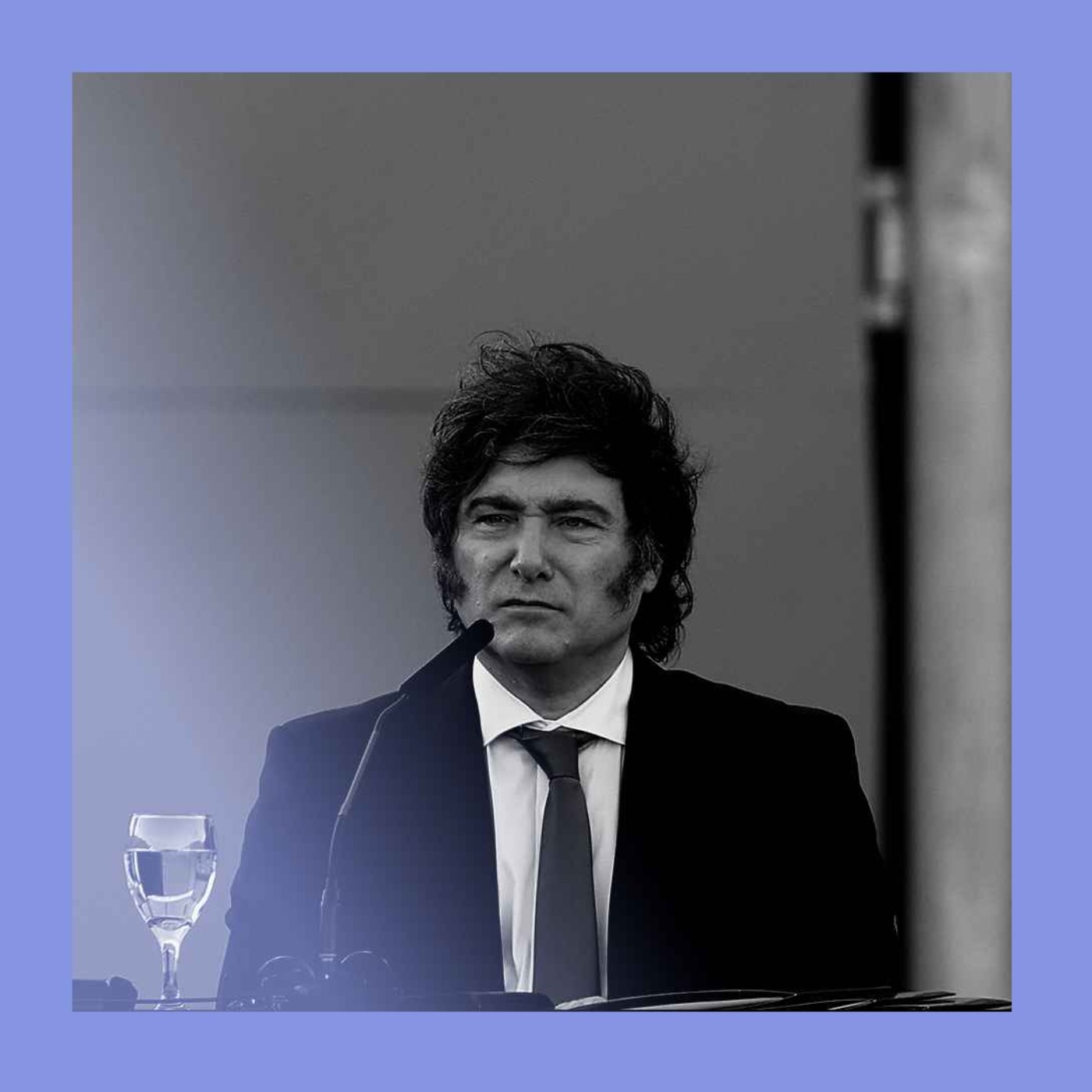
Despite his party holding very few seats in Congress, President Javier Milei successfully enacts his agenda by maintaining enormous popular support. This pressures opposition parties to cooperate, as they fear voter backlash if they are seen to obstruct his popular policies.
Unprecedented US financial support, likened to Draghi's "whatever it takes," has successfully created a circuit breaker for Argentina's negative market feedback loop. However, this support only addresses financial symptoms (FX and credit risk) and cannot solve the underlying political uncertainty about the government's ability to implement reforms.

The recent $20 billion U.S. Treasury support for Argentina was not a reactive bailout for a failing program. It was a pre-planned "big bazooka" to counter a politically-motivated speculative attack on the peso ahead of midterm elections, making it prohibitively expensive to bet against the country's stability.
Argentina's President Javier Milei uses a chainsaw at rallies not just for shock value, but as a potent symbol. It simultaneously represents the problem (excessive government spending) and his proposed solution (slashing the budget), creating a simple and resonant message for voters weary of economic jargon.
Despite Javier Milei's iconoclastic image, his economic program is run by a highly respected, conventional team of technocrats, many from the previous reformist administration. This creates a separation between his "Trumpy" political style and the orthodox, IMF-style stabilization policies being implemented.
Knowing they would perform well in Buenos Aires, the Peronist party strategically held an early local election. They correctly anticipated President Milei would over-promise on his party's performance, creating a negative market reaction when he under-delivered, thereby executing a "perfectly executed attack" on his program's stability.
Javier Malé's midterm victory gives him enough congressional seats to block opposition spending but not enough to pass his own ambitious reforms. His success now hinges on building coalitions, a skill that contrasts with his populist, anti-establishment persona and represents a critical pivot from campaigning to governing.

Unlike countries with no recent memory of economic collapse, nations like Greece, Spain, and Italy—and potentially now Argentina—that have endured hyperinflation are more likely to elect reformist governments. The population internalizes the cost of fiscal irresponsibility and votes to avoid repeating the disaster.
The significant time until Argentina's October elections creates a dangerous feedback loop. The market's anticipation of a weaker currency post-election incentivizes investors to sell pesos now. This pressure forces authorities into reactive controls, which reinforces the negative sentiment they are trying to combat.