Get your free personalized podcast brief
We scan new podcasts and send you the top 5 insights daily.
AI doesn't replace managers; it enhances them. By using AI to synthesize information about their reports, projects, and goals, managers can offload preparation and be more present, empathetic, and effective in their human interactions.

Related Insights
AI's current strength lies in enhancing efficiency by handling tasks like summarization and data categorization. It is not suited for big-picture thinking or complex processes. The goal should be to make existing teams more effective—augmenting their abilities rather than pursuing wholesale replacement, which is a common misconception among business leaders.
As AI automates entry-level knowledge work, human roles will shift towards management. The critical skill will no longer be doing the work, but effectively delegating to and coordinating a team of autonomous AI agents. This places a new premium on traditional management skills like project planning and quality control.

Instead of replacing managers, AI can act as a 'bionic enhancement' or a mirror. It provides objective feedback on communication, helping overwhelmed leaders scale their human skills like empathy and listening in an increasingly complex remote work environment.

Business owners should view AI not as a tool for replacement, but for multiplication. Instead of trying to force AI to replace core human functions, they should use it to make existing processes more efficient and to complement human capabilities. This reframes AI from a threat into a powerful efficiency lever.

The common fear of AI eliminating jobs is misguided. In practice, AI automates specific, often administrative, tasks within a role. This allows human workers to offload minutiae and focus on uniquely human skills like relationship building and strategic thinking, ultimately increasing their leverage and value.

Don't think of AI as replacing roles. Instead, envision a new organizational structure where every human employee manages a team of their own specialized AI agents. This model enhances individual capabilities without eliminating the human team, making everyone more effective.

Frame internal AI initiatives not as a way to replace employees, but to automate their chores. This frees them to move 'up the stack' to perform higher-value functions like client relations, creative strategy, and founder meetings, ultimately increasing overall output.
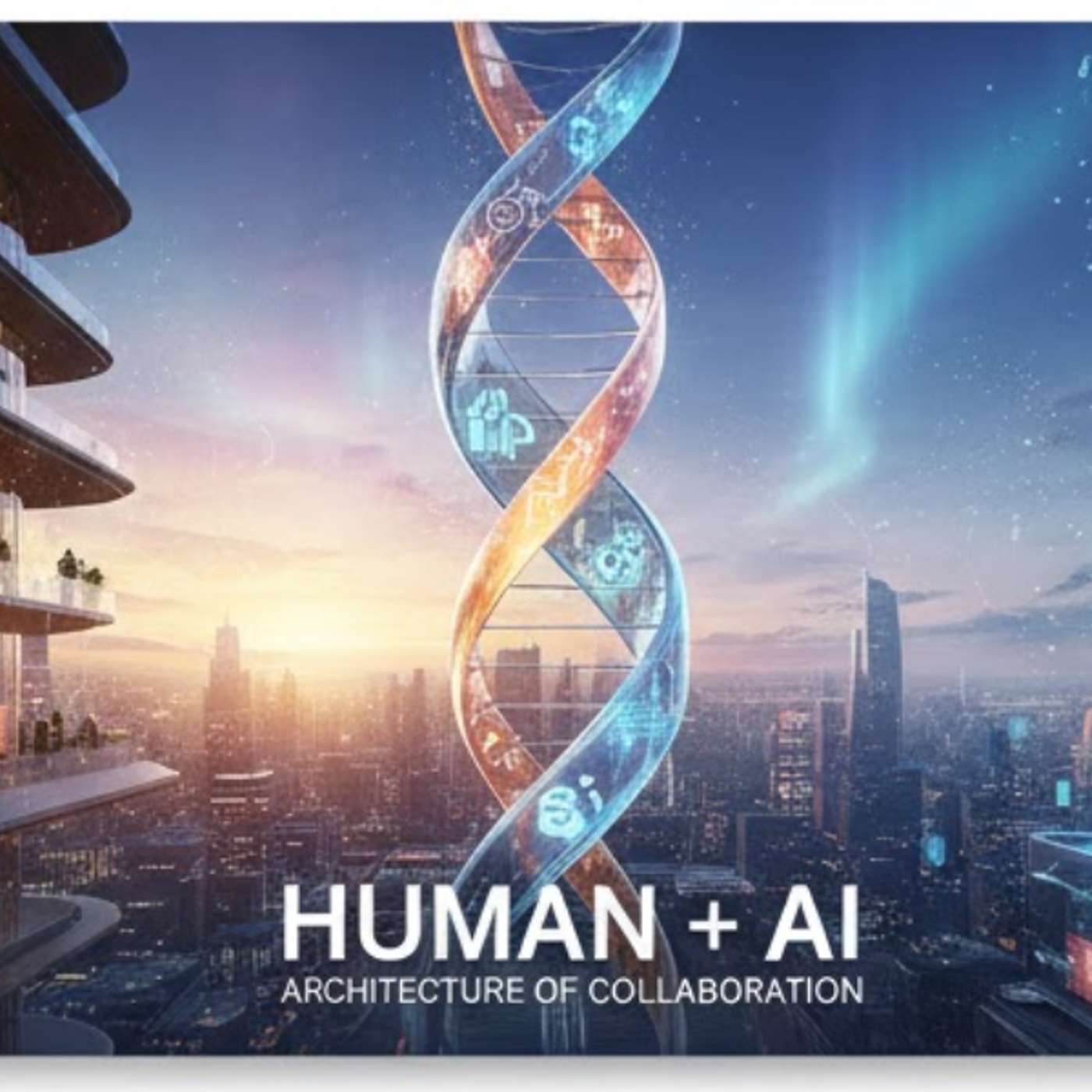
The strategic narrative for AI integration is shifting from automation (replacement) to augmentation (collaboration). Augmentation positions AI as an assistant that enhances human skills, enabling teams to achieve outcomes that neither humans nor AI could accomplish independently. This fosters a more inclusive and productive environment.
AI's value for PMs is augmentation, not replacement. By automating tactical tasks that consume most of a PM's day (e.g., "six out of eight hours"), AI frees up critical capacity for higher-level strategic, creative, and innovative work—the core functions of a product leader.

The most powerful current use case for enterprise AI involves the system acting as an intelligent assistant. It synthesizes complex information and suggests actions, but a human remains in the loop to validate the final plan and carry out the action, combining AI speed with human judgment.
