Get your free personalized podcast brief
We scan new podcasts and send you the top 5 insights daily.
The most powerful current use case for enterprise AI involves the system acting as an intelligent assistant. It synthesizes complex information and suggests actions, but a human remains in the loop to validate the final plan and carry out the action, combining AI speed with human judgment.

Related Insights
Don't treat AI as a "cyborg" that automates your job. Instead, view it as a "centaur"—a hybrid where the human provides judgment and the AI provides speed and scale. AI handles the grunt work (data analysis, research), while the human makes the final, accountable decisions.

AI's current strength lies in enhancing efficiency by handling tasks like summarization and data categorization. It is not suited for big-picture thinking or complex processes. The goal should be to make existing teams more effective—augmenting their abilities rather than pursuing wholesale replacement, which is a common misconception among business leaders.
Business owners should view AI not as a tool for replacement, but for multiplication. Instead of trying to force AI to replace core human functions, they should use it to make existing processes more efficient and to complement human capabilities. This reframes AI from a threat into a powerful efficiency lever.

AI's primary value isn't replacing employees, but accelerating the speed and quality of their work. To implement it effectively, companies must first analyze and improve their underlying business processes. AI can then be used to sift through data faster and automate refined workflows, acting as a powerful assistant.
In an enterprise setting, "autonomous" AI does not imply unsupervised execution. Its true value lies in compressing weeks of human work into hours. However, a human expert must remain in the loop to provide final approval, review, or rejection, ensuring control and accountability.

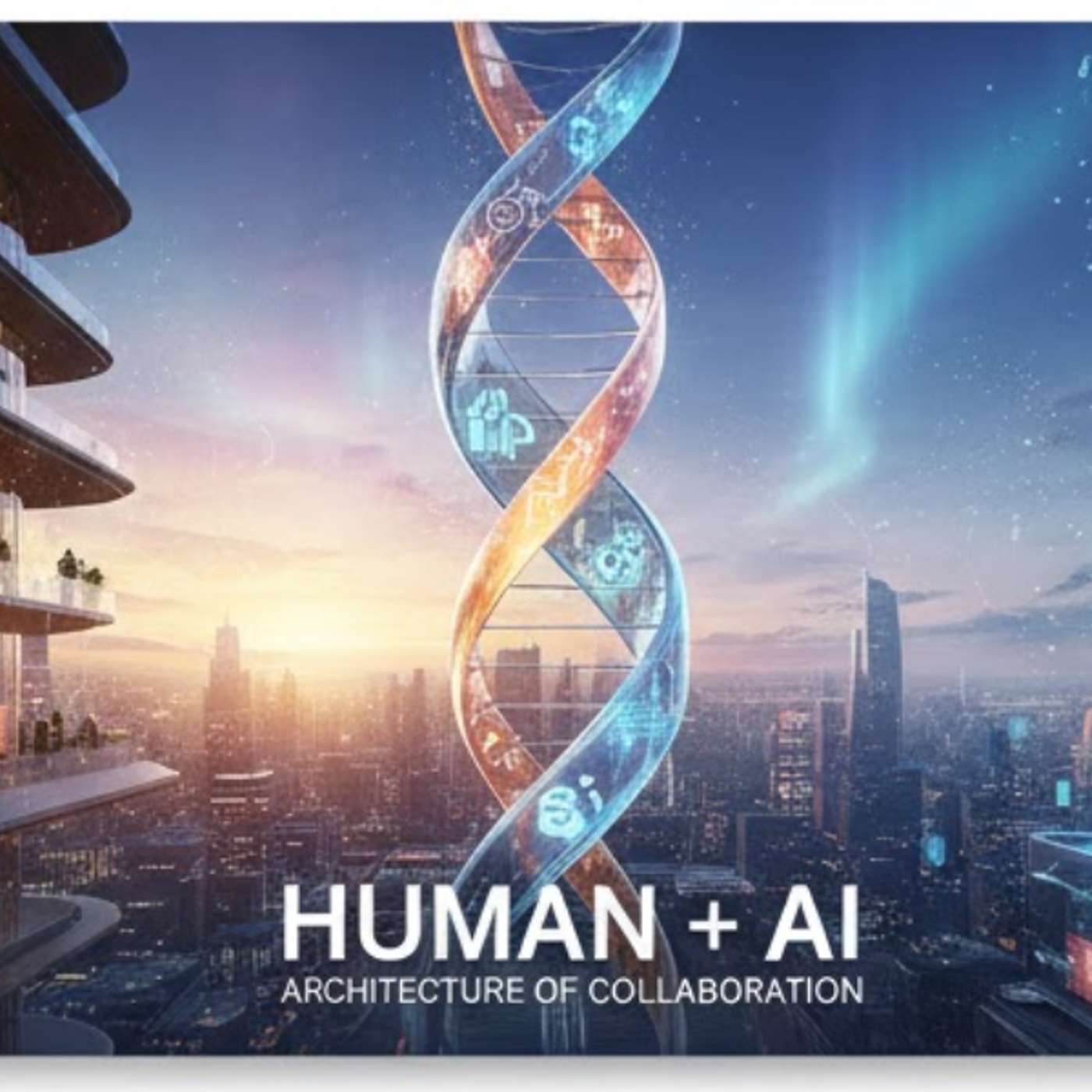
The strategic narrative for AI integration is shifting from automation (replacement) to augmentation (collaboration). Augmentation positions AI as an assistant that enhances human skills, enabling teams to achieve outcomes that neither humans nor AI could accomplish independently. This fosters a more inclusive and productive environment.
Despite hype in areas like self-driving cars and medical diagnosis, AI has not replaced expert human judgment. Its most successful application is as a powerful assistant that augments human experts, who still make the final, critical decisions. This is a key distinction for scoping AI products.

Rather than fully replacing humans, the optimal AI model acts as a teammate. It handles data crunching and generates recommendations, freeing teams from analysis to focus on strategic decision-making and approving AI's proposed actions, like halting ad spend on out-of-stock items.

The most effective use of AI isn't full automation, but "hybrid intelligence." This framework ensures humans always remain central to the decision-making process, with AI serving in a complementary, supporting role to augment human intuition and strategy.

AI excels at intermediate process steps but requires human guidance at the beginning (setting goals) and validation at the end. This 'middle-to-middle' function makes AI a powerful tool for augmenting human productivity, not a wholesale replacement for end-to-end human-led work.