Get your free personalized podcast brief
We scan new podcasts and send you the top 5 insights daily.
The belief that autonomous driving is an unbreachable technological moat for one company is likely wrong. The technology is commoditizing at a pace similar to LLMs. It is not an impossible breakthrough, but rather a feature that will be implemented across most vehicle manufacturers, much like chatbots are now common.

Related Insights
Autonomous vehicle technology will likely become a commodity layer, with most manufacturers providing their cars to existing ride-sharing networks like Uber and Lyft. Only a few companies like Tesla have the brand and scale to pursue a vertically-integrated, closed-network strategy.
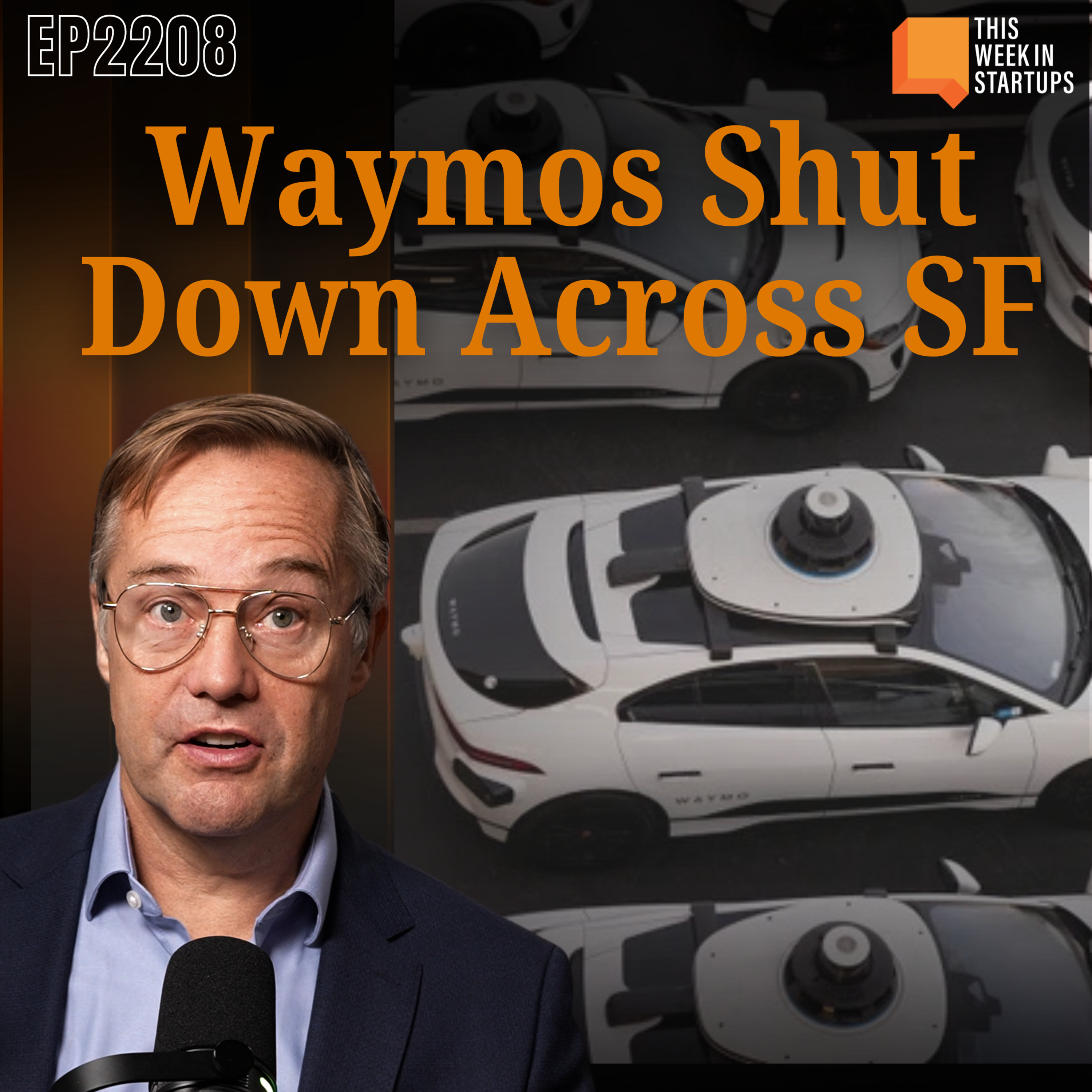
While large language models (LLMs) converge by training on the same public internet data, autonomous driving models will remain distinct. Each company must build its own proprietary dataset from its unique sensor stack and vehicle fleet. This lack of a shared data foundation means different automakers' AI driving behaviors and capabilities will likely diverge over time.

While the race for AI supremacy in language models is fierce with many well-funded competitors, the autonomous driving sector remains starkly different. Legacy automakers are still perceived as being a decade behind Tesla's Full Self-Driving capabilities, failing to close the gap in a way that companies have in the LLM space.

The neural nets powering autonomous vehicles are highly generalizable, with 80-90% of the underlying software being directly applicable to other verticals like trucking. A company's long-term value lies in its scaled driving data and core AI competency, not its initial target market.

Rivian's CEO explains that early autonomous systems, which were based on rigid rules-based "planners," have been superseded by end-to-end AI. This new approach uses a large "foundation model for driving" that can improve continuously with more data, breaking through the performance plateau of the older method.

Leading AI models are becoming increasingly similar in capability. This rapid convergence suggests the underlying technology is becoming a commodity, and competitive advantage will likely shift to user interface, distribution, and specific applications rather than the core model itself.

As tech giants like Google and Amazon assemble the key components of the autonomy stack (compute, software, connectivity), the real differentiator becomes the ability to manufacture cars at scale. Tesla's established manufacturing prowess is a massive advantage that others must acquire or build to compete.
Initially criticized for forgoing expensive LIDAR, Tesla's vision-based self-driving system compelled it to solve the harder, more scalable problem of AI-based reasoning. This long-term bet on foundation models for driving is now converging with the direction competitors are also taking.

Wave's CEO asserts that the core scientific challenges of self-driving are solved. The remaining hurdles are engineering execution, product integration, and economic scaling. This marks a maturation point where the problem moves from a question of 'if' to 'how'—a predictable, albeit difficult, path of scaling data, compute, and validation.

Dara Khosrowshahi observes that the "magic" of a new technology, like on-demand rides or autonomous vehicles, wears off almost instantly. The initial awe is fleeting. Therefore, the sustainable competitive moat is not the novelty but operational excellence in safety, efficiency, and affordability, which is where companies must focus.
![Dara Khosrowshahi - Uber's Bet on AVs, AI, and Building a Super-App - [Invest Like the Best, EP.476] thumbnail](https://megaphone.imgix.net/podcasts/ef669774-cccd-11ed-889b-c36caad6646f/image/158efdddfb983d2678b3530d484e8aa2.jpg?ixlib=rails-4.3.1&max-w=3000&max-h=3000&fit=crop&auto=format,compress)