Get your free personalized podcast brief
We scan new podcasts and send you the top 5 insights daily.
Dara Khosrowshahi observes that the "magic" of a new technology, like on-demand rides or autonomous vehicles, wears off almost instantly. The initial awe is fleeting. Therefore, the sustainable competitive moat is not the novelty but operational excellence in safety, efficiency, and affordability, which is where companies must focus.
![Dara Khosrowshahi - Uber's Bet on AVs, AI, and Building a Super-App - [Invest Like the Best, EP.476] thumbnail](https://megaphone.imgix.net/podcasts/ef669774-cccd-11ed-889b-c36caad6646f/image/158efdddfb983d2678b3530d484e8aa2.jpg?ixlib=rails-4.3.1&max-w=3000&max-h=3000&fit=crop&auto=format,compress)
Related Insights
With AI commoditizing technology, the sustainable advantage for startups is the speed and discipline of their experimentation. Founders who leverage AI to operate 10x faster will outcompete those with static tech advantages, as execution velocity is far harder to replicate than a feature.

With AI commoditizing the tech stack, traditional technical moats are disappearing. The only sustainable differentiator at the application layer is having a unique insight into a problem and assembling a team that can out-iterate everyone else. Your long-term defensibility becomes customer love built through relentless execution.
In previous tech waves, proprietary technology was a key differentiator. Now, with powerful AI models widely available, the advantage shifts to deeply understanding customer problems. The question "Should we even build this?" is more critical to creating a moat than the technology itself.

Despite dreaming of self-driving cars for decades, the host found himself bored and checking his phone within minutes of his first ride. This reveals how quickly truly revolutionary technology can shift from a marvel to a background utility, losing its novelty upon proving its reliability.

While many see autonomous vehicles as a threat to Uber's ride-hailing, its delivery segment may be more important and defensible. Automating last-mile delivery of goods from varied locations is significantly more complex and less economical than automating passenger transport, providing a durable moat.
Uber's key advantage in the AV race is its "custody of the consumer." By controlling the main ride-hailing app, it can aggregate various AV providers (Waymo, Rivian), commoditize their technology, and extract large margins, much like Apple does with Google Search in its ecosystem.

As tech giants like Google and Amazon assemble the key components of the autonomy stack (compute, software, connectivity), the real differentiator becomes the ability to manufacture cars at scale. Tesla's established manufacturing prowess is a massive advantage that others must acquire or build to compete.
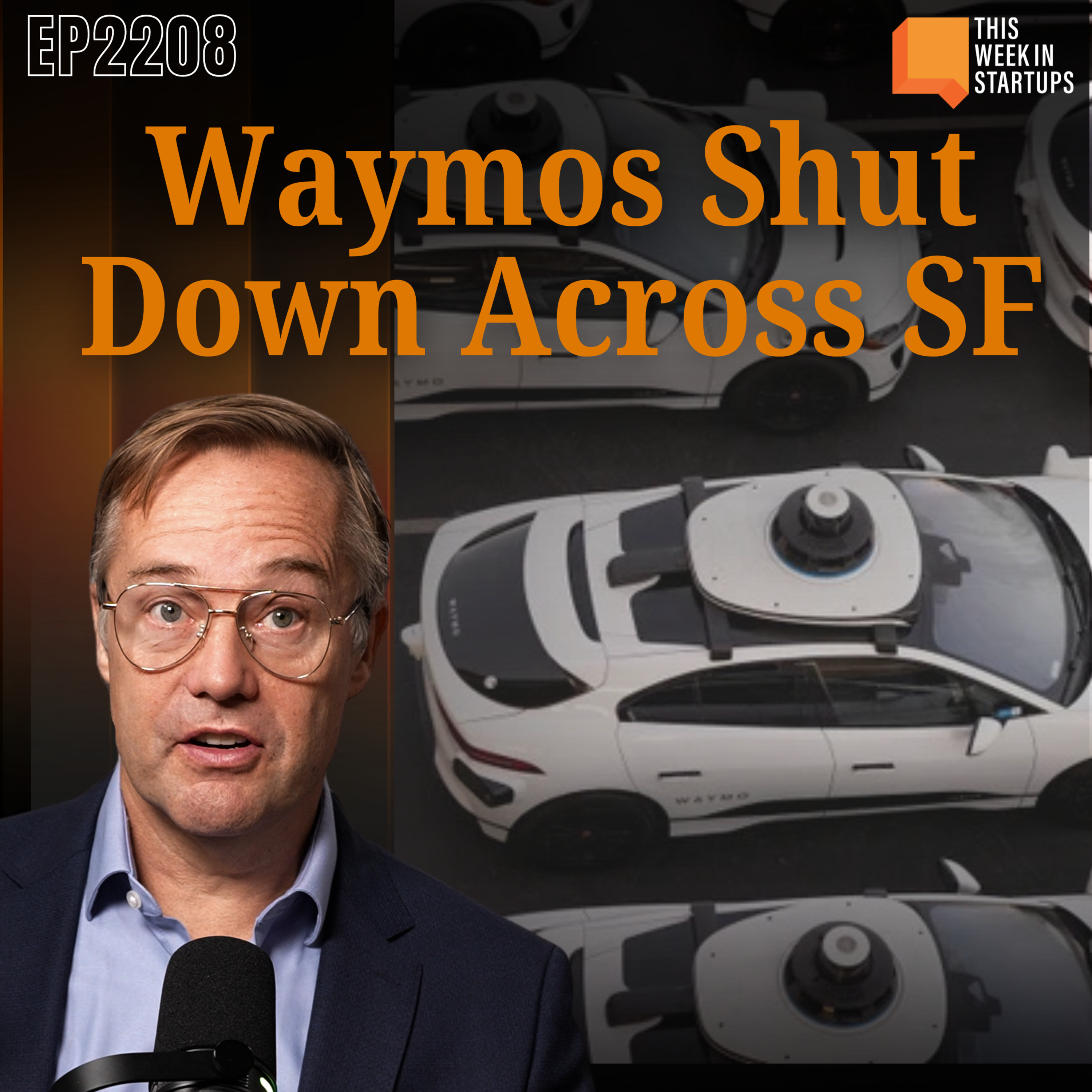
When all competitors can access the same frontier models, the technology itself is not a sustainable advantage. The only durable moat is velocity: how fast your organization can iterate through the build-measure-learn-improve loop. The fastest team to learn and adapt wins.

In an age where AI can quickly commoditize features, traditional moats like data are weakening. Miro's CEO argues the only sustainable competitive advantage is an organization's speed of learning—its ability to rapidly identify market signals, separate them from noise, and act decisively.

In the AI era, technology moats are shrinking as tools become commoditized. Consequently, early-stage investors increasingly prioritize the founding team itself, specifically their execution velocity and ability to leverage AI, over any specific technical advantage.