Get your free personalized podcast brief
We scan new podcasts and send you the top 5 insights daily.
"Frankenstein" is foundational because it captures a crucial turning point in Western thought. It explores the shift from God as the sole creator to humans as creators, introducing anxieties about scientific overreach and moral responsibility that have defined technological discourse ever since.
Related Insights
Major philosophical texts are not created in a vacuum; they are often direct products of the author's personal life and historical context. For example, Thomas Hobbes wrote 'Leviathan,' which argues for an authoritarian ruler, only after fleeing the chaos of the English Civil War as a Royalist. This personal context is crucial for understanding the work.

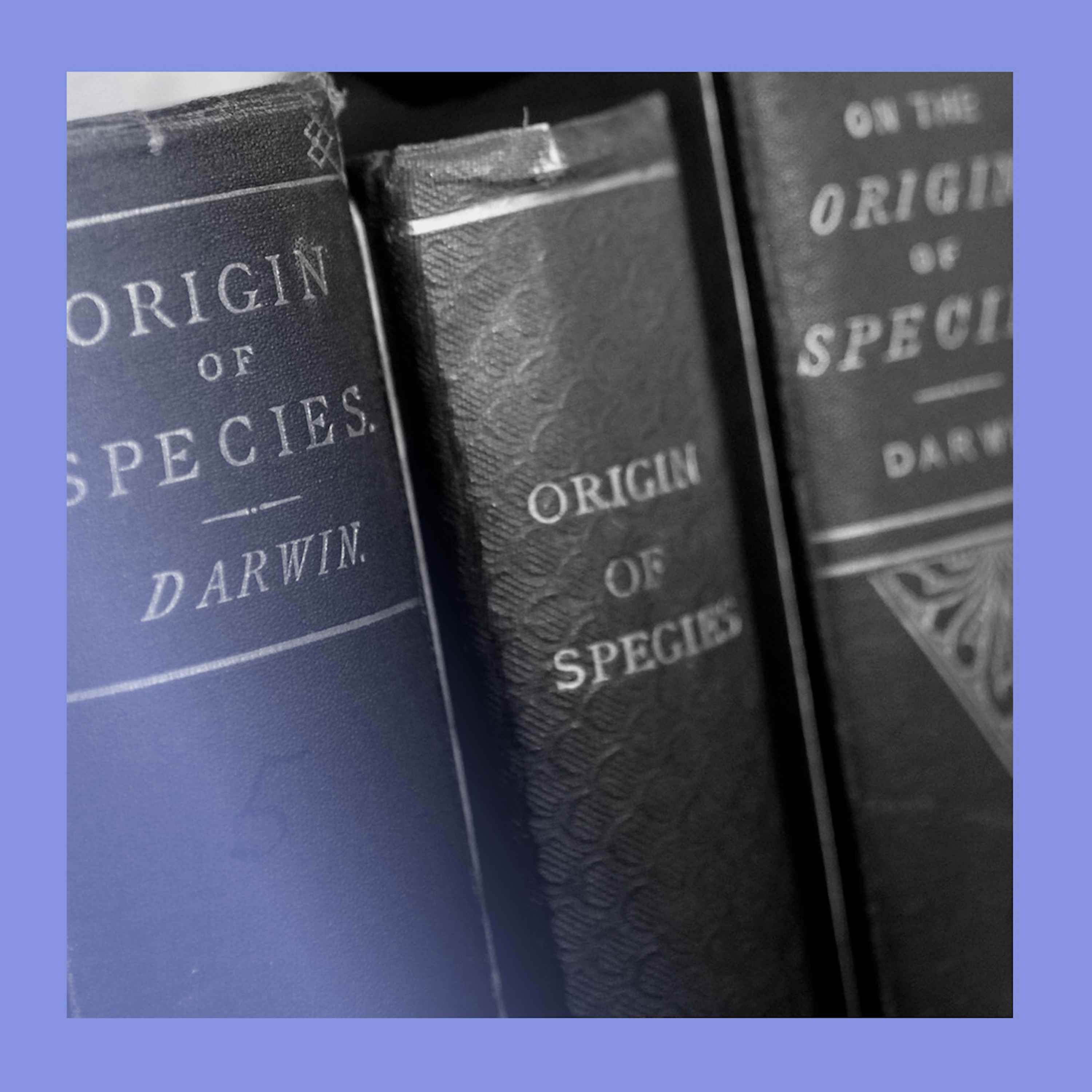
The shift to a scientific worldview, exemplified by Darwin, wasn't just a triumphant march of progress. For many in the Victorian era, it created a painful void by removing the perceived "sucker of religion." This highlights that with every world-changing book that opens a new world, a previous worldview is lost.
Society rarely bans powerful new technologies, no matter how dangerous. Instead, like with fire, we develop systems to manage risk (e.g., fire departments, alarms). This provides a historical lens for current debates around transformative technologies like AI, suggesting adaptation over prohibition.

Ideologies that rely on a 'blank slate' view of human nature have made a catastrophic error. As genetic technologies become mainstream, the public is forced to confront the tangible reality of genetic predispositions in their own reproductive choices. This will unravel the blank slate worldview, a cornerstone of some progressive thought.
The popular perception of Galileo challenging religious dogma has a greater cultural impact than the specific, nuanced arguments in his actual writings. A book's power can derive from what people believe it represents, even if they've never read it or misunderstand its contents.
We often think of "human nature" as fixed, but it's constantly redefined by our tools. Technologies like eyeglasses and literacy fundamentally changed our perception and cognition. AI is not an external force but the next step in this co-evolution, augmenting what it means to be human.

Dr. Li rejects both utopian and purely fatalistic views of AI. Instead, she frames it as a humanist technology—a double-edged sword whose impact is entirely determined by human choices and responsibility. This perspective moves the conversation from technological determinism to one of societal agency and stewardship.

New technology can ignite violent conflict by making ideological differences concrete and non-negotiable. The printing press did this with religion, leading to one of Europe's bloodiest wars. AI could do the same by forcing humanity to confront divisive questions like transhumanism and the definition of humanity, potentially leading to similar strife.

The tech industry often builds technologies first imagined in dystopian science fiction, inadvertently realizing their negative consequences. To build a better future, we need more utopian fiction that provides positive, ambitious blueprints for innovation, guiding progress toward desirable outcomes.

Dr. Fei-Fei Li warns that the current AI discourse is dangerously tech-centric, overlooking its human core. She argues the conversation must shift to how AI is made by, impacts, and should be governed by people, with a focus on preserving human dignity and agency amidst rapid technological change.
