Get your free personalized podcast brief
We scan new podcasts and send you the top 5 insights daily.
Despite its challenges, Europe’s potential is immense, with 450 million people and 15% of global GDP. The key to unlocking this is for the continent to operate as a unified economic bloc, creating an 'investment and savings union,' rather than 27 individual states, to compete with the U.S. and Asia.

Related Insights
Increased defense spending is not just a security measure. It presents a prime opportunity to create a European safe asset, funded at both national and EU levels, which is key to developing the deep, liquid capital market Europe currently lacks.

Chronic issues like high energy costs and regulatory burdens, combined with a failure to implement meaningful reforms (e.g., only 11% of the Draghi report), have weakened Europe's competitiveness. This leaves the continent exposed and losing market share as China aggressively pursues an export-led growth strategy.
Europe's path to economic growth may be easier than America's precisely because it's starting from a lower base. It's easier for a '1.5 GPA student' to improve to a 2.5 than for a '3.6 GPA student' to reach a 4.0. With strong universities and talent, Europe has the assets to make significant gains by fixing fundamental issues.

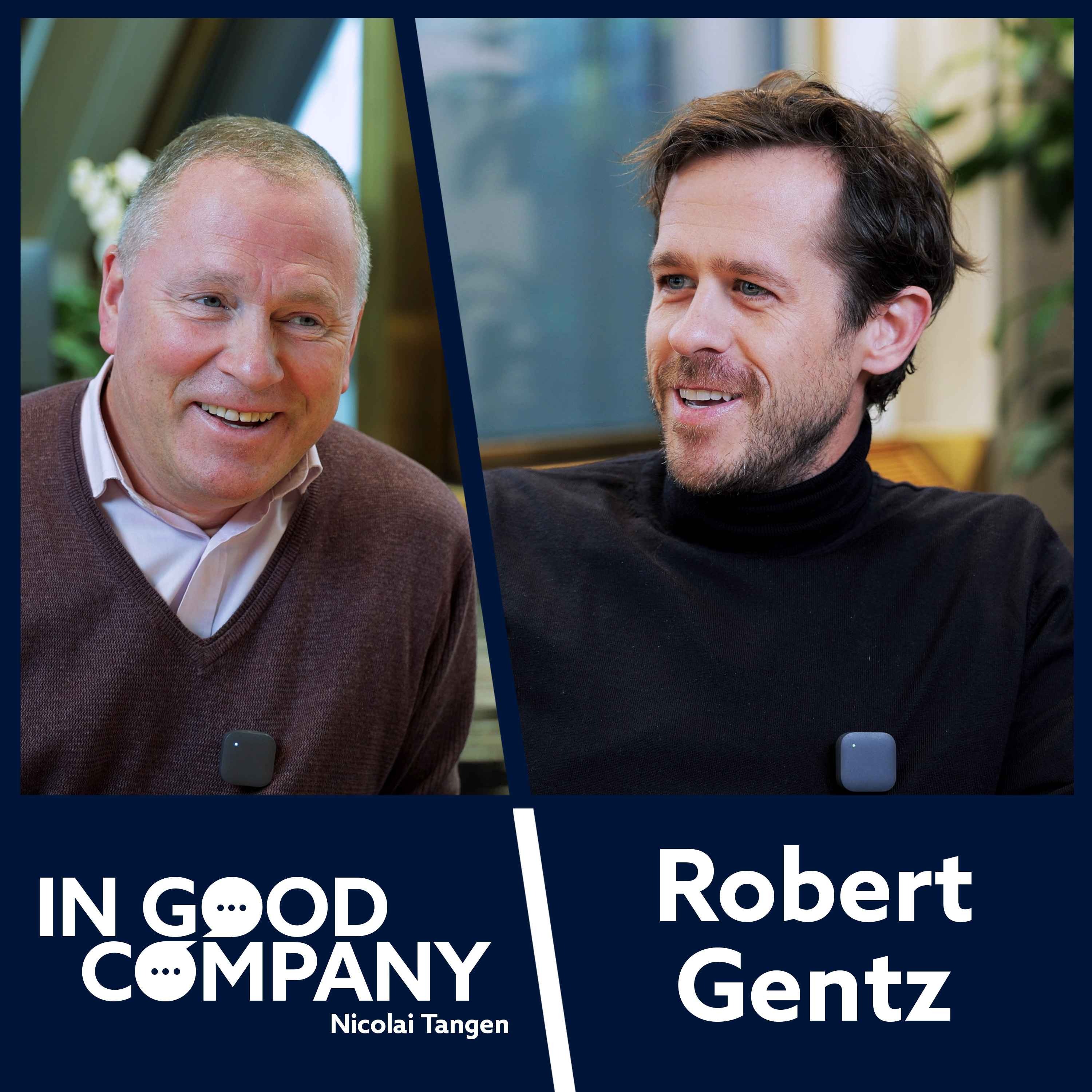
Zalando's co-CEO argues Europe's entrepreneurial ecosystem lacks a unifying vision like the "American Dream." He sees an opportunity for Europe to establish its own brand based on inclusivity and democratic values, creating a powerful narrative to attract global talent and win the innovation race against the US and China.

The widening GDP gap between the U.S. and Europe since 2007 is attributed not just to policy but a cultural shift. The speaker argues Europe has lost its collective "hunger" and lacks the ambitious, unifying national projects that historically drove its innovation and attracted top talent.

Robert Gens believes Europe has a massive opportunity to create its own "European Dream" as a talent magnet. He posits that as the "American Dream" becomes more exclusive, Europe can offer a more inclusive, democratic, and values-driven environment for entrepreneurs to build their businesses.
The Euro was created with monetary union first, assuming political and fiscal union would follow; they haven't. Now, with nationalist governments rising across Europe, the project's core conflict is exposed. A shared currency managed by inwardly-focused national interests is a fundamentally unstable structure.

Contrary to their post-2008 reputation, countries like Portugal, Spain, and Greece have been named The Economist's top-performing rich economy for four consecutive years. This signals a significant regional economic resurgence after a prolonged period of struggle and stagnation.

Europe's economic underperformance is caused by a governance structure that is not just indifferent but actively hostile to its entrepreneurial class. This 'regulatory malice' and 'contempt' makes it prohibitively difficult to build, innovate, and capture upside, driving away talent and capital.

The German chancellor's admission that the EU is declining due to overregulation serves as a stark warning. The collective pursuit of safety and control through bureaucracy stifles entrepreneurial freedom and personal responsibility, ultimately making the entire economic bloc less competitive on the world stage.
