Get your free personalized podcast brief
We scan new podcasts and send you the top 5 insights daily.
OpenAI's Pentagon deal is only a single-digit-million-dollar contract, a tiny fraction of its projected revenue. The true value is not financial but strategic: a government contract serves as a powerful security and compliance endorsement, making hesitant enterprise buyers more comfortable adopting its AI tools.

Related Insights
OpenAI's ability to partner with AWS for its Pentagon deal stems from a strategic carve-out negotiated with Microsoft last fall. This clause specifically allowed OpenAI to work with other cloud providers for national security customers, revealing a deliberate, long-term strategy to enter the government sector.
Leading AI companies, facing high operational costs and a lack of profitability, are turning to lucrative government and military contracts. This provides a stable revenue stream and de-risks their portfolios with government subsidies, despite previous ethical stances against military use.

OpenAI is lobbying the federal government to co-invest in its Stargate initiative, offering dedicated compute for public research. This positions OpenAI not just as a private company but as a key partner for national security and scientific advancement, following the big tech playbook of seeking large, foundational government contracts.

While publicly expressing support for Anthropic's principles, OpenAI was simultaneously negotiating with the Department of Defense. OpenAI's move to accept a deal that Anthropic rejected showcases how ethical conflicts can create strategic business opportunities, allowing a competitor to gain a major government contract by being more flexible on terms.

Companies like Amazon are seeing massive market cap increases (e.g., $150B) from announcing large deals with OpenAI ($38B). This highlights a "press release economy" where the announcement itself creates immense value, even if the underlying financial commitments are not fully binding or guaranteed.

Microsoft’s new superintelligence team is a direct result of a renegotiated OpenAI deal. The previous contract restricted Microsoft from building AGI past a certain computational threshold. Removing this clause was a pivotal, strategic move to pursue AI self-sufficiency.
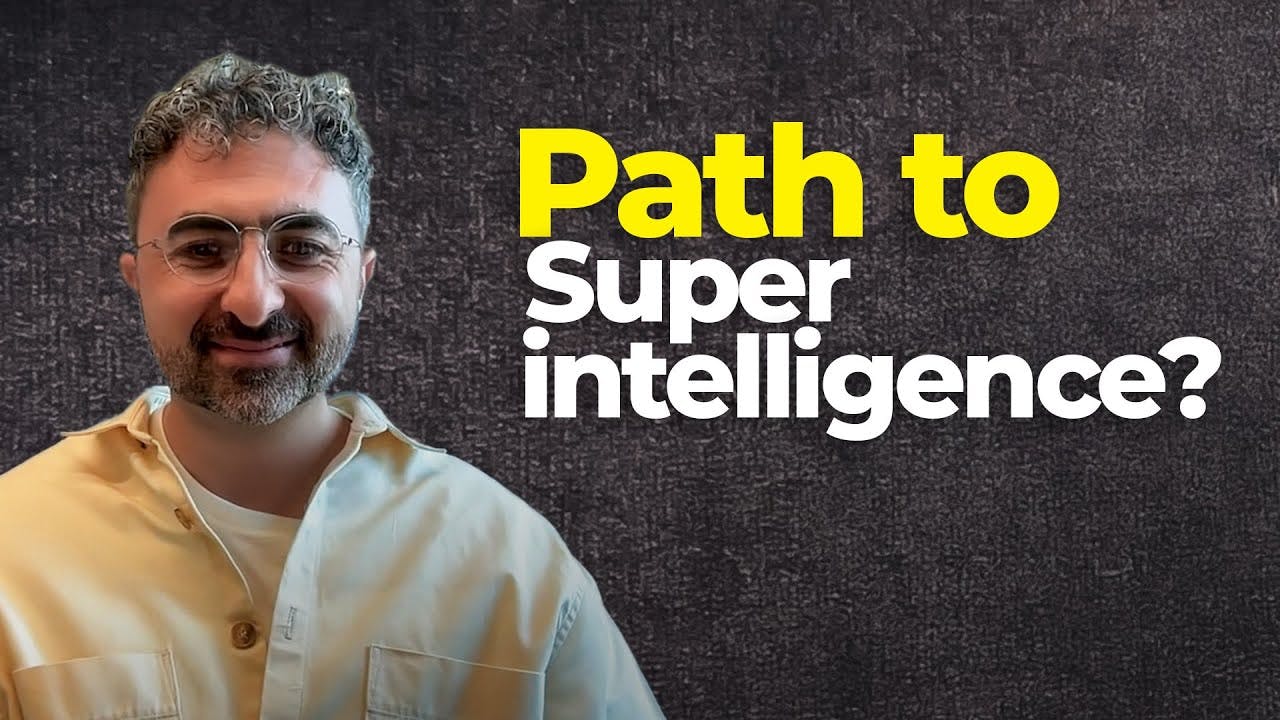
While Anthropic battles the Pentagon over usage policies, Elon Musk's XAI is the only major lab to have agreed to the government's "all lawful uses" standard. This quiet compliance strategically positions XAI as a more reliable and less contentious partner for military contracts, potentially giving it a significant advantage in the lucrative defense sector.
As Anthropic's negotiations with the Pentagon collapsed, OpenAI's Sam Altman swiftly moved to secure a nearly identical deal for his company. This highlights a classic competitive strategy of capitalizing on a rival's turmoil to gain market share in a critical government sector.

Securing a government contract, even a relatively small one, provides a powerful signal of legitimacy and reliability. This 'halo effect' can open doors to large corporate customers who view it as a stamp of approval, making it a strategic asset for enterprise startups.
Key negotiators for both OpenAI and Anthropic in their Pentagon talks are former government officials. This reveals a growing talent war for policy experts with deep government ties, who are now crucial for navigating and securing high-stakes defense contracts.